

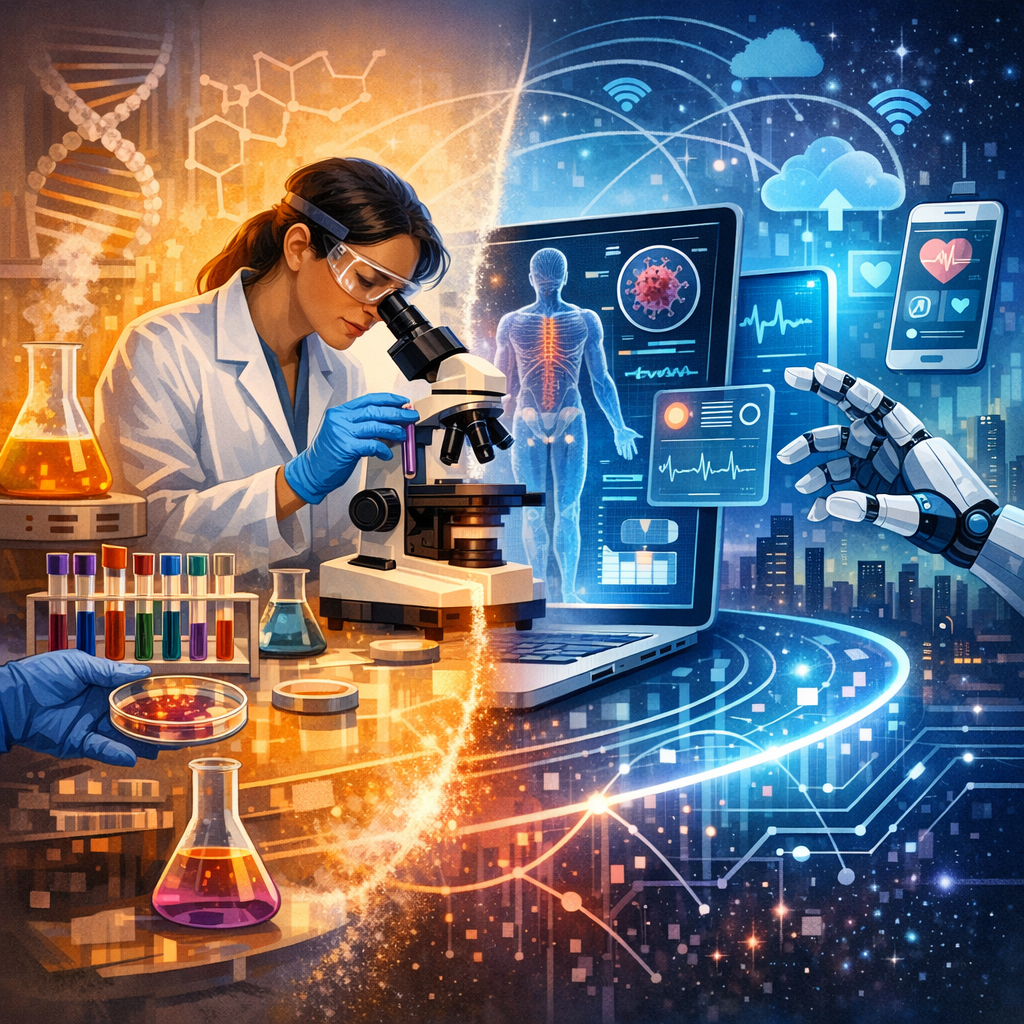
### The Digital Transformation in Healthcare
In an era defined by telemedicine apps, wearable health trackers, and AI-driven diagnostics, it may appear that traditional laboratory testing is becoming obsolete. According to a survey by Deloitte, 87% of healthcare professionals are incorporating digital health tools into their practices. Despite this digital dominance, lab testing remains a cornerstone for accurate diagnosis and effective treatment, guiding both immediate patient care and long-term health strategies.
### Embracing Digital Advancements in Healthcare
As healthcare organizations rapidly adopt digital tools, patients today have unprecedented options for actively managing their health. Smartphone apps, for example, enable users to monitor blood pressure, glucose levels, and sleep patterns with just a few taps. The American Medical Association reports that 62% of adults are willing to use virtual visits, connecting with physicians from the comfort of their homes. Dr. Eleanor Murray, an epidemiologist, emphasizes that “digital advances complement but do not replace the rigor of lab-based analysis.” These innovations enrich traditional lab testing instead of replacing it.
### The Enduring Value of Laboratory Testing
Laboratory tests measure biomarkers — molecules, cells, and genetic material — found in blood, urine, saliva, and other specimens. These tests provide objective, quantitative data that guide physician decision-making in ways that digital sensors alone cannot achieve. For instance, comprehensive panels in lab tests can measure dozens of analytes simultaneously, offering insights into important metrics such as electrolyte levels and hormone balance, areas where digital sensors may fall short. Laboratories accredited by CLIA or ISO15189 adhere to strict quality-control protocols, ensuring standardized accuracy with every test.
### Integrating Digital Tools and Traditional Labs
Health systems are increasingly melding lab testing with digital solutions to create a seamless care pathway. Advances in microfluidics and biosensors now allow certain lab tests to be performed at the doctor’s office, with results instantly uploaded to electronic health records (EHRs). Patients can also order home sample collections online, send samples to central labs, and receive digital results within days. By ensuring data interoperability, lab results seamlessly integrate into patient apps like Apple Health, offering a comprehensive view of a patient’s medical history.
### Accuracy and Reliability: The Bedrock of Medical Data
Digital health tools rely heavily on raw data, which must be trustworthy. For instance, only lab-based HbA1c tests can confirm average blood sugar control over a span of months — a crucial metric for diabetes management. Clinical labs are equipped to detect even minute concentrations of biomarkers, with strict oversight reducing errors and ensuring consistency. As noted by the CDC, regulation compliance is essential to maintaining patient trust and ensuring data accuracy.
### Key Scenarios Where Lab Testing Excels
Lab testing is invaluable in critical scenarios such as cancer diagnostics, infectious disease detection, and chronic disease management. PCR assays, for instance, are the gold standard for pathogen identification, offering the unparalleled sensitivity needed to efficiently manage infectious diseases like COVID-19 and influenza.
### The Future of Healthcare: A Hybrid Approach
As digital and lab testing converge, the healthcare industry is anticipated to adopt a hybrid model. Predictive analytics, powered by AI and utilizing vast lab result databases, will help forecast disease risks and recommend preventive screenings. Personalized medicine will benefit significantly from the integration of lab test data with genomics and lifestyle information, enabling tailored treatment plans. Virtual-first workflows may begin with a telehealth call, transition to home sample collection, and culminate in lab-confirmed results review without requiring an in-person visit.
### Overcoming Integration Challenges
Integrating lab testing with digital health poses significant challenges, including maintaining data security and privacy, and ensuring patient engagement. Robust encryption and compliance with regulations like HIPAA remain crucial. Furthermore, providing clear instructions and ongoing support can alleviate patient reluctance toward self-collection and digital platforms. Insurers and public payers must adapt to cover hybrid services, thus providing comprehensive patient access.
### Conclusion: Lab Testing’s Vital Role Amidst Digital Advances
Even in our digital-first world, lab testing remains indispensable. Far from being sidelined, clinical laboratories are evolving in tandem with telemedicine and AI to forge a more connected, patient-centric healthcare ecosystem. By upholding rigorous standards, lab tests provide the crucial data clinicians require to make confident diagnoses, tailor treatments, and monitor patient outcomes. As technology progresses, the most effective healthcare models will integrate digital tools with the proven accuracy of laboratory science, ensuring the best possible care for patients everywhere.