

### Introduction: The Silent Threat of Cardiovascular Disease
Cardiovascular disease (CVD) remains the leading cause of death worldwide, accounting for approximately 18 million deaths annually, according to the World Health Organization in 2021. Often, the early warning signs of CVD go unnoticed—particularly among men who are managing careers, families, and personal interests. Unlike sudden heart attacks, which demand immediate attention, risk factors such as high blood pressure, elevated cholesterol, and irregular heart rhythms develop quietly. In the digital age, telehealth is emerging as a powerful tool to detect these hidden threats before they escalate. It bridges accessibility gaps and empowers men to take charge of their heart health from the comfort of their homes. Dr. John Smith, a cardiologist at the Heart Institute, notes that telehealth can transform preventive care by catching early warning signs of heart disease that often go unnoticed.
### The Rise of Telehealth: Transforming Healthcare Access
Over the past decade, telehealth services have gained immense popularity, with a notable surge during the COVID-19 pandemic. In March 2020, there was a 154% increase in telehealth visits compared to the previous year, as reported by the CDC. Virtual consultations, remote monitoring, and digital health platforms now offer convenient, on-demand care that fits into even the busiest schedules. Telehealth provides an alternative path to preventive care for men who might otherwise postpone routine checkups due to work and family commitments. It eliminates commute times, waiting rooms, and scheduling conflicts. For example, using platforms like eDrugstore.com, individuals can easily refill prescriptions or consult healthcare providers from home.
### The Hidden Risks of Cardiovascular Disease
Many cardiovascular risk factors are asymptomatic in their early stages. Hypertension, often called “the silent killer,” can go unnoticed for years before causing damage to blood vessels, kidneys, or the heart. Elevated cholesterol levels may not present overt signs until a buildup of plaque triggers chest pain or a more serious event occurs. Conditions such as atrial fibrillation (AFib), diabetes, and metabolic syndrome similarly lurk beneath the surface. According to the American Heart Association, about 46% of U.S. adults have hypertension, yet only about half have it under control. By the time physical symptoms appear, men may have already sustained irreversible damage or face higher odds of hospitalization.
### Telehealth’s Role in Uncovering Invisible Threats
#### Virtual Consultations and Risk Assessments
Telehealth platforms enable primary care physicians and cardiologists to conduct comprehensive health histories, lifestyle evaluations, and risk assessments through video calls. Tailored questionnaires help uncover family history of heart disease, smoking habits, dietary patterns, and stress levels—critical components of cardiovascular risk profiles.
#### Remote Monitoring of Vital Signs
Home blood pressure cuffs, connected glucometers, and wearable ECG patches can transmit real-time data directly to healthcare providers. Instead of relying on isolated readings in a clinic, clinicians gain a continuous stream of information, enhancing diagnosis accuracy and revealing trends that might otherwise be overlooked.
#### AI-Powered Data Analysis
Advanced algorithms analyze transmitted data for irregularities such as spikes in blood pressure, erratic heart rhythms, or subtle glucose level fluctuations. When anomalies are detected, telehealth systems can automatically alert both patient and physician, prompting timely interventions before complications arise.
### Cutting-Edge Tools and Technologies in Telehealth
#### Wearable Devices
Smartwatches and patch monitors track heart rate variability, sleep patterns, and physical activity, providing insights into overall cardiovascular health.
#### Mobile Health Apps
Apps guide users through medication reminders, dietary logs, and stress-management exercises, promoting healthy habits and improving patient engagement.
#### Cloud-Based Platforms
Secure portals store patient data, lab results, and imaging, facilitating seamless communication among primary care providers, specialists, and patients.
#### Home Testing Kits
Cholesterol and HbA1c kits sent by mail allow men to collect samples at home and send them to labs, integrating results into telehealth visits without needing in-person appointments.
### Encouraging Men’s Healthcare Participation
Despite these advances, many men remain hesitant to seek preventive care. Cultural attitudes toward stoicism, fear of bad news, and misconceptions about telehealth effectiveness can deter engagement. Healthcare organizations work to overcome these hurdles by:
– Educating through digital campaigns that normalize telehealth visits and highlight success stories.
– Offering flexible scheduling, including evening and weekend tele-visits, to accommodate work demands.
– Ensuring platforms have simple interfaces and dedicated technical support for first-time users.
– Providing multilingual services and culturally sensitive care to reach diverse communities.
### Case Study: Telehealth in Action
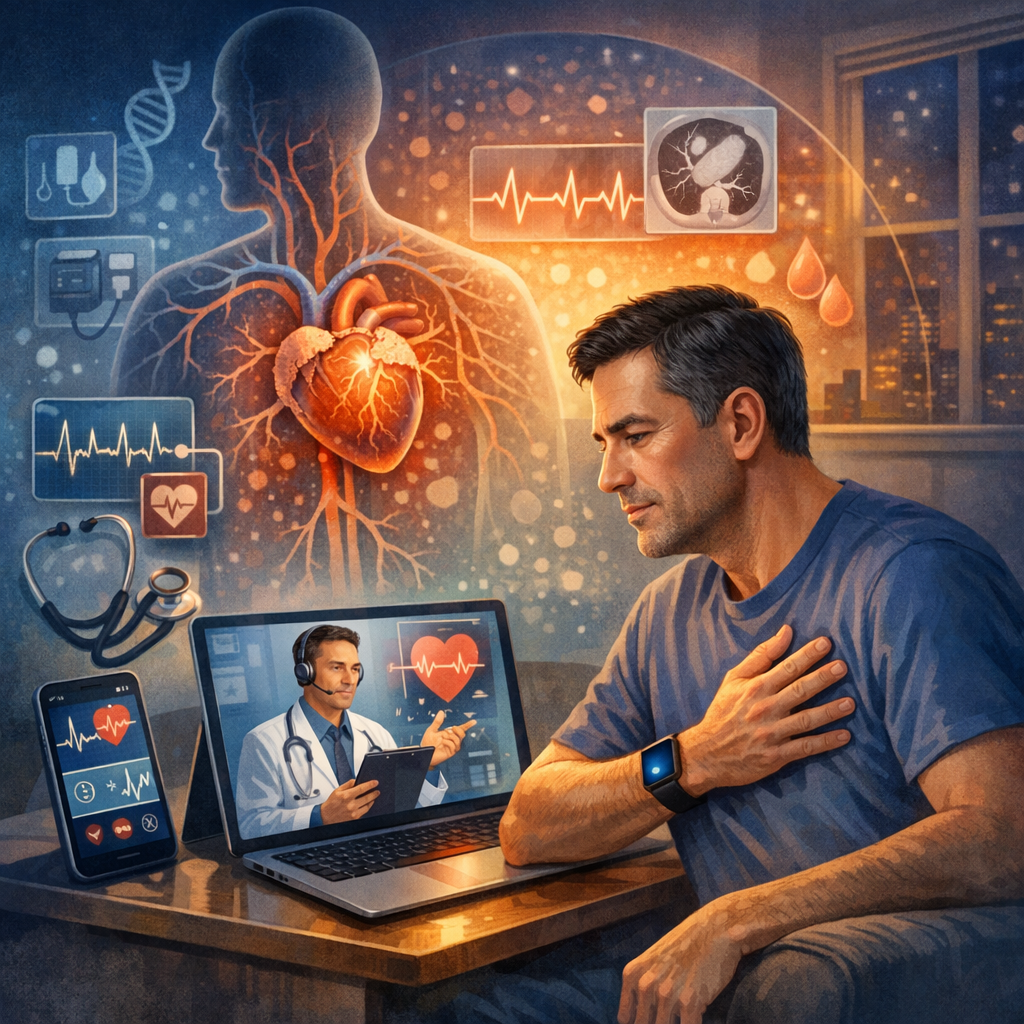
Consider John, a 45-year-old software engineer. He enrolled in a corporate telehealth program and completed an online cardiovascular risk survey. His clinician prescribed a Bluetooth-enabled blood pressure monitor and a smartwatch ECG patch. Remote uploads revealed consistently elevated readings and occasional irregular heartbeats. Within days, John had a virtual cardiology consult, medication adjustments, and a personalized lifestyle plan. Six months later, his blood pressure is controlled, cholesterol levels have dropped, and he reports fewer stress-related symptoms—all without stepping foot in a clinic until a follow-up imaging appointment.
### The Future of Telehealth: Innovations on the Horizon
As telehealth continues to identify silent cardiovascular risks, upcoming developments include:
– Advanced biomarkers detectable via at-home saliva or breath tests.
– Enhanced AI diagnostics combining genetic, lifestyle, and environmental data for hyper-personalized risk models.
– Virtual reality-guided cardiac rehabilitation sessions to support men recovering from heart events.
– Integrated digital twins—virtual replicas of patients’ cardiovascular systems—to simulate disease progression and test interventions.
### Conclusion: Embracing Telehealth for Heart Health
Navigating the unseen landscape of silent cardiovascular risks calls for a proactive, technologically driven approach. Telehealth proves to be a vital ally in modern men’s health, offering early detection, continuous monitoring, and personalized care plans without the hassles of traditional office visits. By embracing remote consultations, wearable devices, and AI-driven analytics, men can uncover hidden threats, reduce their risk of serious heart events, and chart a course toward long-term well-being. The future of heart health is no longer confined to hospital walls—it’s in your phone, your smartwatch, and your daily choices.