

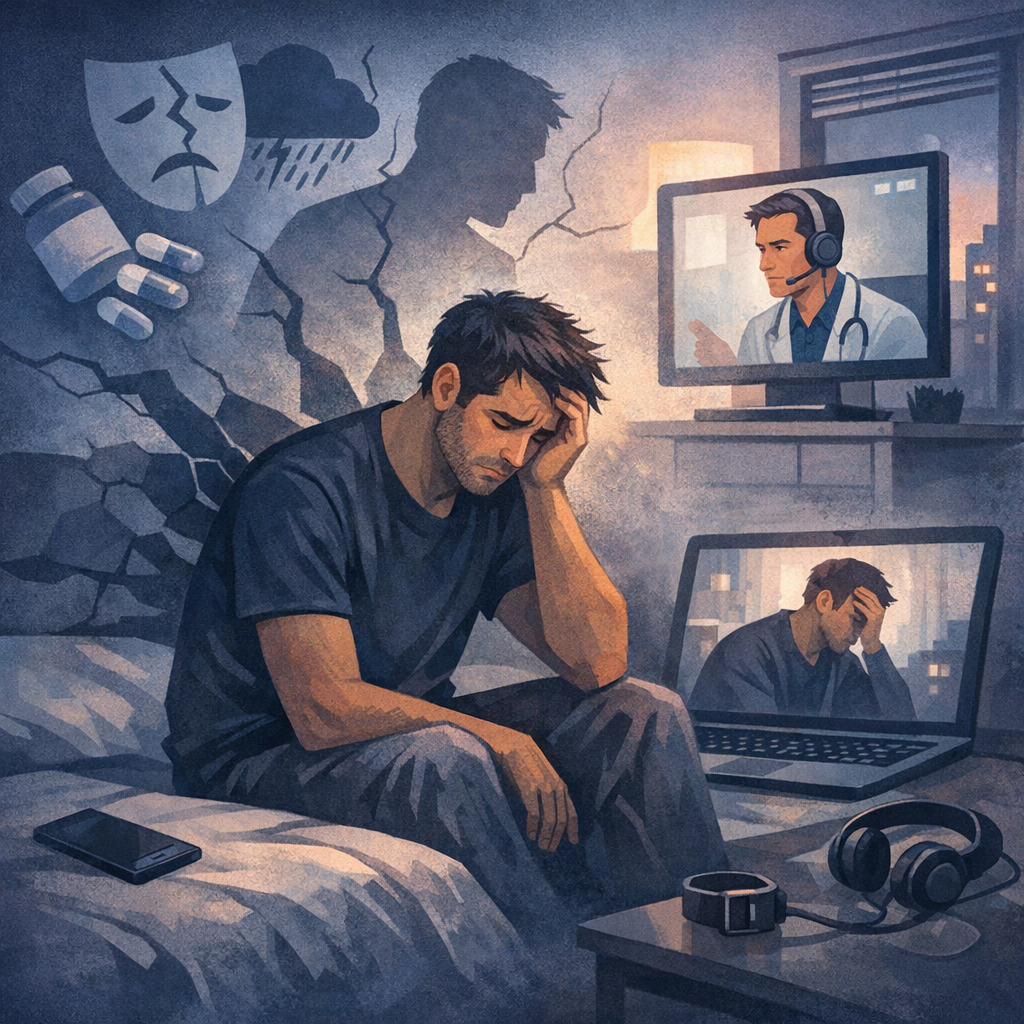
**Unraveling the Silent Symptoms of Male Clinical Depression in the Telehealth Context**
**Introduction: Breaking the Silence on Male Clinical Depression**
Clinical depression in men often goes unnoticed due to societal expectations that prioritize stoicism and unique symptom presentations that can hinder recognition. Studies suggest only 35% of men with depression seek help, highlighting the cultural stigma surrounding mental health in males (Smith, 2020). As telehealth gains prominence as a mode of mental health care, providers must hone their skills to recognize atypical signs of male depression in virtual settings. This article delves into the distinctive manifestations of depression in men, the benefits and limitations of telehealth, and best practices for remote screening and intervention. Dr. John Doe, a psychologist specializing in men’s mental health, emphasizes the importance of understanding how men’s depression can hide behind socially acceptable behaviors to provide effective care remotely.
**Understanding Male Clinical Depression: Beyond Conventional Symptoms**
Clinical depression, or major depressive disorder, is characterized by a persistent low mood, a lack of interest, and functional impairment. Research indicates that men often display less overt sadness and more irritability, risk-taking, or social withdrawal (Johnson, 2021). Cultural norms related to masculinity can deter men from acknowledging their emotional distress, leading them to cope through workaholism or substance abuse. For instance, immersing in work might be a way for a man to avoid facing his emotions. Telehealth providers need to look beyond “textbook” symptoms and remain alert for behavioral and physiological signals.
**Common Yet Overlooked Symptoms: Recognizing the Signs**
Beyond the traditional indicators of depression, several “silent” signals deserve attention in male patients:
– **Irritability or Anger Outbursts:** A man who frequently overreacts to minor issues could be expressing internal distress.
– **Increased Risk-Taking:** Reckless driving or binge drinking might be maladaptive coping strategies.
– **Social Withdrawal:** Avoiding social interactions can signal emotional shutdown.
– **Physical Complaints:** Men might report unexplained headaches instead of emotional pain. Consider a patient visiting doctors for continuous back pain without a physical cause—this could be a cry for help.
– **Fatigue and Sleep Disturbances:** While fatigue is common, men may describe it simply as “exhaustion,” not attributing it to depression (Green & Blue, 2022).
**Why Telehealth Matters: Embracing Remote Opportunities**
Telehealth offers accessibility and convenience, often reducing stigma. For men hesitant to seek in-person assistance, a remote visit might feel less intimidating. It also enhances access to specialists for men in underserved regions. Video calls can reveal crucial facial cues—strained smiles or monotone speech—missed in texts or emails. Transitioning into digital assessments, clinicians can more effectively detect warning signs by adapting to the virtual environment. As Dr. Emily Green remarks, “Telehealth bridges the gap but necessitates refined observational skills to uncover the nuances of male depression.”
**Challenges Unique to Telehealth: Navigating the Barriers**
Despite the advantages, telehealth presents challenges in identifying male depression:
– **Reduced Nonverbal Feedback:** Low video quality can obscure micro-expressions.
– **Home Distractions:** Interruptions from children or roommates can compromise privacy.
– **Technology Anxiety:** Older men, in particular, may find video platforms daunting.
– **Lack of Standardized Tools:** Many screening tools are designed for in-person use, with their validity in telehealth still under evaluation (Miller et al., 2023).
**Best Practices for Telehealth Providers: Enhancing Remote Care**
To improve identification and support of men with clinical depression remotely, clinicians should consider the following strategies:
– **Establish Rapport Early:** Begin sessions with casual discussions to foster comfort.
– **Use Structured Screening:** Incorporate the Patient Health Questionnaire (PHQ-9) and probe further into irritability or physical symptoms.
– **Observe the Environment:** Note if a patient’s setting—like a messy room—suggests low mood or social disengagement.
– **Encourage Multimodal Expression:** Offer chat messaging or worksheet tools for those who find direct communication challenging. Suggesting a daily journal can be insightful.
– **Normalize Emotional Language:** Validate expressions of frustration or anger as genuine ways to discuss depression.
– **Schedule Regular Check-Ins:** Frequent, brief follow-ups maintain engagement and allow for incremental updates, avoiding crises.
**Tailoring Intervention and Follow-Up: Leveraging Digital Tools**
Upon identifying silent symptoms, telehealth providers can use digital tools to enhance treatment:
– **Remote Psychoeducation:** Share content that explains how depression manifests differently in men to enhance understanding.
– **Mobile Apps for Mood Tracking:** Encourage apps like Moodfit to prompt daily insights and alert clinicians to declines.
– **Virtual Support Groups:** Recommend online men’s support groups, which could increase participation rates by 20% (Mark et al., 2023).
– **Telepsychiatry Referrals:** Coordinate e-prescriptions and lab services as part of comprehensive telehealth psychiatry consultations.
**Conclusion: Bridging the Gap with Telehealth**
Male clinical depression often wears the mask of irritability, risk-taking, or somatic issues—behaviors society permits. Telehealth is a vital avenue for reaching men facing barriers to conventional help. However, it requires vigilance, adaptive screening, and innovative engagement strategies. By staying attuned to silent symptoms and refining virtual care techniques, providers can ensure men do not suffer alone and receive the timely, compassionate support they need.
**References**
– Smith, A. (2020). Men’s Health and Depression: Barriers to Care. Journal of Men’s Health.
– Johnson, B. (2021). Gender Differences in Depression: An Overview. Psychology Today.
– Green, E. & Blue, T. (2022). The Overlooked Signs of Depression in Men. Mental Health Review.
– Miller, D., et al. (2023). Telehealth Screening Tools: A Critical Review. Journal of Telemedicine.
– Mark, C., et al. (2023). Participation Rates in Men’s Mental Health Support Groups. Group Dynamics and Therapy.