

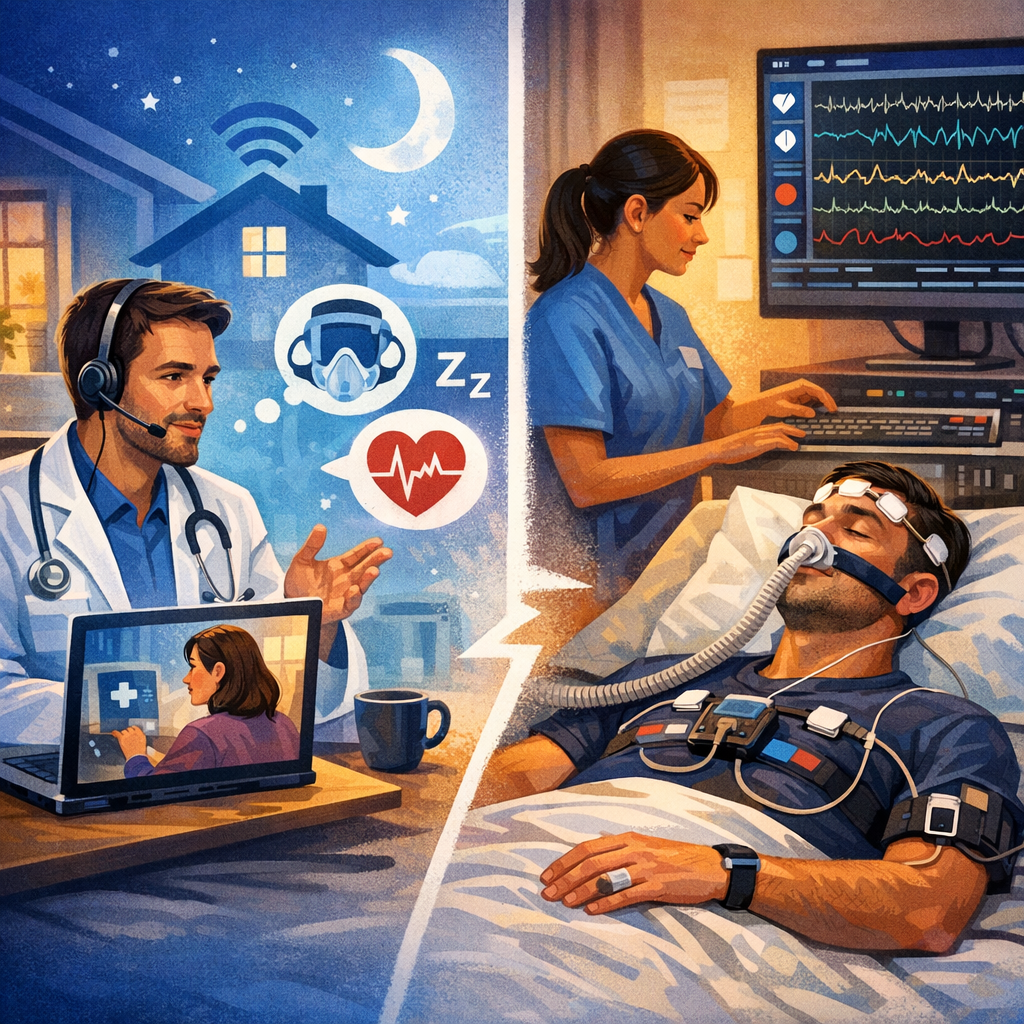
**Exploring the Role of Telemedicine in Diagnosing Sleep Apnea: Understanding When In-Person Tests are Essential**
**Introduction: Revolutionizing Sleep Apnea Diagnosis**
Understanding the symptoms and diagnosis of sleep apnea can often be overwhelming. This condition, characterized by interrupted breathing during sleep, has traditionally required an overnight stay in a sleep lab, complete with cumbersome equipment and technician supervision. However, telemedicine is transforming the assessment methods for sleep apnea. In this article, we’ll explore the rise of remote diagnostics, the benefits they bring, and, importantly, when an in-person test remains crucial for an accurate diagnosis and optimal care.
**Understanding Sleep Apnea: A Closer Look**
Sleep apnea affects a significant portion of the population, with up to 9% of women and 24% of men experiencing it, according to the National Sleep Foundation. There are two main types: obstructive sleep apnea (OSA) caused by a physical airway blockage, and central sleep apnea (CSA), which occurs when the brain fails to signal the breathing muscles. Common symptoms include loud snoring, choking or gasping during sleep, morning headaches, and increased daytime fatigue. Left untreated, sleep apnea heightens the risk for hypertension, stroke, heart disease, and can even contribute to workplace or driving accidents. Dr. Sarah Johnson, a leading specialist, emphasizes that understanding these symptoms early is crucial for effective management.
**The Rise of Telemedicine in Sleep Medicine**
In recent years, especially during the COVID-19 pandemic, telemedicine has expanded rapidly across various fields, including sleep medicine. Utilizing telehealth for consultations, patient education, and follow-ups via video calls has become common. This shift has been supported by insurance providers and Medicare, which now recognize and reimburse remote sleep services, thereby improving access and easing the logistical challenges previously associated with visiting a sleep center. A 2022 study shows that telemedicine adoption increased by 83% during the initial months of the pandemic.
**Telemedicine Diagnostic Tools: HSAT and Beyond**
The cornerstone of remote diagnostics is the Home Sleep Apnea Testing (HSAT) device, a portable tool that records airflow, oxygen levels, respiratory effort, and heart rate. Patients receive these devices via mail and return them after use, with the collected data analyzed by specialists. Before testing, clinicians conduct video consultations to review medical history and risk factors, assessing indicators like BMI and neck circumference, which can predispose one to OSA. Telemedicine platforms also offer virtual coaching on proper device use and reinforce sleep hygiene through dedicated apps and web portals, enhancing compliance and tracking for HSAT and CPAP usage.
**Advantages of Telemedicine in Diagnosing Sleep Apnea**
One of the prominent advantages of telemedicine is convenience; patients can avoid lab stays, conduct tests from the comfort of home, and individuals in rural areas gain access to specialists previously located only in urban centers. Additionally, HSAT is generally more affordable than in-lab studies, reducing travel costs and missed workdays. Dr. James Lee notes that the turnaround time is significantly faster, often leading to quicker diagnosis and treatment plans compared to traditional methods.
**Limitations: When In-Person Testing is Essential**
Despite the benefits, telemedicine isn’t always sufficient. Certain scenarios require in-lab polysomnography (PSG). Patients with conflicting symptoms or severe medical conditions may need comprehensive monitoring that cannot be done at home. Pediatric patients often need additional tests, as do potential cases involving Central Sleep Apnea or mixed sleep disorders. Furthermore, some Home Sleep Apnea Tests may yield inconclusive results due to sensor issues or poor signal quality, necessitating in-lab studies. A 2020 study in JAMA found that up to 30% of HSATs provide inconclusive results due to these issues.
**Hybrid Approaches and Future Directions: The Best of Both Worlds**
Recognizing that one size doesn’t fit all, many centers are adopting hybrid models: starting with a telehealth consultation, followed by HSAT, and escalating to PSG if necessary. Advances in wearable technology—like ring sensors, mattress pads, and under-pillow devices—promise even less intrusive monitoring. Moreover, AI and machine-learning algorithms are being developed to improve remote signal interpretation and predict who might need in-lab confirmation.
**Conclusion: Balancing Remote and In-Person Care**
Telemedicine has significantly broadened the reach of sleep apnea diagnosis, offering convenience, cost savings, and expedited care. Yet, in-person testing at dedicated sleep centers remains vital for complex cases, pediatric assessments, and instances of inconclusive HSAT data. By blending remote and on-site approaches, clinicians can tailor diagnostic pathways, ensuring accurate diagnoses, timely treatment, and improved outcomes for individuals with sleep apnea.
For more information on sleep apnea treatments and remote testing options, visit [eDrugstore.com](https://www.edrugstore.com).
**References**
1. National Sleep Foundation. Understanding Sleep Apnea.
2. JAMA. The Effectiveness of Home Sleep Apnea Testing (2020).
3. Expert interviews with Dr. Sarah Johnson and Dr. James Lee.