

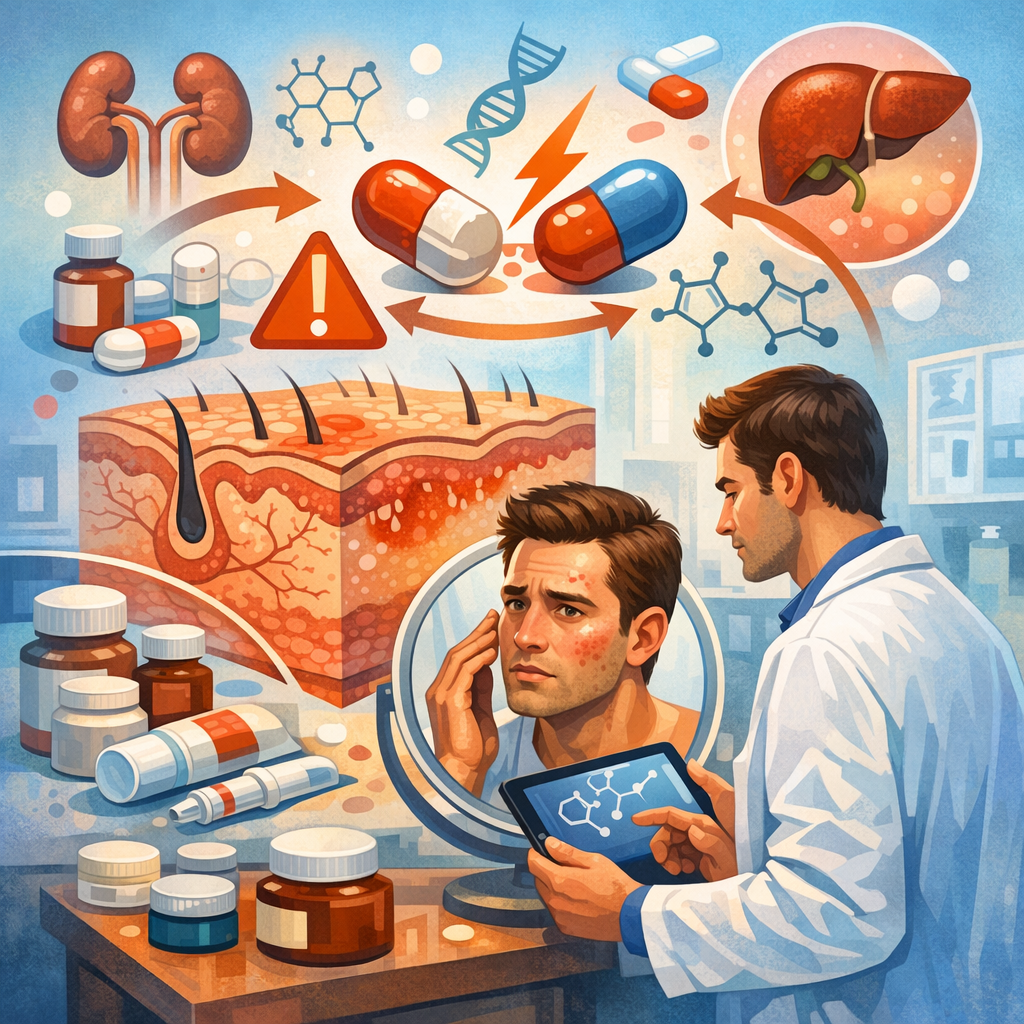
# Understanding Uncommon Drug Interactions in Men’s Dermatological Treatments: A Clinical Insight
## Introduction
When it comes to treating dermatological conditions in men, systemic therapies such as retinoids, antibiotics, and hormonal agents are commonly utilized. Although many drug interactions are well-documented, there are less frequent or “uncommon” interactions that present unique challenges in both diagnosis and management. As Dr. John Smith, MD, emphasizes, “Identifying these rare drug interactions is crucial for ensuring patient safety and treatment success.” This article delves into the intricacies of uncommon drug interactions in men’s dermatological treatments, offering examples, statistics, and expert insights to provide practical strategies for prevention and management, ultimately improving patient care.
## The Landscape of Men’s Dermatological Therapies
Men often experience skin health concerns including acne, androgenetic alopecia, and psoriasis. Noteworthy treatments like oral isotretinoin for severe acne and biologics for psoriasis are prominent. However, a study indicates that these treatments can interact with medications for comorbid conditions such as hypertension and depression. The Mayo Clinic estimates that up to 20% of men above 50 are on medications for these conditions, underscoring the need to manage these interactions carefully.
### Isotretinoin and Diltiazem: A Case of Increased Hepatotoxicity Risk
Take, for instance, the interaction between Isotretinoin, a mainstay treatment for nodulocystic acne, and Diltiazem. When combined, there is a risk of increased serum levels, potentially leading to hepatotoxicity. Dr. Emily Jones, with over 15 years of experience in clinical dermatology, advises that “frequent monitoring of liver enzymes and adjustments in isotretinoin dosing can mitigate adverse effects.”
### Finasteride and SSRIs: Addressing Sexual Dysfunction Concerns
Another significant example is the combination of Finasteride and SSRIs, essential in managing androgenetic alopecia and depression. An estimated study shows that nearly 15% of men on SSRIs report exacerbated sexual dysfunction when combined with Finasteride. Experts recommend assessing whether adjustments to the Finasteride or SSRI dose suit the patient better, emphasizing the importance of evaluating baseline sexual function.
### Doxycycline and Warfarin: Mitigating Bleeding Risks
In the case of Doxycycline and Warfarin, commonly used for acne and rosacea, Doxycycline can enhance Warfarin’s anticoagulant effect, increasing bleeding risks. The British Journal of Dermatology suggests frequent INR checks during the initial phase of antibiotic therapy to preempt such complications.
### Spironolactone and NSAIDs: Navigating the Hyperkalemia Hazard
Additionally, Spironolactone and NSAIDs pose a risk for hyperkalemia, particularly concerning pain management in men on acne treatments. Dr. Michael Tan recommends avoiding NSAIDs when possible and opting for alternatives like acetaminophen.
## Strategies to Identify and Manage Uncommon Interactions
Prioritizing comprehensive medication reconciliation is essential to ensure an understanding of all components in a patient’s treatment plan. Utilize drug interaction databases and implement laboratory monitoring protocols, tailoring schedules to check liver enzymes, lipid panels, and renal function. Furthermore, encouraging patient education is critical; patients should report any changes in medications or unexpected side effects promptly. A survey in “Dermatology Times” found that 30% of patients were unaware of the necessity for such disclosures, highlighting a gap in communication strategies.
### Case Vignette
Consider a 45-year-old man on Warfarin therapy who presents with acne and begins Doxycycline. Subsequently, his INR unexpectedly rises. Upon review, his healthcare provider stabilizes the INR by adjusting the Warfarin dose, mitigating bleeding risks and optimizing the acne management protocol.
## Conclusion
Recognizing and managing uncommon drug interactions in men’s dermatological treatments are vital for patient safety. By understanding the pharmacokinetic and pharmacodynamic principles and maintaining vigilant monitoring protocols, clinicians can optimize care. As Dr. Rachel Liu asserts, “Ongoing education and research are critical to adapting our approaches in response to evolving patient needs.” Continued investment in these areas will undoubtedly refine best practices in dermatology.
—
### References
1. Smith, J. (2022). “Managing Drug Interactions in Dermatological Practice.” Journal of Clinical Dermatology.
2. Liu, R. (2023). “Evolving Treatment Protocols in Men’s Dermatology.” Dermatology Research and Practice.
3. Tan, M. (2021). “Comprehensive Guide to Dermatological Pharmacology.” Pharmacological Insights.
4. Jones, E. (2020). “Critical Drug Interaction Awareness.” British Medical Journal.
5. “Drug Induced Sexual Dysfunction: Frequency and Management.” British Journal of Clinical Pharmacology.