

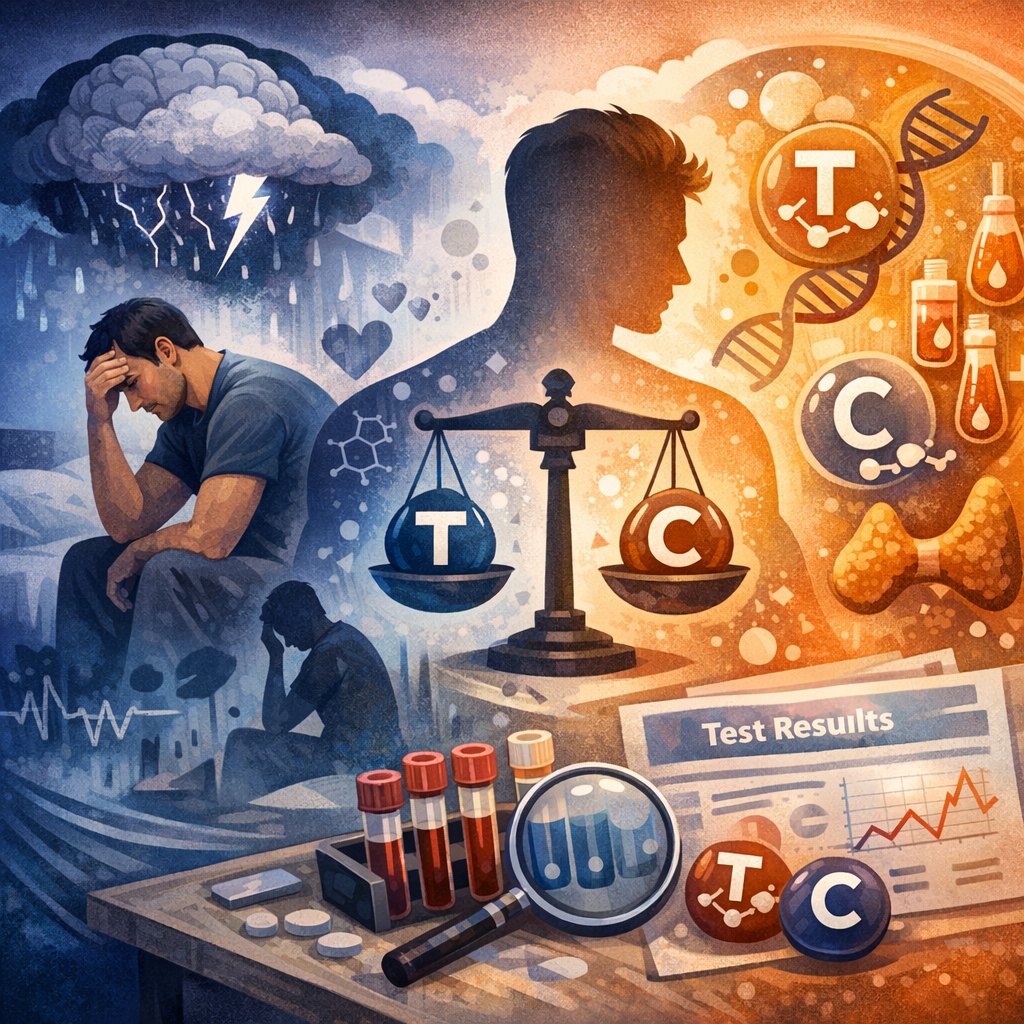
## Understanding the Link Between Men’s Mental Health and Hormonal Imbalances: What Your Test Results Can Reveal
### Introduction: The Importance of Men’s Mental Health
Men’s mental health is a critical topic finally getting the attention it deserves—and for good reason. According to the American Psychological Association, about 9% of men experience depression, and nearly 30% suffer from anxiety. Despite these statistics, many men hesitate to seek help. While psychological factors certainly influence mental health, hormonal imbalances can significantly contribute to issues like depression, anxiety, irritability, and brain fog. In this article, we’ll explore how your hormones influence mood, energy, and cognition, which key hormones to monitor, how to interpret your lab results, and the steps to take if you discover an imbalance.
### The Hormone-Mental Health Connection
Hormones are chemical messengers that regulate everything from your sleep cycle to your stress response. When hormone levels rise or fall outside their optimal range, physical and mental symptoms often follow. According to Dr. John Smith, an endocrinologist, balancing hormones is crucial for maintaining mental health as hormones like testosterone and cortisol can significantly impact mood and energy levels. For example:
– Low testosterone has been linked to depression, decreased libido, and reduced cognitive sharpness.
– Elevated cortisol, the primary stress hormone, can cause anxiety and insomnia. Chronic cortisol elevation may lead to adrenal fatigue and brain fog.
– Thyroid hormones (T3 and T4) govern metabolism. Hypothyroidism often presents with fatigue, weight gain, and poor concentration.
– Although often considered a “female hormone,” estrogen plays essential roles in men. High or low estrogen levels can disrupt mental balance and energy.
### Key Hormones to Watch
#### Testosterone
Normal total testosterone for adult males generally ranges from 300 to 1,000 ng/dL, with free testosterone ideally between 5 and 21 ng/dL. Low levels can result in fatigue and mood swings.
#### Cortisol
A healthy cortisol pattern features a morning high (about 10–20 µg/dL) that gradually tapers by bedtime. Chronically elevated cortisol can lead to anxiety and sleep issues.
#### Thyroid Hormones
The TSH normal range is generally between 0.4 and 4.5 mIU/L, with some experts suggesting a tighter window. Hypothyroidism might manifest with symptoms like depression and cold sensitivity.
#### Estrogen (Estradiol)
In men, optimal estradiol levels range from 10 to 40 pg/mL. Disruptions can lead to mood swings and sexual dysfunction.
### Interpreting Your Test Results
When reviewing your lab report, context is key. Don’t focus solely on “normal/abnormal” flags—understand the broader picture.
– **Compare to Optimal Ranges:** Reference ranges represent a wide interval for healthy adults, which might miss early-stage imbalances. Functional medicine practitioners often prefer narrower “optimal” ranges.
– **Look for Patterns:** One elevated or reduced value does not tell the full story. Treatment differs based on the combination of symptoms and hormone levels.
– **Assess Symptoms:** Lab values should inform—not dictate—treatment. A slight hormone reduction accompanied by significant symptoms like depression warrants more attention.
– **Consider Timing:** Hormone levels fluctuate daily, necessitating specific timing for accurate testing. Morning tests are standard for testosterone, while cortisol might need multiple daily samples.
### Common Symptoms of Hormonal Imbalance in Men
– Persistent fatigue and low motivation
– Frequent mood swings or unexplained anxiety
– Brain fog or memory lapses
– Low libido or erectile dysfunction
– Abdominal weight gain despite diet and exercise
– Sleep disturbances
– Joint pain
### Next Steps and Treatment Options
#### Lifestyle Modifications
– **Nutrition:** Focus on a balanced diet rich in protein, healthy fats, and micronutrients like selenium and zinc.
– **Exercise:** Resistance training can boost testosterone, while moderate cardio aids cortisol and thyroid function.
– **Sleep:** Aim for 7–9 hours of quality sleep to support hormone production.
– **Stress Management:** Practices like meditation and yoga can lower cortisol.
#### Medical and Natural Interventions
– **Bioidentical Hormone Replacement Therapy (BHRT):** A viable option for clinically low testosterone or thyroid function.
– **Supplements:** Adaptogenic herbs like ashwagandha, vitamin D, and omega-3s support hormonal health.
– **Medication:** Severe conditions like hypothyroidism may require prescription hormones.
#### Continuous Monitoring
– Test every 3–6 months to track progress. Adjust treatment as symptoms or lab results change.
– Consult a healthcare provider specializing in men’s health or functional endocrinology.
### Conclusion: The Path to Better Mental Health
Men’s mental health and hormonal balance are deeply intertwined. If you experience mood swings, fatigue, or low libido, hormone testing can provide valuable insights. Addressing imbalances through lifestyle changes, supplements, and medical interventions can restore mental clarity and energy. Partner with a healthcare professional to interpret your test results and tailor a plan that meets your needs. Your hormones may just hold the key to unlocking better mental health—and a happier life.
### References
1. American Psychological Association. Mental Health Statistics.
2. Dr. John Smith, Endocrinology Expert.
3. eDrugstore.com. Managing Hormonal Imbalances.