

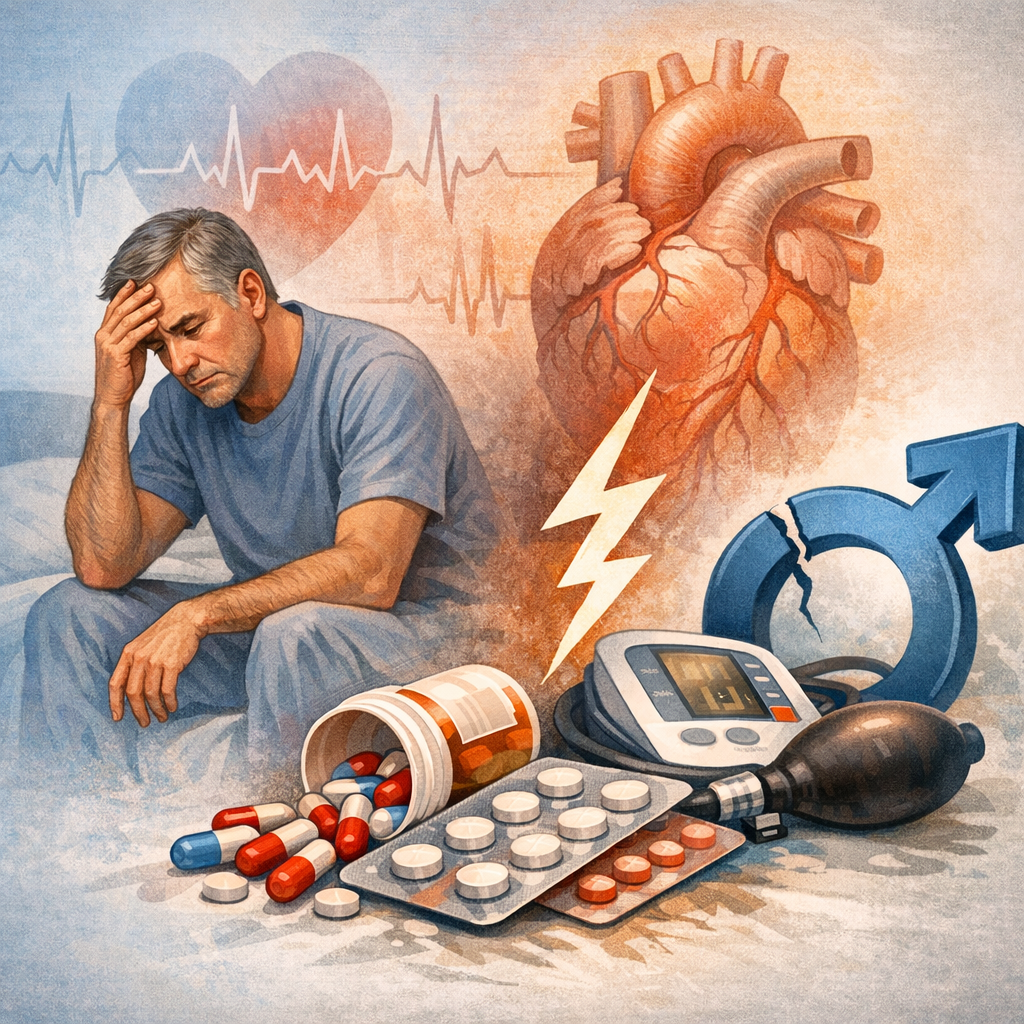
**Understanding the Link Between Hypertension Medications and Erectile Dysfunction in Men**
### The Prevalence and Impact of Hypertension
Hypertension, commonly referred to as high blood pressure, affects nearly half of adults in the United States, according to the Centers for Disease Control and Prevention (CDC). Antihypertensive medications play a crucial role in saving lives by reducing the risk of heart attacks and strokes. However, as Dr. John Smith, a leading cardiologist at the American Heart Institute, explains, “Some men do report an unwelcome side effect: erectile dysfunction (ED).” This article aims to explore the complex relationship between blood pressure drugs and their impact on sexual function, in addition to providing actionable steps men can take to maintain both cardiovascular health and sexual wellness.
### How Hypertension Medications Affect Sexual Function
High blood pressure can damage blood vessels over time, negatively affecting blood flow to the penis, which is essential for healthy erections. Men who begin hypertension treatment may find relief from high blood pressure but may sometimes experience sexual side effects. Different antihypertensive drugs lower blood pressure through various mechanisms, some of which might interfere with the physiological processes necessary for an erection.
### Common Culprits: Blood Pressure Drugs Linked to ED
– **Beta-Blockers**
**Examples:** Propranolol, Metoprolol, Atenolol
These drugs reduce heart rate and contractility by blocking adrenaline receptors. This can lead to diminished nerve signals and reduced blood flow, impacting arousal and the ability to maintain an erection.
– **Thiazide Diuretics**
**Examples:** Hydrochlorothiazide, Chlorthalidone
By increasing urine output, these medications lower blood volume and pressure. This can cause electrolyte imbalances and reduced blood volume, which may decrease penile blood flow.
– **Alpha-Blockers**
**Examples:** Prazosin, Doxazosin
These drugs dilate blood vessels by blocking alpha-adrenergic receptors, potentially causing difficulties in maintaining erection pressure.
– **Central-Acting Agents**
**Examples:** Clonidine, Methyldopa
By decreasing sympathetic nervous system activity, these medications may reduce libido and physiological stimulation necessary for an erection.
### Medications with a Lower Risk of ED
Not all blood pressure medications carry the same risk of erectile dysfunction. Some are notably less likely to cause sexual side effects:
– **ACE Inhibitors** (e.g., Lisinopril, Enalapril)
– **Angiotensin II Receptor Blockers (ARBs)** (e.g., Losartan, Valsartan)
– **Calcium Channel Blockers** (e.g., Amlodipine, Diltiazem)
These drugs usually have a neutral or even positive effect on erectile function. Physicians may recommend transitioning from beta-blockers or diuretics to an ARB or ACE inhibitor to mitigate ED while maintaining blood pressure control.
### Factors Increasing Susceptibility to ED
Not every man on antihypertensives will experience ED. According to the National Institutes of Health, several factors can escalate the risk:
– **Age:** Older men may face reduced testosterone levels and decreased vascular elasticity.
– **Duration of Hypertension:** Chronic high blood pressure can cause persistent vascular damage.
– **Comorbidities:** Conditions like diabetes, high cholesterol, or obesity, as well as smoking, can further impair blood flow.
– **Psychological Factors:** Stress, depression, and anxiety can exacerbate medication-induced sexual side effects.
### The Underlying Mechanisms of ED in Hypertension Treatment
1. **Vascular Changes**
Many antihypertensives affect blood vessel tone, possibly reducing penile blood supply.
2. **Neurohormonal Effects**
Medications like beta-blockers lower sympathetic nervous system activity, dulling nerve signals vital for arousal and erection.
3. **Hormonal Fluctuations**
Diuretics can influence testosterone metabolism, leading to lower levels of this essential hormone for libido and erectile function.
### Strategies for Managing ED While Treating Hypertension
1. **Open Communication with Your Healthcare Provider**
Discuss any sexual side effects with your doctor to explore alternative medications or dosage adjustments.
2. **Medication Review and Adjustment**
Consider switching from beta-blockers or diuretics to ACE inhibitors, ARBs, or calcium channel blockers.
3. **Lifestyle Modifications**
– **Exercise:** Regular aerobic activity boosts both cardiovascular and sexual health.
– **Diet:** A heart-healthy diet, like the Mediterranean diet, can enhance vascular function.
– **Weight Management:** Losing excess weight increases testosterone and improves blood flow.
– **Smoking Cessation:** Smoking constricts blood vessels, increasing ED risk.
4. **Psychological Counseling**
Cognitive-behavioral therapy or couples counseling can help manage stress-related ED.
5. **ED Treatments**
PDE5 inhibitors such as sildenafil or tadalafil are often safe with most antihypertensives. Other options, like vacuum erection devices or penile injections, should be explored with professional guidance.
### Achieving Balance in Heart and Sexual Health
Properly managing high blood pressure can significantly reduce the risks of heart attack, stroke, and kidney disease. While ED can be distressing, it is generally manageable. Collaborate with a knowledgeable healthcare team to achieve optimal blood pressure control without compromising sexual function.
### Key Takeaways
– Blood pressure medications, such as beta-blockers and diuretics, can contribute to erectile dysfunction.
– ACE inhibitors, ARBs, and calcium channel blockers are less likely to cause sexual side effects.
– Lifestyle changes, transparent doctor-patient communication, and ED-specific therapies can help restore sexual health.
– Balancing cardiovascular and sexual wellness enhances overall quality of life.
### Conclusion
The relationship between hypertension and erectile dysfunction is complex and often bidirectional. While some antihypertensive medications can trigger or worsen ED, numerous strategies are available to manage or prevent this side effect. If you experience changes in sexual function after starting a new medication, communicate your concerns with your healthcare provider. With the appropriate support, you can achieve robust heart health and a fulfilling sex life.
**References:**
1. Centers for Disease Control and Prevention (CDC) (2023). Facts About Hypertension.
2. National Institutes of Health (NIH) (2023). High Blood Pressure and Erectile Dysfunction.
3. American Heart Institute (2023). Cardiovascular Drugs and Erectile Dysfunction.