

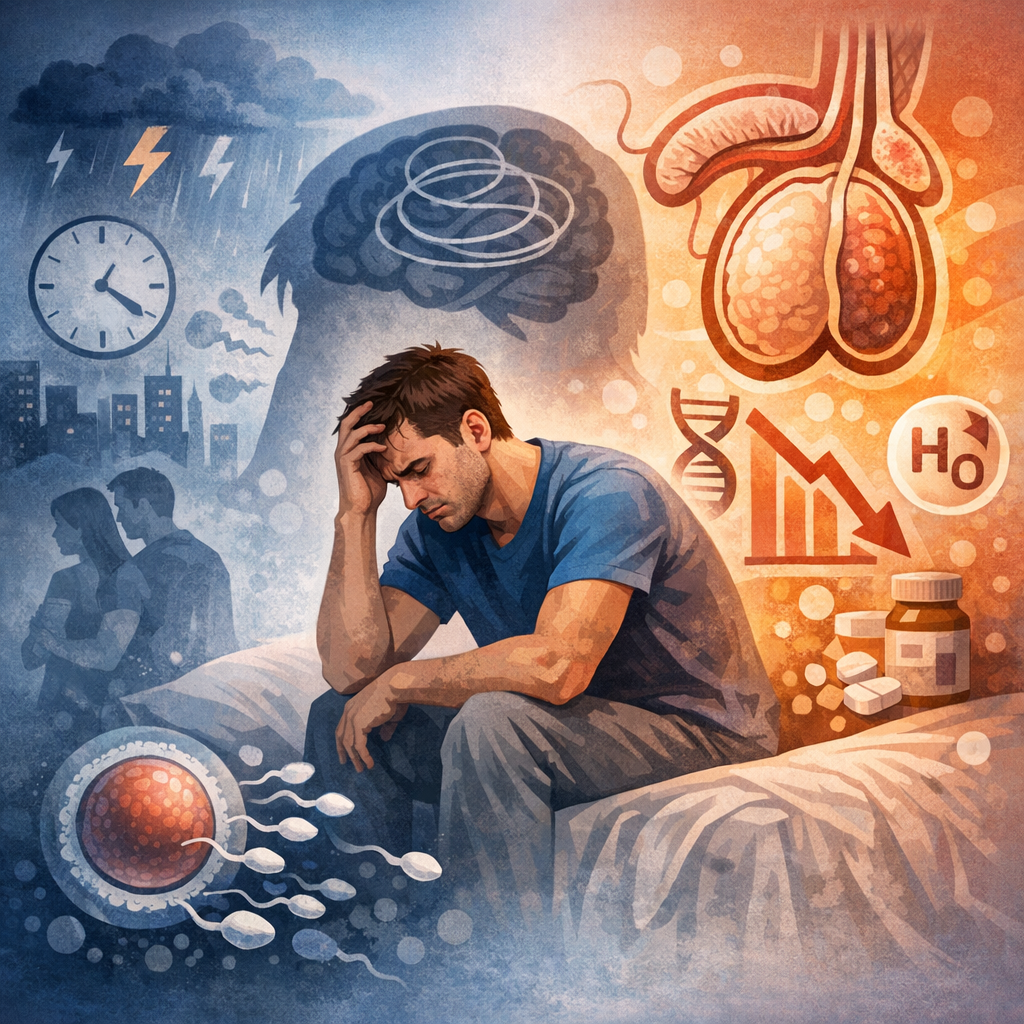
**Understanding the Link Between Chronic Stress and Men’s Reproductive Health**
**Introduction**
Chronic stress is a frequently overlooked aspect of men’s health that can have extensive implications. While short bursts of stress, such as those from meeting work deadlines, can increase focus and motivation, prolonged exposure to stress hormones can disrupt critical bodily systems, particularly those associated with reproduction. According to a study by the American Institute of Stress, around 77% of people experience stress that negatively impacts their physical health. Today’s rapid-paced lifestyles, job demands, financial concerns, and personal challenges have heightened stress levels for many men. As Dr. John Mayer, a clinical psychologist, points out, “Chronic stress acts like a slow poison, eroding the body’s natural harmony.” This article delves into how chronic stress affects men’s reproductive health and offers practical strategies to restore balance and protect fertility.
**Defining Chronic Stress**
When Stress Lingers Too Long
Chronic stress occurs when stress persists unchecked for weeks, months, or even years, with insufficient recovery time. In such prolonged states, the body remains in a heightened fight-or-flight mode. Key stress hormones, such as cortisol and adrenaline, continuously flood the bloodstream, keeping the heart rate elevated and blood pressure high, with many metabolic processes in overdrive. For example, constantly worrying about job security can subject someone to relentless stress. Unlike acute stress, which is a short-lived adaptive response, chronic stress depletes the body’s resources, undermining the delicate hormonal balance crucial for reproductive function. The Harvard Review of Psychiatry revealed that chronic stress exposure can lead to significant hormonal imbalances impacting overall health.
**Hormonal Effects of Stress**
Unraveling the Hormonal Impact
Chronic stress primarily interferes with male reproductive health by disrupting hormone production in the hypothalamic-pituitary-gonadal (HPG) axis. Elevated cortisol levels inhibit the release of gonadotropin-releasing hormone (GnRH) from the hypothalamus, leading to reduced secretion of luteinizing hormone (LH) and follicle-stimulating hormone (FSH) from the pituitary gland. These hormones are essential for testosterone synthesis and sperm development in the testes. Reduced testosterone levels can result in decreased libido, erectile difficulties, and various mood and energy issues. Dr. Howard Shapiro, an endocrinologist, notes, “The endocrine system can be severely impacted by sustained stress, significantly affecting a man’s life quality.”
**Impact on Sperm Quality and Fertility**
Sperm Health Takes a Hit
Beyond hormonal disruptions, chronic stress can directly damage sperm health. Research indicates that prolonged stress is linked to reduced sperm count, poorer motility, and impaired morphology. A study published in Fertility and Sterility found that men with high stress levels had a 30% lower sperm count than their less-stressed counterparts. High cortisol levels promote oxidative stress in testicular tissue, generating free radicals that can harm sperm DNA. Oxidative stress in the testes can be likened to rust slowly corroding metal. Over time, this can diminish fertility and increase the risk of miscarriages or developmental issues in offspring. Men experiencing constant stress may find it challenging to achieve their reproductive goals without targeted interventions.
**Psychological Stress and Sexual Performance**
The Mind’s Battle on the Body
Stress does not only affect physiology; it also has profound psychological dimensions. Anxiety, mental fatigue, and worry often accompany chronic stress, creating a vicious cycle of performance concerns and sexual dysfunction. Men may encounter premature ejaculation, difficulty achieving or maintaining an erection, or a diminished interest in intimacy. These challenges can heighten relationship tensions, fueling additional stress and creating barriers to open communication and mutual support. Dr. Joyce Brothers, a renowned psychologist, wisely observed, “Emotional distress often manifests in physical ways, affecting the intimate spheres of life.”
**Lifestyle and Nutritional Influences**
Mitigating Stress with Lifestyle Choices
Certain lifestyle habits can exacerbate or alleviate the impact of stress on reproductive health. Excessive alcohol consumption, smoking, and a diet high in processed foods can amplify oxidative damage and hormonal imbalance. Conversely, a nutrient-rich diet focusing on lean proteins, healthy fats, whole grains, fruits, and vegetables supports the body’s antioxidant defenses and balanced hormone synthesis. For instance, foods like spinach and salmon can help maintain hormone levels. Adequate sleep, regular exercise, and moderate caffeine intake also play important roles in controlling cortisol levels and enhancing reproductive resilience. Supplements specifically designed to support men’s health can be beneficial in achieving a balanced lifestyle to improve reproductive health.
**Building a Support Network**
The Power of Community and Connection
Emotional and social support are key buffers against the harmful effects of chronic stress. Sharing concerns with a trusted friend, partner, or family member can foster empathy and reduce feelings of isolation. Men’s health groups or online forums provide additional resources for exchanging coping strategies and success stories. Professional counseling or stress-management workshops offer structured guidance and accountability, helping men establish sustainable routines that protect mental and reproductive health. “Having a solid support network can change the dynamic of stress management,” says Dr. Lisa Firestone, a clinical psychologist.
**Practical Stress-Reduction Techniques**
Cutting Stress at its Core
Incorporating stress-relief practices into daily life can yield measurable benefits for reproductive function. Mindfulness meditation, deep-breathing exercises, and progressive muscle relaxation serve as the body’s natural reset button, lowering cortisol and restoring parasympathetic balance. Regular physical activity—whether brisk walking, cycling, yoga, or resistance training—encourages endorphin release and improves reproductive organ circulation. Time management techniques, setting realistic goals, and scheduling routine breaks can also prevent overwhelm and maintain focus on long-term fertility objectives.
**When to Seek Professional Help**
Getting the Right Assistance
If stress persists despite self-care efforts, it is crucial to seek professional assistance. A primary care physician can evaluate medical conditions that mimic or exacerbate stress responses. A urologist or endocrinologist can assess hormone levels and sperm parameters, recommending targeted treatments when necessary. Mental health professionals, including psychologists and psychiatrists, can address ongoing anxiety or depression. Accessing professional help early can enhance reproductive outcomes and safeguard overall health, ensuring men do not battle these challenges alone.
**Conclusion**
Taking Action Towards Balance
In conclusion, chronic stress and men’s reproductive health are intricately connected through hormonal, cellular, and psychological pathways. By understanding how prolonged stress undermines fertility and sexual function, men can take informed steps to restore balance. Combining a nutrient-rich diet, regular exercise, adequate sleep, social support, and relaxation techniques creates a resilient foundation for mental well-being and reproductive success. When challenges persist, professional guidance ensures that stress management becomes a sustainable, life-enhancing practice.
**References**
– American Institute of Stress. (2022). Stress Statistics.
– Harvard Review of Psychiatry. (2019). Chronic Stress and Health Disorders.
– Fertility and Sterility. (2020). The Impact of Stress on Male Fertility.
– eDrugstore.com – Supplements to support men’s reproductive health.
[Access additional information on stress management](https://www.edrugstore.com).