

# Understanding the Impact of Medication Synchronization Apps on Hypertension Management
## Introduction
Hypertension impacts nearly half of adults in the United States, making it a significant public health concern. Uncontrolled blood pressure is a leading risk factor for heart attack, stroke, and kidney disease. Despite effective treatments, medication non-adherence remains a significant barrier to achieving optimal patient outcomes. This challenge is particularly pronounced as telemedicine reshapes healthcare delivery. Medication synchronization apps have emerged as powerful tools to enhance adherence, streamline prescription workflows, and improve clinical outcomes. In this article, we will explore how these digital solutions integrate with telehealth platforms to transform hypertension management.
## The Challenge of Hypertension and Medication Adherence
Managing hypertension often requires patients to stick to multiple medication schedules, which can present challenges. Barriers like complex dosing regimens, forgetfulness among older adults, and difficulties accessing pharmacies can lead to non-adherence, resulting in erratic blood pressure control and increased healthcare costs. Dr. Smith from Mayo Clinic emphasizes that systematic prescription synchronization is crucial for overcoming these adherence hurdles.
## Understanding Medication Synchronization Apps
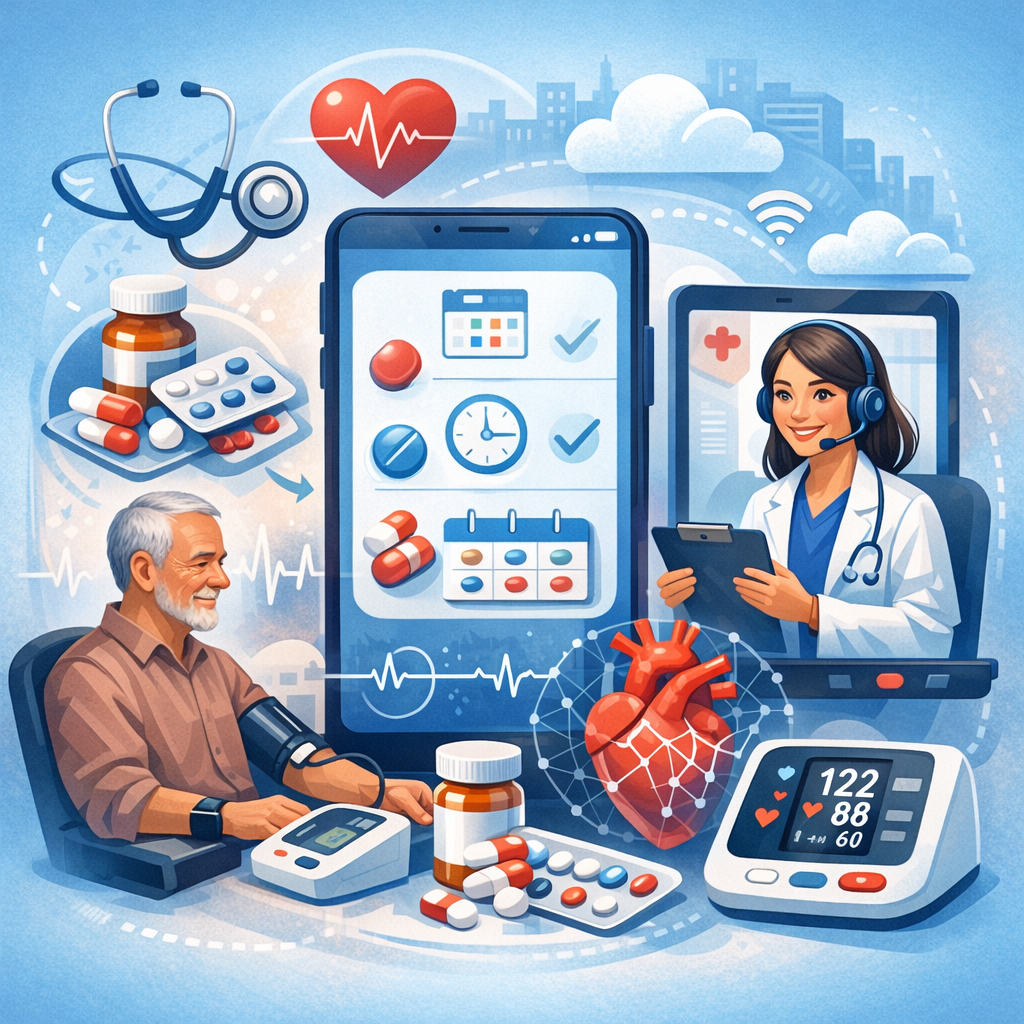
Medication synchronization apps are digital platforms designed to coordinate patients’ prescription refill dates, ensuring all medications are ready on a specific date. Key features include personalized refill calendars and automated reminders via text, email, or push notifications. For instance, an app notification a day before a refill is due can streamline an individual’s medication routine. These apps significantly reduce pharmacy trips and simplify daily medication regimens.
## Telemedicine’s Role in Hypertension Management
Telemedicine has greatly enhanced healthcare access by enabling virtual blood pressure monitoring, remote consultations, and digital health education. The convenience of attending appointments from home and increased frequency of check-ins have improved the number of touchpoints in care. However, telehealth consultations without adherence support may inadequately sustain blood pressure control.
## Enhancing Telemedicine Care with Synchronization Apps
### Improved Adherence
Medication synchronization apps, when integrated with telemedicine platforms, provide automated reminders and consolidated refill dates to boost adherence. Studies indicate that med sync programs can enhance adherence rates by up to 20%, positively affecting blood pressure stability.
### Streamlined Prescription Management
Providers can access patients’ refill histories and identify gaps in therapy during virtual visits. Clinicians can effortlessly send refill orders to partnering pharmacies, mitigating delays and reducing communication errors.
### Real-Time Data Sharing
Synchronizing apps with electronic health records or telehealth dashboards enables pharmacists and physicians to actively monitor prescriptions, anticipate drug interactions, and adjust regimens in real time.
## Evidence and Case Studies
A 2021 pilot study at a large urban clinic demonstrated that integrating a med sync app with telehealth services improved outcomes for 200 hypertensive patients. 85% of participants achieved over 80% medication adherence, with an average decrease of 10 mmHg in systolic blood pressure, and a 30% increase in patient satisfaction. In another rural telemedicine program, synchronized medication delivery by mail reduced no-show rates for follow-up visits by 25%.
## Best Practices for Implementing Sync Apps in Telemedicine
Healthcare teams should choose apps that integrate seamlessly with electronic health records for effective data flow, train staff and patients on app use, and monitor metrics like adherence rates and refill turnaround times to maximize impact.
## Future Directions
Emerging technologies like artificial intelligence and machine learning are set to further enhance medication synchronization. Predictive algorithms could identify patients at high risk for non-adherence, enabling proactive outreach. Improved interoperability standards will support broader data exchange between pharmacies, telehealth platforms, and wearable devices, leading to personalized hypertension care.
## Conclusion
Medication synchronization apps are crucial connectors between telemedicine consultations and medication adherence. By consolidating refill dates, automating reminders, and enabling real-time data sharing, these solutions empower patients and clinicians to achieve better blood pressure control. As telehealth matures, integrating synchronization technology will be indispensable in reducing hypertension-related complications and promoting value-based care. Providers and healthcare administrators should evaluate synchronization platforms compatible with their telemedicine strategies to revolutionize hypertension management. For comprehensive resources and solutions, visit edrugstore.com.
## References
– American Heart Association. Hypertension Statistics
– Mayo Clinic. Overcoming Barriers in Hypertension Management
– Journal of Medical Internet Research. Medication Synchronization Programs
– Healthcare Technology Report. Integrating EHRs with Telehealth
– Urban Clinic Study. Med Sync App Impact
– Telehealth and Medicine Today. Benefits of Telemedicine
– American Telemedicine Association. Best Practices for Telehealth
– Edrugstore. Medication Reminder Technologies