

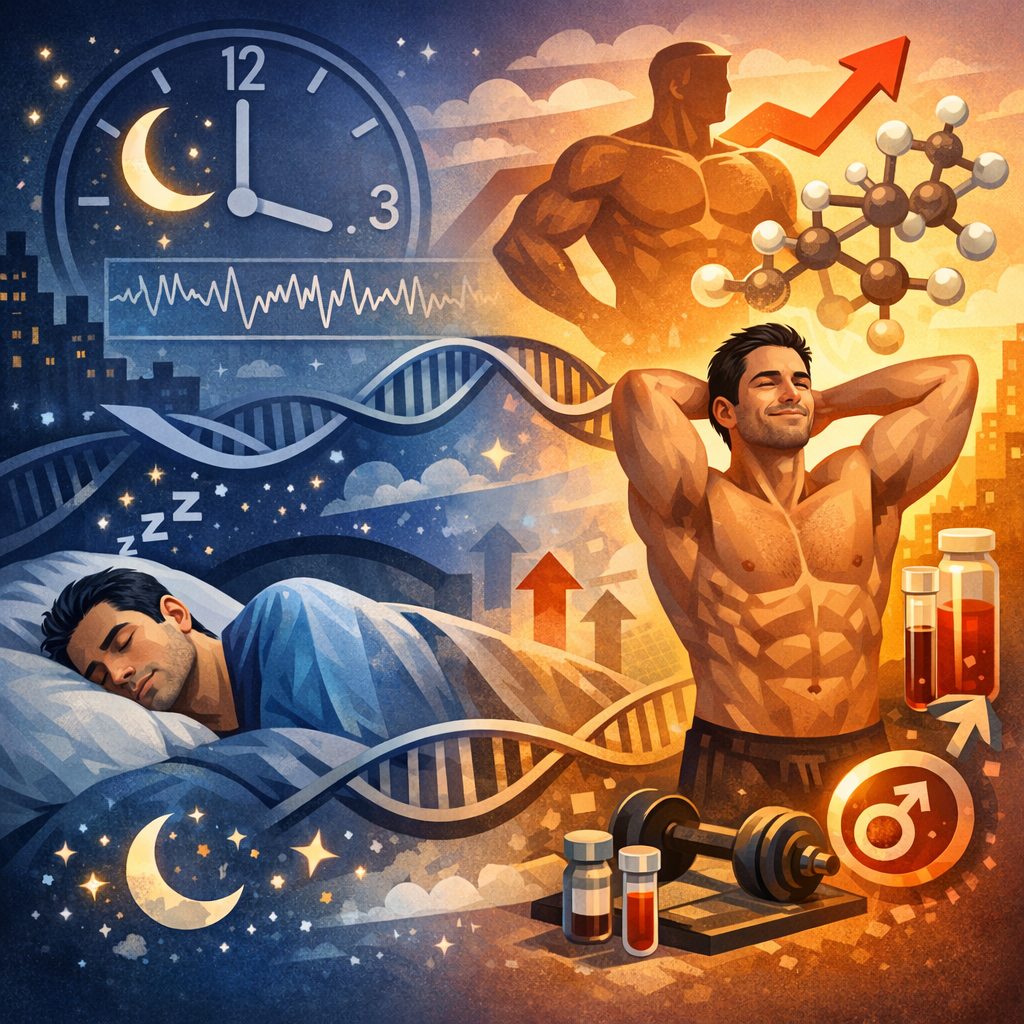
# Understanding the Complex Links Between Sleep Patterns and Testosterone Levels in Men’s Health
—
## Spotlight on Men’s Health: The Role of Sleep and Testosterone
Discussions about men’s health often emphasize the importance of diet and exercise, yet the significance of quality sleep sometimes gets overlooked, especially regarding testosterone. This essential hormone plays a key role in muscle mass, energy, mood, and sexual function. Emerging research reveals how sleep patterns greatly influence testosterone regulation. In this article, we’ll explore the biology of testosterone and sleep, examine the latest scientific findings, and offer practical strategies to optimize both. Dr. Matthew Walker, a renowned sleep expert, aptly remarks, “Sleep is the Swiss Army knife of health.”
## The Importance of Testosterone in Men’s Health
Testosterone is crucial to men’s health. It is the primary male sex hormone responsible for:
– Muscle growth and maintaining strength
– Ensuring bone density and joint health
– Libido and sexual performance
– Production of red blood cells
– Regulating mood and cognitive function
A decrease in testosterone can lead to fatigue, reduced libido, loss of muscle mass, mood swings, and even depression. Understanding the factors that influence testosterone production is vital for male health. Research from the National Institute of Health indicates that around 20% of older men suffer from low levels of this hormone.
## How Does Sleep Impact Hormonal Balance?
Deep sleep, particularly slow-wave sleep (SWS), is when testosterone production is most robust. During SWS, the pituitary gland releases luteinizing hormone (LH), which prompts the testes to produce testosterone. Just one night of poor sleep can reduce morning testosterone by up to 15%, while chronic sleep deprivation might cause a reduction of up to 40%. Those working night shifts or experiencing jet lag often report symptoms linked to decreased testosterone levels.
## Key Stages of Sleep and Hormone Release
– **Stage 1 (Light Sleep):** Transition phase with minimal hormone activity.
– **Stage 2 (Intermediate Sleep):** Brain wave activity slows, body temperature drops, and LH release starts increasing.
– **Stages 3 & 4 (Slow-Wave Sleep):** Peak LH and growth hormone release; testosterone synthesis is at its highest.
– **REM Sleep:** Important for memory consolidation and mood regulation, though hormonal shifts are more modest.
## Scientific Insights Into the Sleep-Testosterone Connection
Numerous studies highlight the link between sleep and testosterone:
– **University of Chicago Study (2011):** Young, healthy men restricted to five hours of sleep per night for a week experienced significant drops in daytime testosterone levels compared to those who slept for eight hours.
– **Veterans Administration Research (2015):** Veterans with obstructive sleep apnea (OSA) and fatigue showed significantly lower testosterone levels. Continuous positive airway pressure (CPAP) therapy improved both breathing and testosterone levels.
– **Harvard T.H. Chan School of Public Health (2018):** Men who extended their sleep from six to eight hours nightly for a month experienced a 10-15% increase in testosterone levels.
## Consequences of Poor Sleep and Low Testosterone
A decline in sleep quality can result in low testosterone, leading to:
– Decreased libido and sexual dysfunction
– Muscle loss and weight gain
– Mood disturbances, such as irritability, anxiety, and depression
– Cognitive impairments, affecting concentration, memory, and decision-making
– Increased cardiovascular risks due to the hormone’s role in regulating blood vessel function
## Practical Strategies to Optimize Sleep and Testosterone
Here are some evidence-based tips to enhance sleep quality and testosterone levels:
1. **Maintain a Consistent Sleep Schedule:** Go to bed and wake up at the same time daily to stabilize your circadian rhythm.
2. **Create a Sleep-Conducive Environment:** Keep the bedroom cool (60–67°F) and dark. Avoid screens an hour before bed or use blue-light filters.
3. **Practice Relaxation Techniques:** Engage in activities like reading, gentle yoga, or deep breathing exercises to wind down.
4. **Optimize Nutrition and Supplementation:**
– Consume balanced diets rich in healthy fats to support hormone production.
– Avoid caffeine after mid-afternoon.
– Consider magnesium or melatonin supplements after consulting with your healthcare provider.
5. **Incorporate Regular Exercise:** Resistance training and high-intensity interval training (HIIT) can boost testosterone. Aim for 150 minutes of moderate aerobic activity per week.
6. **Address Underlying Sleep Disorders:** Seek professional evaluation if sleep apnea or other disorders are suspected.
## Monitoring Progress and When to See a Doctor
Track your sleep using a journal or a wearable device, noting bedtime, wake time, and overall sleep quality. If issues persist despite consistent efforts over two to three months, consult an endocrinologist or sleep specialist. Blood tests and sleep studies can assess testosterone levels and diagnose sleep disorders.
## Conclusion: Prioritizing Sleep for Men’s Hormonal Health
Sleep is more than just a nightly pause; it’s integral to men’s hormonal health. Poor sleep can suppress testosterone, leading to numerous physical and mental challenges. By prioritizing consistent, quality sleep, balanced nutrition, regular exercise, and stress management, men can maintain healthy testosterone levels and enhance their overall well-being. Start by setting aside screens, enjoying a relaxing pre-sleep ritual, and allowing your body to rejuvenate for the better health you deserve.
—
**References**
– NIH Source
– Journal of Clinical Endocrinology & Metabolism, 2010
– University of Chicago Study, 2011
– Veterans Administration Research, 2015
– Harvard Study, 2018
– Journal of American Heart Association, 2017