

## Understanding Nocturia in Men: When Nighttime Urination Signals an Underlying Health Issue
### Introduction: The Silent Warning of Nocturia
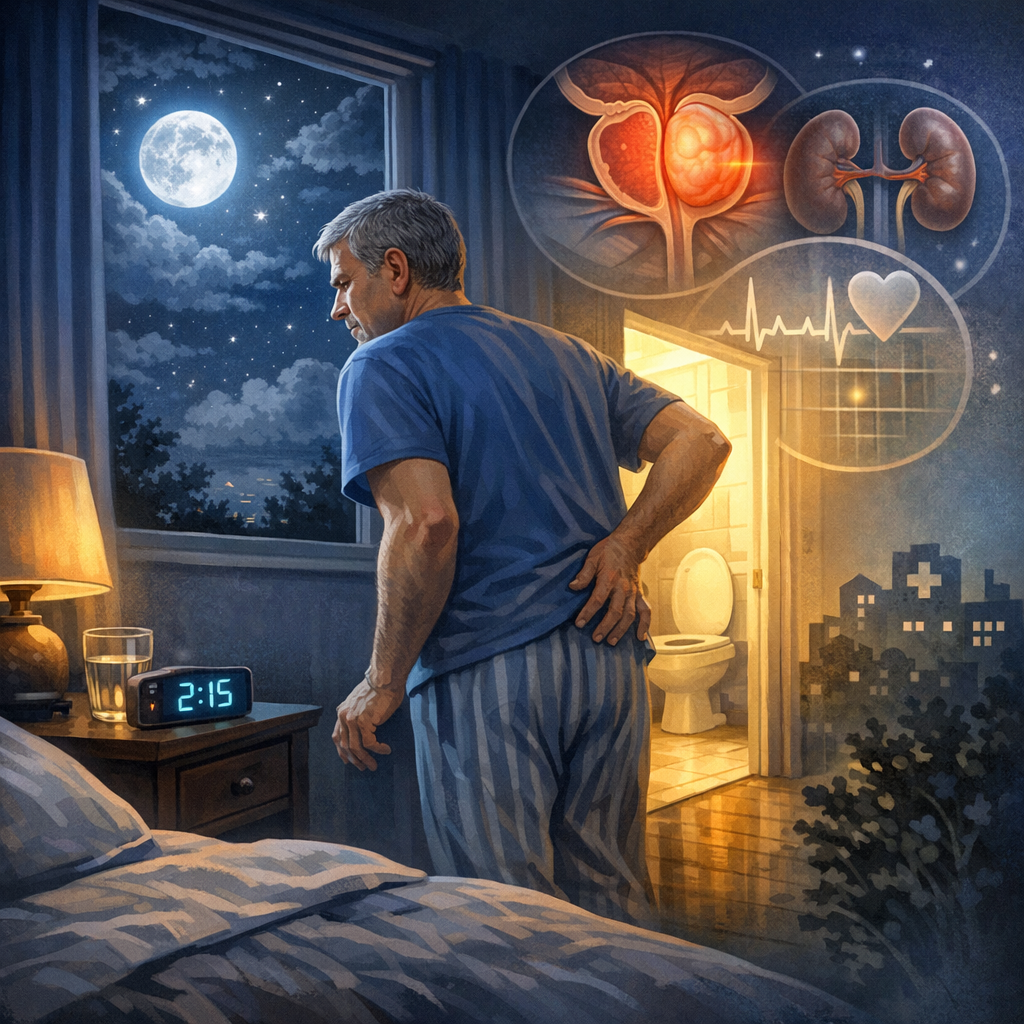
Waking up multiple times a night to urinate is not just a bothersome inconvenience; it may signal an underlying health issue. Medically known as nocturia, frequent nighttime urination affects millions of men globally, especially as they age. According to the Cleveland Clinic, nearly one-third of older adults experience nocturia. While occasional nighttime bathroom trips are normal, persistent disturbances can fragment sleep, reduce daytime productivity, and indicate issues such as benign prostate enlargement, heart disease, or diabetes. Dr. John Smith, a prominent urologist, emphasizes, “Nocturia can be an early warning sign for various health conditions, and addressing it promptly can lead to improved health outcomes.” In this article, we explore nocturia, its common causes in men, when to seek medical attention, and how it can be managed or treated.
### What is Nocturia?
Nocturia is characterized by waking at least once during the main sleep period to urinate. While a single interruption at night becomes more common with age, waking up two or more times should raise concerns. A study published in the Journal of Urology found that 41% of men over 60 experience two or more nighttime awakenings. The condition may arise from increased nighttime urine production, decreased bladder capacity, or a combination of both. Unlike simply getting older, nocturia can deteriorate sleep quality, increase falls in the elderly, and indicate chronic diseases that benefit from early intervention.
### Common Causes of Nocturia in Men
#### Age-Related Changes
As men age, both bladder capacity and elasticity decline. The kidneys may also produce more urine at night. While not inherently pathological, age-related nocturia can worsen when compounded by other factors such as medications or minor prostate enlargement. For instance, diuretics used for hypertension can increase the frequency of urination.
#### Enlarged Prostate (Benign Prostatic Hyperplasia — BPH)
BPH is a leading cause of nocturia in older men. As the prostate enlarges, it compresses the urethra, leading to urinary frequency, urgency, hesitancy, and nocturnal awakenings. Men with BPH often experience a slow urine stream and an incomplete emptying of the bladder. Dr. Alan White highlights, “Timely management of BPH can alleviate nocturia and enhance quality of life.”
#### Overactive Bladder
An overactive bladder results in sudden and uncontrollable urges to urinate. Though it can occur at any age, it becomes more prevalent due to age-related changes in bladder muscle and nerve function. The bladder muscle contracts involuntarily, creating an urgent need to urinate, even for small amounts of urine.
#### Diabetes and Metabolic Conditions
High blood sugar prompts the kidneys to excrete excess glucose, pulling more water into the urine and increasing its volume. Men with undiagnosed or poorly controlled diabetes may experience nocturia as an early warning sign. Similarly, conditions such as sleep apnea and uncontrolled hypertension may contribute to nighttime fluid shifts and increased urination.
#### Sleep Disorders
Sleep disorders like sleep apnea, restless legs syndrome, or insomnia can lead to multiple bathroom visits. Interrupted sleep causes awakenings, and upon waking, the urge to void—even if mild—becomes more pronounced. Treating the sleep disorder can sometimes alleviate nocturia. For example, continuous positive airway pressure (CPAP) therapy for sleep apnea can decrease nocturia by maintaining open airways.
#### Heart and Kidney Conditions
Congestive heart failure leads to fluid accumulation in the legs during the day. At night, when lying down, this fluid returns to the bloodstream and is processed by the kidneys, causing nocturia. Chronic kidney disease can also alter urine production patterns, prompting nighttime trips to the bathroom.
### When to See a Doctor
Consider scheduling a medical evaluation if you wake more than once per night to urinate for several consecutive weeks. Seek immediate medical attention if nocturia is accompanied by:
– Sudden onset of frequent urination
– Pain or burning during urination
– Blood in the urine
– Fever or chills
– Leg swelling or unexplained weight gain
– Significant daytime fatigue or drowsiness
These symptoms may indicate serious health issues that necessitate prompt intervention.
### Diagnosis and Tests
Your healthcare provider will begin with a comprehensive medical history and physical examination, focusing on urinary symptoms, medications, sleep patterns, and fluid intake. Common diagnostic tools include:
– **Bladder Diary**: A record of fluid intake, voiding times, and volumes over several days.
– **Urinalysis**: Screens for infection, blood, or glucose.
– **Blood Tests**: Checks kidney function, blood sugar, and PSA levels.
– **Imaging**: Ultrasound or other scans to assess the kidneys, bladder, and prostate.
– **Urodynamic Studies**: Measures bladder pressure, capacity, and flow rates.
– **Sleep Study**: Conducted if sleep apnea or another sleep disorder is suspected.
### Treatment Options
#### Lifestyle and Behavioral Changes
– **Limit Fluids Before Bedtime**: Avoid consuming large volumes two to four hours before sleep.
– **Reduce Caffeine and Alcohol**: Both substances can irritate the bladder and increase urine production.
– **Elevate Legs**: If fluid retention in the legs is an issue, prop your legs with pillows in the evening to reduce nighttime fluid shift.
– **Bladder Training**: Gradually increase the time between bathroom visits during the day to build bladder capacity.
#### Medications
– **Alpha Blockers**: Relax prostate and bladder neck muscles to improve urine flow in BPH.
– **5-Alpha-Reductase Inhibitors**: Shrink an enlarged prostate over several months.
– **Antimuscarinics or Beta-3 Agonists**: Calm an overactive bladder and reduce urgency.
– **Desmopressin**: A hormone analogue that decreases nighttime urine production, under close supervision to avoid low sodium complications.
#### Managing Underlying Conditions
– **Diabetes Control**: Tight glucose management through diet, exercise, and medications.
– **Heart Failure Treatment**: Diuretics, ACE inhibitors, or lifestyle modifications to reduce fluid overload.
– **Sleep Apnea Therapy**: CPAP devices can improve both sleep quality and nocturia.
### Conclusion: Taking Nocturia Seriously
Nocturia is not just an annoying nighttime ritual; it can signal that your body needs attention. While benign reasons like age-related bladder changes and mild prostate enlargement are common, persistent or severe nocturia warrants a thorough evaluation. According to the Mayo Clinic, many men can reduce the impact of nocturia through lifestyle modifications and medical treatments. By identifying underlying causes, adopting healthy habits, and pursuing appropriate treatments—ranging from lifestyle adjustments to targeted medications or therapies—many men can restore uninterrupted sleep, improve daily functioning, and protect long-term health. If you find yourself regularly waking up at night to urinate, don’t ignore it; reach out to your healthcare provider for a personalized plan that enhances both your nights and days.