

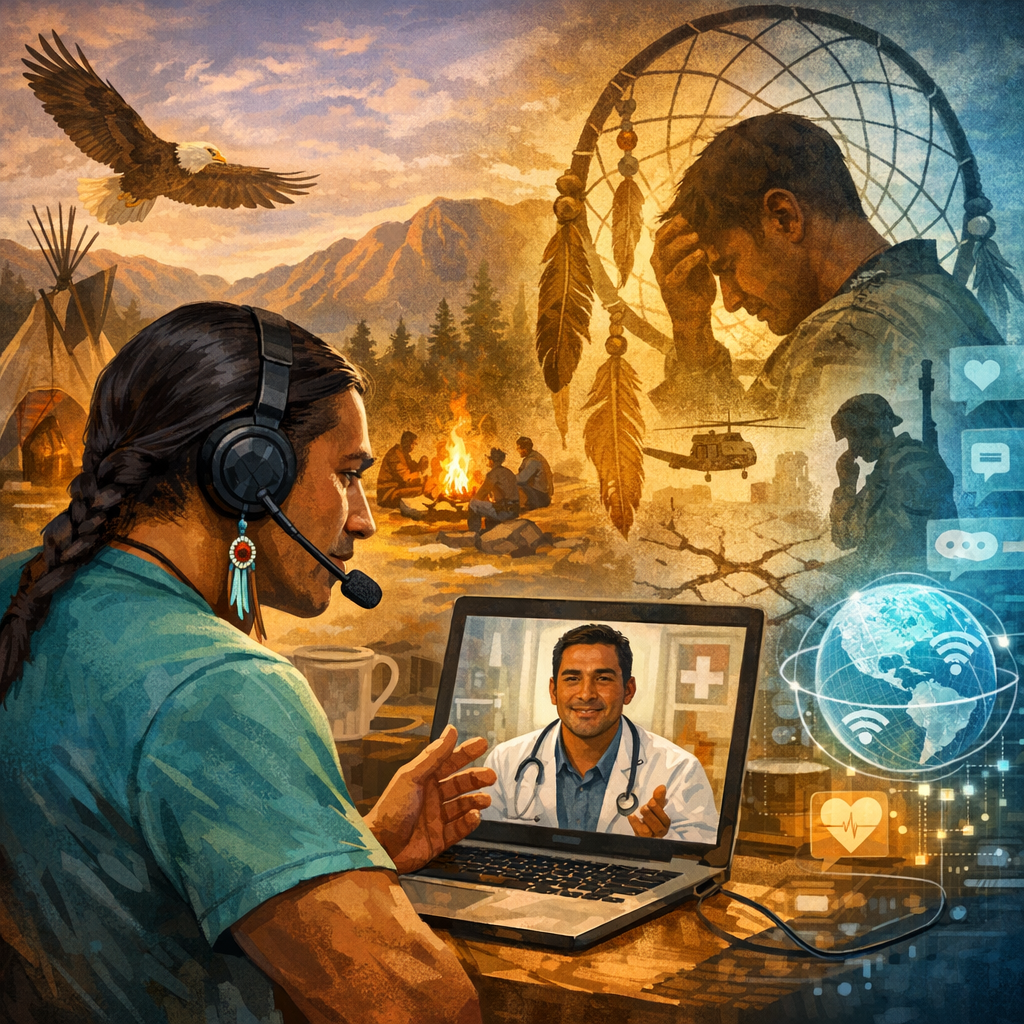
### Understanding Cultural Competency in Addressing PTSD in Indigenous Men through Telehealth Services
#### Introduction
Post-traumatic stress disorder (PTSD) is a serious mental health condition that affects many individuals who have survived violence, accidents, military service, and intergenerational trauma. According to the National Center for PTSD, about 8% of the U.S. population will experience PTSD at some point in their lives. Among Indigenous men, PTSD rates can be disproportionately high due to historical injustices, forced displacement, and systemic discrimination. Dr. Annita Lucchesi, an Indigenous researcher and activist, highlights, “It’s essential to understand the historical trauma faced by Indigenous communities for effective mental health interventions.” Telehealth—the delivery of health services through digital platforms—shows promise in bridging care gaps in remote or underserved regions. However, for telehealth to be truly effective, it must be grounded in cultural competency: an awareness of Indigenous histories, values, communication styles, and healing traditions. For example, incorporating culturally significant storytelling into therapy sessions can enhance engagement and comprehension. This article explores how culturally competent telehealth can address PTSD in Indigenous men and offers practical guidance for providers, emphasizing the critical role of respecting cultural traditions.
#### The Importance of Cultural Competency
Cultural competency involves more than just a respect for diversity; it requires providers to understand and integrate cultural worldviews, intergenerational values, and community priorities into clinical care. For many Indigenous men, health and healing are intrinsically linked to land, language, spirituality, and kinship. Leading psychologist Dr. Joseph Gone notes, “Cultural context shapes how individuals experience stress and recovery.” Failure to recognize these connections can result in mistrust, low engagement, and suboptimal outcomes. Key aspects include:
– **Historical Awareness**: Understanding residential schools, forced relocations, and assimilation policies helps providers appreciate the roots of collective and individual trauma.
– **Communication Styles**: Indirect speech, storytelling, and metaphors are often preferred over direct questioning. Providers should be comfortable with pauses and allow time for reflection.
– **Community-Centered Healing**: Group circles, consultations with elders, and land-based ceremonies are integral to resilience and recovery.
#### Opportunities and Challenges of Telehealth for PTSD
Telehealth can overcome barriers like geographic isolation, transportation costs, and workforce shortages. The American Psychological Association notes that telehealth has expanded access to mental health services by over 50%. Video conferencing, secure messaging, and phone consultations enable consistent follow-ups, psychoeducation, and culturally adapted therapies, such as imagery exercises involving sacred sites. Benefits include:
– **Increased Accessibility**: Men who work seasonal jobs or live in remote areas can schedule sessions without traveling long distances.
– **Anonymity and Privacy**: Telehealth can feel safer than in-person visits, especially in close-knit communities where stigma persists.
– **Continuity of Care**: Digital records and automated reminders help maintain engagement and follow treatment plans.
However, challenges must be addressed:
– **Technology Gaps**: Lack of reliable broadband or devices can block access; programs may need to supply tablets or partner with community centers.
– **Digital Literacy**: Elders or younger men unfamiliar with telehealth platforms require orientation sessions and easy-to-follow user guides.
– **Confidential Spaces**: Finding a private room at home can be difficult. Community health centers can provide dedicated telehealth kiosks.
#### Indigenizing Telehealth for PTSD Treatment
To build trust and ensure cultural safety, telehealth interventions for PTSD must be adapted in collaboration with Indigenous communities. Strategies include:
1. **Co-designing Programs**: Collaborate with local men’s groups, tribal councils, and elders to develop telehealth protocols and content. Their input ensures modules respect spiritual practices and utilize culturally meaningful examples.
2. **Integrating Traditional Healing**: Allocate time in sessions for smudging rituals, prayer, or the presence of a respected cultural advisor. Virtual land-based excursions, where clinicians guide clients in breathing exercises while showing sacred landscapes, can reinforce ties to the land.
3. **Language Access**: Offer services in the client’s first language or involve interpreters who understand cultural connotations.
4. **Strength-Based Approaches**: Focus on resilience, family bonds, and community stories of survival rather than solely on symptoms.
#### Practical Strategies for Providers
Clinicians and telehealth coordinators can implement these best practices:
– **Pre-Session Cultural Briefings**: Review community histories and relevant clan or tribal protocols before meeting clients.
– **Flexible Scheduling**: Recognize seasonal ceremonies, hunting seasons, and community events; ensure appointment times honor these commitments.
– **Trauma-Informed Technology Use**: Send technology check reminders, explain privacy measures, and confirm the client’s comfort with recording sessions if necessary.
– **Interdisciplinary Teams**: Collaborate with community health representatives, traditional healers, and peer mentors who bridge the gap between Western therapy and Indigenous supports.
#### Community and Cultural Integration
Sustainable telehealth programs extend beyond individual sessions by building infrastructure and relationships:
– **Telehealth Hubs**: Equip organization offices, friendship centers, or rural clinics with secure telehealth suites. This communal setting reduces isolation and allows on-site staff to assist with technology.
– **Training and Mentorship**: Provide ongoing cultural competency workshops for mental health professionals and recruit Indigenous clinicians or paraprofessionals.
– **Evaluation with Indigenous Metrics**: Use outcome measures shaped by community definitions of wellness—such as reconnection to land, strength in family roles, or participation in ceremonial life—alongside standard PTSD scales.
#### Conclusion
Culturally competent telehealth represents a transformative approach to addressing PTSD in Indigenous men’s health. By appreciating historical context, co-designing services with communities, blending traditional and clinical practices, and ensuring equitable access to technology, providers can enhance engagement, reduce symptoms, and foster long-term resilience. As telehealth continues to expand, integrating cultural competency is not just a best practice but an ethical imperative and a pathway to healing rooted in respect, collaboration, and shared purpose.