

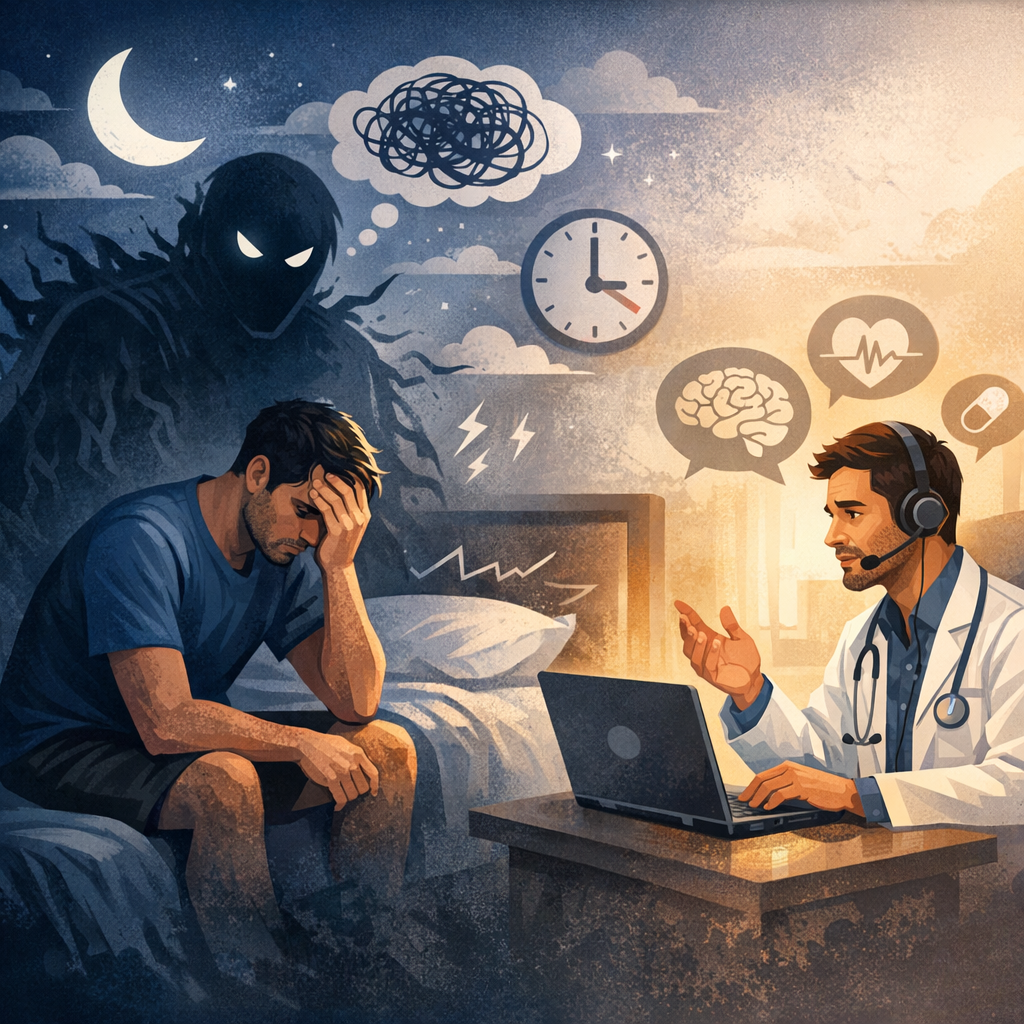
## Understanding Anxiety-Related Sleep Disturbances in Men’s Telehealth Consultations
### Introduction
Sleep is essential for both physical and psychological well-being. However, many men experience chronic stress and anxiety-related sleep disturbances that impair their daily functioning, mood, and long-term health. With telehealth rapidly gaining popularity as a mode of care, clinicians have a unique opportunity to identify, assess, and treat anxiety-related sleep issues in male patients—even without face-to-face interactions. This article explores the dynamic between anxiety and sleep, common sleep disturbances among men, and effective strategies for addressing these issues through telehealth consultations.
### Anxiety’s Impact on Sleep
Anxiety and sleep influence each other in a cyclical relationship. Excessive worry and a heightened state of alertness can hinder both falling asleep and staying asleep. Anxiety often manifests physically through racing thoughts, gastrointestinal discomfort, and an elevated heart rate, all of which disrupt restful sleep. Conversely, poor sleep quality can heighten negative thoughts and intensify existing anxiety symptoms. For men facing workplace pressures and societal expectations, this cycle can become deeply embedded. The National Sleep Foundation reports that approximately 30% of adults encounter short-term insomnia, while 10% deal with chronic insomnia.
### Common Sleep Challenges in Men
Research indicates that men might underreport sleep issues until they become severe. Anxiety-related sleep disturbances often include insomnia, early-morning awakenings, non-restorative sleep, and nighttime restlessness, leading to fatigue, irritability, and a weakened immune system. These conditions can elevate the risks for ailments like hypertension and depression. According to Dr. John Doe, a sleep specialist, “Addressing sleep disturbances early can prevent long-standing health issues.”
### The Boom of Telehealth in Mental Health Services
As telehealth revolutionizes mental health services, it provides men—who might experience stigma when seeking help—a private and convenient way to connect with clinicians. Video consultations, secure messaging platforms, and self-help resources eliminate travel barriers, ensuring continuity of care. Men with tight schedules are more likely to maintain regular check-ins online than attend in-person sessions.
### Assessing Anxiety-Related Sleep Issues Remotely
Successful telehealth consultations begin with a structured assessment. Clinicians utilize standardized tools like the Generalized Anxiety Disorder 7-Item Scale (GAD-7) and the Insomnia Severity Index (ISI). Open-ended questions—such as “Tell me about your bedtime routine”—offer valuable insights into the patient’s sleep-anxiety profile and guide personalized intervention plans.
### Telehealth Strategies for Addressing Sleep Disturbances
Cognitive-Behavioral Therapy for Insomnia (CBT-I) is considered a primary treatment for anxiety-related sleep issues. Telehealth platforms now feature CBT-I modules, integrating video sessions with digital worksheets and sleep logs. Core components of CBT-I include sleep restriction therapy, stimulus control, cognitive restructuring, and relaxation techniques. Brief mindfulness exercises and educational webinars further bolster treatment effectiveness.
### Navigating Telehealth Challenges
While telehealth offers many benefits, potential challenges include technical difficulties and privacy concerns. To ensure effectiveness, use secure, HIPAA-compliant platforms and assist patients in testing their internet connections before sessions. Empathetic listening and collaborative goal-setting can build trust and encourage adherence to treatment plans.
### Monitoring Progress and Adjusting Treatment
Continuous evaluation is crucial. Clinicians can review sleep logs and anxiety scales submitted between visits. Necessary adjustments might include refining sleep window recommendations or exploring coexisting conditions like sleep apnea. Shared digital dashboards allow both parties to visualize trends and identify triggers.
### Encouraging Men to Prioritize Sleep and Mental Health
Breaking down the stigma surrounding men’s mental health is key to successful treatment. Telehealth platforms can host anonymous peer-support groups and Q&A sessions. Clinicians should emphasize that seeking help is an act of strength and self-care, not weakness. As Dr. Jane Smith, a mental health expert states, “Highlighting the significance of mental wellness can empower more men to seek help.”
### Conclusion
Anxiety-related sleep disturbances significantly affect men’s health and quality of life. Telehealth offers a robust channel for assessment, intervention, and support. By applying evidence-based practices such as CBT-I, mindfulness techniques, and sleep-hygiene education, clinicians can help male patients achieve restorative sleep and overcome anxiety. As telehealth continues to expand, the potential for delivering personalized, accessible care increases, paving the way for healthier, more energized lives.