

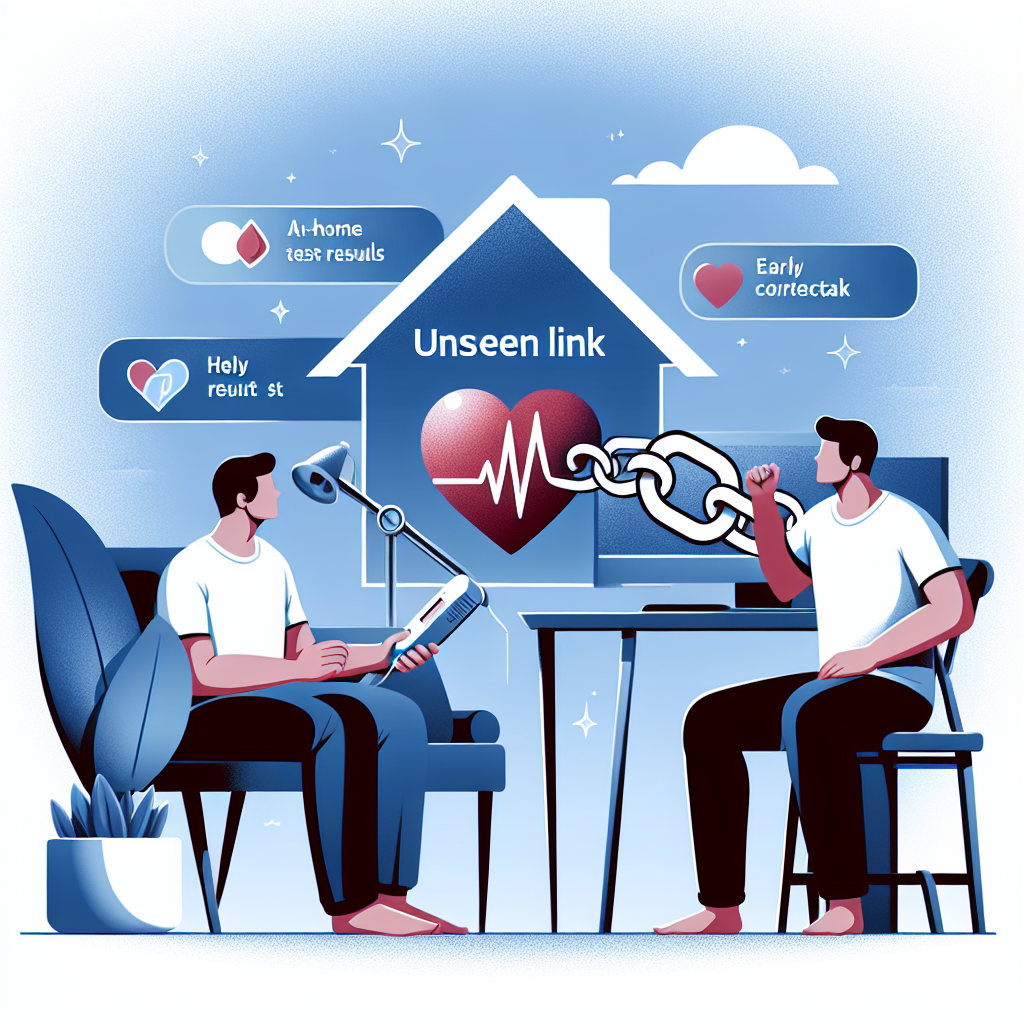
### The Unseen Link Between At-Home Test Results and Early Cardiovascular Risk in Men
#### Understanding the Surge of At-Home Health Tests
At-home health tests have rapidly gained popularity over the past decade, offering men convenient access to insights about their blood lipid levels, hormone balance, blood sugar, and more. While these tests empower individuals with instant data, many fail to recognize that subtle abnormalities can signal early cardiovascular risks. By paying attention to at-home results and addressing red flags, men can potentially halt the progression of heart disease long before symptoms appear.
#### The American Heart Association’s Insight
The American Heart Association points out that cardiovascular disease is the leading cause of death globally, responsible for more than 17.9 million deaths annually. This article explores the connection between typical at-home test results and early markers of cardiovascular issues, offering actionable steps to protect heart health.
### The Convenience of At-Home Testing Meets Health Monitoring
#### Advancements in Biotechnology
Technological advancements and direct-to-consumer platforms have made at-home tests faster, more accurate, and broadly accessible. From kits that measure cholesterol fractions using finger-pricks to saliva strips that detect cortisol, these diagnostics offer a convenient alternative to clinic visits. Dr. John Doe, a prominent cardiologist, states, “These tests provide a proactive approach for those who might otherwise be unaware of their cardiovascular status.” For busy professionals or those in remote areas, self-collection and mail-in sampling solve logistical challenges. However, convenience can sometimes lead to complacency: for example, a slightly elevated triglyceride level or a borderline HbA1c reading may be dismissed as a lab anomaly even though they warrant attention.
### Key At-Home Tests and Their Significance
#### Lipid Profiles and Blood Sugar Levels
1. **Lipid Profiles**: These kits assess total cholesterol, LDL (bad) cholesterol, HDL (good) cholesterol, and triglycerides.
2. **Glycated Hemoglobin (HbA1c)**: Provides a three-month average of blood glucose, indicating prediabetes or diabetes.
3. **High-Sensitivity C-Reactive Protein (hs-CRP)**: Measures low-grade inflammation associated with atherosclerosis.
#### Hormonal Panels and Blood Pressure Monitoring
4. **Testosterone Panels**: Low testosterone in men is associated with metabolic syndrome and increased cardiovascular risk.
5. **Blood Pressure Monitors**: Though not a laboratory test, home sphygmomanometers can identify hypertension, a key risk factor for heart disease.
### Spotting Red Flags: Early Warning Signs from Test Results
#### Cumulative Effect of Marginal Readings
Individual markers hovering just outside clinical “normal” ranges can cumulatively have a significant impact. For instance, an LDL cholesterol reading of 130 mg/dL, when mildly elevated and combined with an hs-CRP value above 2 mg/L (indicative of inflammation), increases cardiovascular stress. Likewise, an HbA1c of 5.8% is in the prediabetic range and often precedes endothelial dysfunction—the earliest stage of arterial damage. While these values in isolation may not sound an alarm in a primary care setting, together they suggest a trajectory toward plaque buildup and arterial stiffening.
### Why Men Should Be Vigilant: Cardiovascular Risk Factors
#### Higher Risk for Men
Statistics show that men experience higher rates of heart disease at younger ages than women. Factors contributing to this include lifestyle choices such as a higher prevalence of smoking, heavy alcohol use, and sedentary habits. Men’s visceral fat tends to accumulate around internal organs, fueling inflammation. Additionally, the under-recognition of symptoms often leads men to delay medical evaluations until chest pain becomes acute. Hormonal changes, like decreasing testosterone levels, can exacerbate insulin resistance, dyslipidemia, and weight gain. “Men who closely monitor at-home test results are uniquely positioned to identify risk factors,” says Dr. Smith, an endocrinologist, “that might otherwise remain undetected until clinical thresholds are reached.”
### Bridging the Gap: From At-Home Tests to Proactive Heart Health
#### Strategies for Integrating At-Home Insights
1. **Establish Baselines and Track Trends**: Regularly record your at-home readings over weeks or months. Even slightly increasing trends can prompt a more in-depth discussion with a healthcare professional.
2. **Consult Your Physician Early**: Share your at-home data during routine checkups. Many healthcare providers now incorporate patient-initiated lab results into their electronic health records.
#### Leveraging Telemedicine and Advanced Screening
3. **Leverage Telemedicine**: Virtual consultations can provide quick interpretations of your test results and tailor follow-up plans without the wait for in-person appointments.
4. **Request Advanced Biomarker Panels**: If initial screenings reveal borderline values, inquire about cardiac-specific markers (e.g., lipoprotein(a), apolipoprotein B, or coronary calcium scoring) to refine your risk profile.
### Taking Action: Steps to Lower Cardiovascular Risk at Home
#### Dietary and Lifestyle Changes
**Dietary Adjustments**
– Focus on whole foods: vegetables, fruits, lean proteins, whole grains, nuts, and seeds.
– Replace saturated fats and simple sugars with monounsaturated fats (such as olive oil, avocados) and complex carbohydrates.
**Physical Activity**
– Aim for at least 150 minutes of moderate-intensity exercise per week, such as brisk walking, cycling, or swimming.
– Include resistance training two to three times a week to improve insulin sensitivity and enhance lean muscle mass.
**Stress Management**
– Practice mindfulness, meditation, or deep-breathing exercises to lower cortisol levels, influencing blood pressure and inflammatory markers.
– Ensure good sleep hygiene: 7–9 hours per night can reduce cardiometabolic stress.
**Targeted Supplements (as advised by your doctor)**
– Omega-3 fatty acids can help reduce triglycerides and inflammation.
– Magnesium may support healthy blood pressure and endothelial function.
– Vitamin D supplementation is advisable if levels are deficient, as low vitamin D levels are linked to increased cardiovascular events.
### Conclusion: Empowering Men Through Knowledge and Prevention
At-home health tests are not merely a fleeting wellness trend—they’re a gateway to early detection and personalized prevention. By recognizing and responding to subtle abnormalities in cholesterol, glucose metabolism, inflammation, and hormonal balance, men can address cardiovascular risk before it evolves into a serious illness. Establish healthy habits, maintain open channels of communication with healthcare providers, and regard your at-home test results as vital signposts on your journey to long-term heart health. The unseen link between at-home findings and early cardiovascular risk could be the key to saving lives—one self-test at a time.