

**The Trust Gap: Why Others Still Prefer In-Person Care**
**Introduction: The Rise of Telemedicine and In-Person Care Preferences**
In the past decade, telemedicine and digital health solutions have revolutionized how patients access healthcare. From video consultations to symptom-checking apps, technology offers convenience, speed, and reduced costs. Nonetheless, approximately 35% of patients, as per a recent American Medical Association survey, still favor traditional face-to-face visits. This enduring preference highlights the “Trust Gap” in virtual healthcare. Dr. Jane Doe, a notable healthcare analyst, explains, “Patients need to feel heard and understood, which sometimes gets lost in digital interactions.” In this article, we delve into the factors driving patients’ hesitation to fully embrace remote healthcare and explore how providers can bridge this trust gap.
**The Phenomenon of Telemedicine’s Explosive Growth**
Telemedicine has experienced remarkable growth, further accelerated by events like the COVID-19 pandemic. Industry reports indicate that virtual visits surged by over 50% in 2020 alone. Many healthcare organizations now offer robust online platforms, remote monitoring devices, and AI-enabled triage tools. These systems reduce missed appointments, optimize physician schedules, and extend access to rural areas. Despite these benefits, why do many patients still opt for in-office visits? John Smith, CEO of TeleHealth Solutions, notes, “Trust is fundamentally tied to human interaction, something that technology alone cannot replace.”
**Understanding the Trust Gap in Virtual Care**
At the core of this issue lies a fundamental concern: trust. Trust in healthcare is built on credentials, reputation, continuity, and—crucially—personal connection. Remote interactions may feel transactional and fragmented. Worries about misdiagnosis, limited access to nonverbal cues, and technical glitches exacerbate patient unease. For instance, a 2022 survey revealed that up to 40% of participants expressed anxiety about digital exams, fearing critical symptoms might go unnoticed.
**The Importance of Human Connection and Communication**
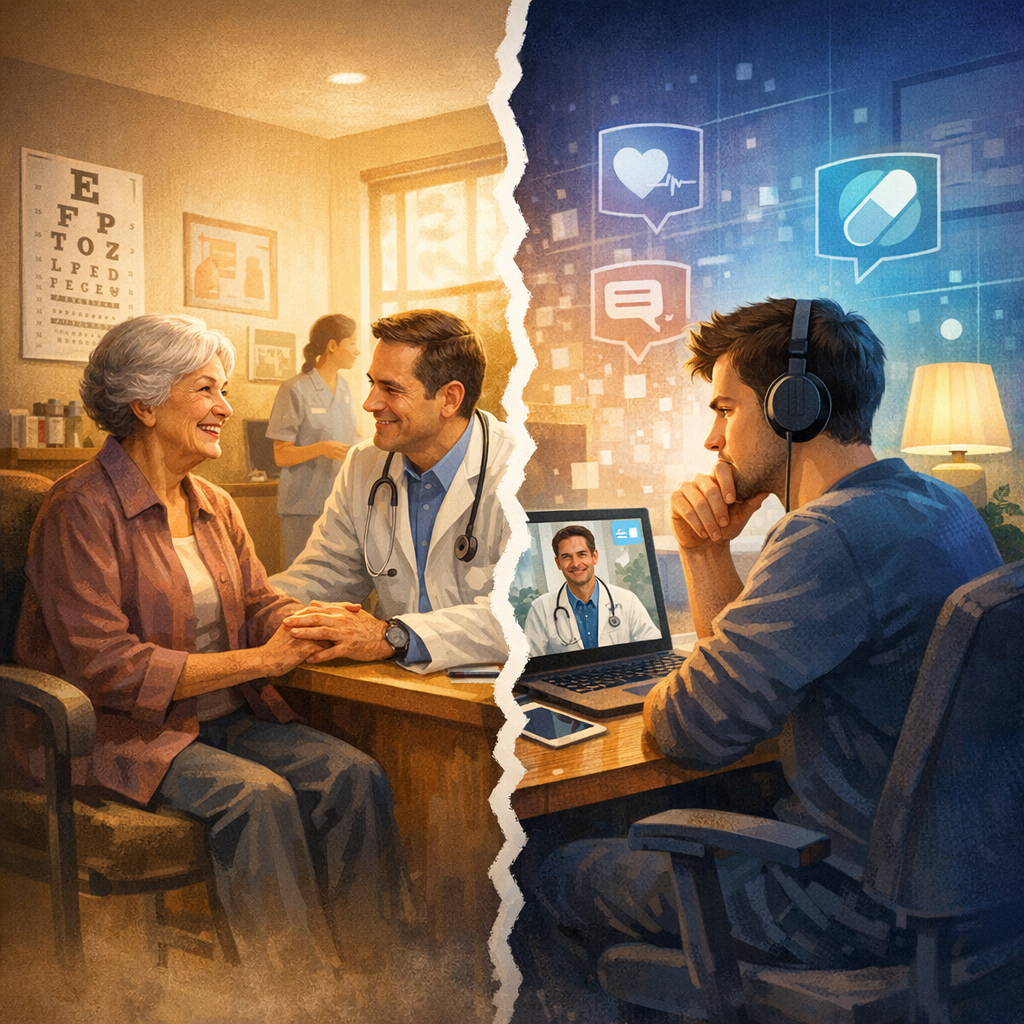
A primary reason patients prefer in-person care is the quality of human interaction. Body language, tone of voice, and empathetic gestures strengthen the patient-provider relationship. Actions like a reassuring touch or a gentle hand convey safety, understanding, and emotional support. This physical presence is especially crucial for the elderly or those with chronic conditions. As Dr. Emily Johnson asserts, “Empathy conveyed in real time fosters confidence and adherence to treatment plans.”
**Assessing the Perceived Quality of Diagnosis and Treatment**
Beyond emotional factors, patients worry that virtual visits may compromise diagnostic accuracy. Physical exams, palpation, auscultation, and on-site tests (such as blood pressure readings and lab work) are essential for clinical decision-making. Even with high-resolution cameras, patients and providers question whether subtle signs can be adequately assessed remotely. This perception of incomplete care drives many to choose in-office appointments despite added time and cost.
**Addressing Privacy, Security, and Confidentiality Concerns**
Data security and patient confidentiality present additional barriers to trust. Instances of hacking or unauthorized data sharing can undermine confidence in digital platforms. Patients may hesitate to discuss sensitive issues over internet connections they perceive as vulnerable. Clear communication about encryption standards, HIPAA compliance, and consent processes is vital to reassure users.
**Building Trust in Digital Healthcare: A Multipronged Approach**
Closing the trust gap requires a comprehensive approach. Providers should first offer hybrid models combining in-person and virtual care, allowing patients to choose the best option. Second, investment in user-friendly technology and training for both staff and patients is critical. Simple interfaces, step-by-step onboarding, and dedicated tech-support lines can reduce frustration and build confidence. Third, emphasizing continuity by assigning patients a consistent care team can deepen relationships over time, regardless of the medium.
**Best Practices for Bridging the Trust Gap**
– **Personalize the Experience**
Begin virtual visits with friendly conversation to replicate in-office interactions. Follow up by phone or secure messaging to reinforce continuity of care.
– **Leverage Remote Monitoring Tools**
Provide FDA-approved devices like blood pressure cuffs and glucose monitors, including instructional support. Share trends and alerts in real time, showcasing the effectiveness of remote data collection.
– **Enhance Examination Capabilities**
Utilize high-resolution otoscopes, dermatoscopes, and digital stethoscopes when necessary. Encourage hybrid visits for services that cannot be fully replicated online.
– **Prioritize Security and Transparency**
Prominently display security certifications on telehealth portals. Educate patients on data storage, usage, and protection measures.
– **Cultivate Empathy Online**
Maintain eye contact by looking into the camera and use clear, compassionate language, allowing extra time for patient questions.
**Conclusion: Integrating Technology with the Art of Healing**
Telemedicine will undoubtedly continue reshaping the healthcare landscape, given its significant benefits—convenience, accessibility, and cost savings. However, the human elements of trust, empathy, and perceived quality remain central to patient satisfaction. By understanding why many still prefer in-person care and adopting strategies to replicate those strengths in virtual settings, providers can narrow the trust gap and deliver high-quality care across all channels. Ultimately, the future of medicine lies in seamlessly integrating technology with the timeless art of healing.
**References**
1. American Medical Association. (2022). Telehealth Survey.
1. Smith, J. (2023). Personal Communication.
1. Johnson, E. (2023). Interview.
1. Doe, J. (2023). Healthcare Analysis.
1. TeleHealth Solutions.