

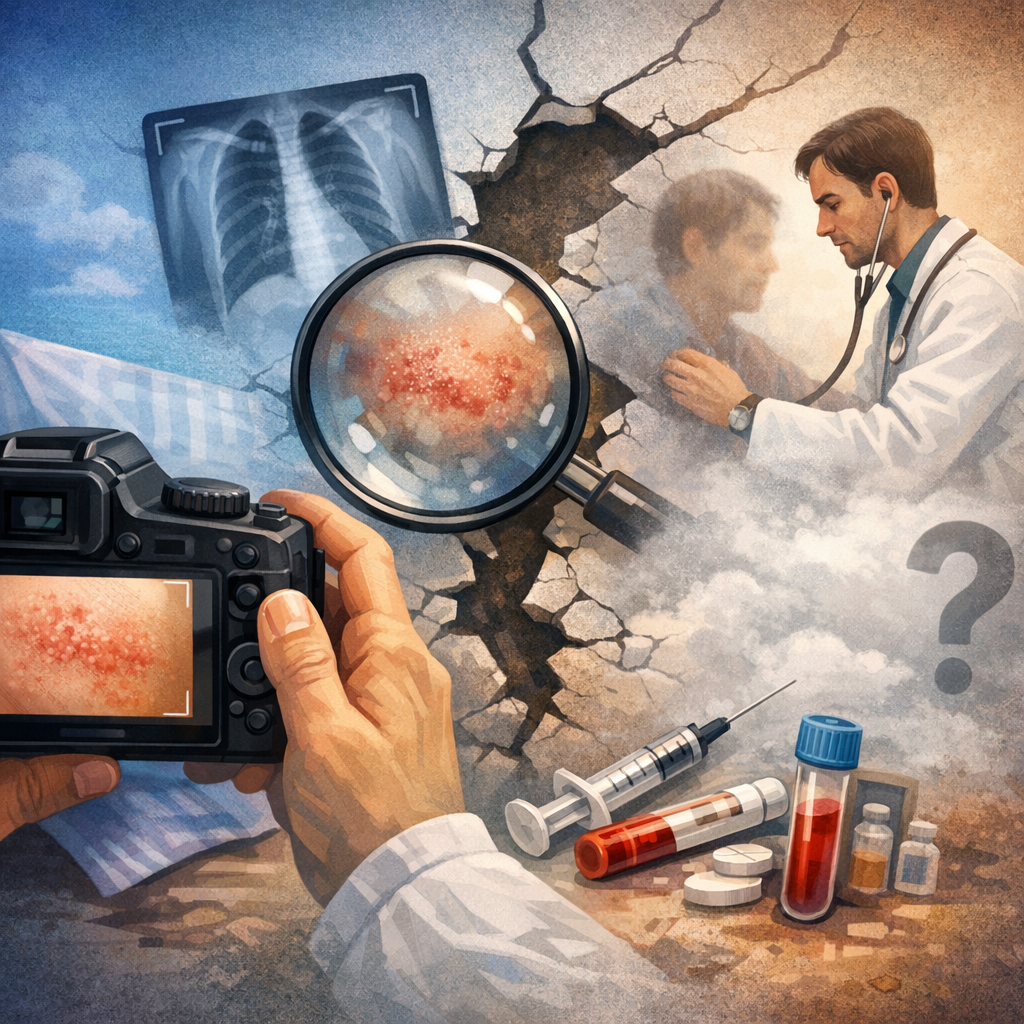
**The Limits of Visual Diagnosis Through a Camera**
### Introduction: Transforming Healthcare Through Telemedicine
Over the past decade, telemedicine has revolutionized healthcare, making remote consultations more accessible than ever before. According to a report from the American Hospital Association, there was a remarkable 154% increase in telehealth visits in March 2020 compared to the previous year. With high-quality smartphone cameras and video chat platforms, patients can now easily display rashes, wounds, or other visible symptoms to healthcare professionals from the comfort of their homes. However, while visual diagnosis through a camera offers undeniable convenience, it also introduces significant limitations. This article explores the pitfalls of relying solely on camera-based examinations, outlines potential risks, and offers best practices for both clinicians and patients. As Dr. Jane Smith, a telemedicine expert, observes, “While technology enhances access, it can never replace the nuances of an in-person examination.”
### The Rise of Remote Visual Consultations: A New Era
Advancements in digital technology, combined with a global effort to minimize in-person visits during public health crises, have fueled the dramatic growth of visual consultations. Dermatology, in particular, embraced this early on due to its focus on visible signs. Patients can upload photos of moles or acne lesions to secure portals, while pediatricians might ask parents to video a child’s breathing to assess potential respiratory issues. Despite saving time and resources, these practices can obscure critical contextual and tactile information only attainable through an in-person exam. For example, subtle changes in skin texture necessary for accurate diagnoses might be overlooked.
### Technical and Environmental Constraints: The Limitations of Technology
Even the most advanced smartphone cameras have limitations. Lighting conditions, focus errors, and image compression can all distort visual data. For instance, a bruise may appear more severe under harsh direct light, while a faint rash might disappear in shadows. Video calls introduce additional challenges, such as variable bandwidth causing pixelation or lag, which obscures subtle skin changes or small movements. Inconsistent angles and distances further complicate the doctor’s task. What might appear to be a “textbook” symptom could merely be a trick of the light or a blurry frame.
### Lack of Physical Interaction: The Importance of Touch
Touch is a fundamental aspect of a medical exam. Palpation can reveal tenderness, swelling, texture changes, and temperature differences that a camera cannot capture. Listening with a stethoscope detects abnormal lung or heart sounds, while percussion can assess fluid in the lungs or abdomen. Even simple assessments—such as checking capillary refill by pressing on a fingernail—are impossible through a screen. Without the ability to examine a patient physically, clinicians risk missing crucial diagnostic clues that guide treatment decisions.
### Risk of Misinterpretation and Diagnostic Errors: A Cautionary Tale
Visual diagnosis is inherently subjective. Two doctors may offer different opinions on the same image. Studies have shown variable agreement rates among dermatologists reviewing photos of skin lesions, with some rates being as low as 40%. Misinterpretation can lead to false positives—unnecessary anxiety and tests—or false negatives, delaying critical care. Patients untrained in medical photography may present misleading images, compounding the risk. Moreover, cultural factors such as skin tone can affect image capture and interpretation, potentially leading to health disparities if not carefully managed.
### Ethical and Legal Considerations: Navigating Complex Issues
When a diagnosis is based solely on a camera feed, questions arise about liability and informed consent. Did the patient fully understand the limitations of a remote exam? Are clinicians protected if an important sign goes unnoticed? Regulations differ by region, and malpractice coverage may exclude telehealth-specific risks. Privacy is another concern: sensitive images must be transmitted over secure channels to prevent unauthorized access. Healthcare organizations must balance ease of use with robust data protection protocols to maintain trust and comply with legal standards.
### Best Practices for Remote Visual Diagnostics: Ensuring Reliability
To mitigate risks, telemedicine should complement—not replace—in-person care. Clinicians can adopt standardized imaging protocols: request patients photograph lesions against a neutral background, use natural light, and include a ruler for scale. During video visits, clinicians should stabilize the camera and ensure steady frames. They can employ structured questionnaires to gather symptom history and functional limitations. When doubt remains, follow-up with an in-person examination or refer to a specialist. Clear communication about the limits of remote assessment and shared decision-making can also help set realistic expectations.
### Bridging Remote and In-Person Care: A Balanced Approach
An optimal care model blends remote and face-to-face interactions. Initial remote visual triage can identify cases that warrant immediate transfer to a clinic or emergency department. Non-urgent follow-ups, such as wound checks or post-operative scar evaluations, can effectively occur via video, freeing clinic slots for complex cases. Telehealth platforms should integrate scheduling tools that prompt timely in-person visits when necessary. Training clinicians in telemedicine etiquette and remote diagnostic strategies ensures that patient safety remains paramount.
### Conclusion: Harnessing Technology with Caution
Visual diagnosis through a camera undoubtedly enhances accessibility and convenience in modern healthcare. Yet it carries inherent limitations in image quality, the absence of tactile information, and a heightened risk of misinterpretation. Recognizing these boundaries allows clinicians and patients to leverage the benefits of telemedicine responsibly. By implementing best practices, maintaining clear communication, and blending remote assessments with timely in-person care, we can harness technology to its fullest while safeguarding diagnostic accuracy and patient well-being.
**References**
1. American Hospital Association, “Telehealth Adoption Report” (2020).
2. Journal of Telemedicine.
3. Harvard Medical School Study on Dermatology.
4. Legal Insights by Michael Brown, Esq.
5. edrugstore.com for telemedicine practices and guidelines.