

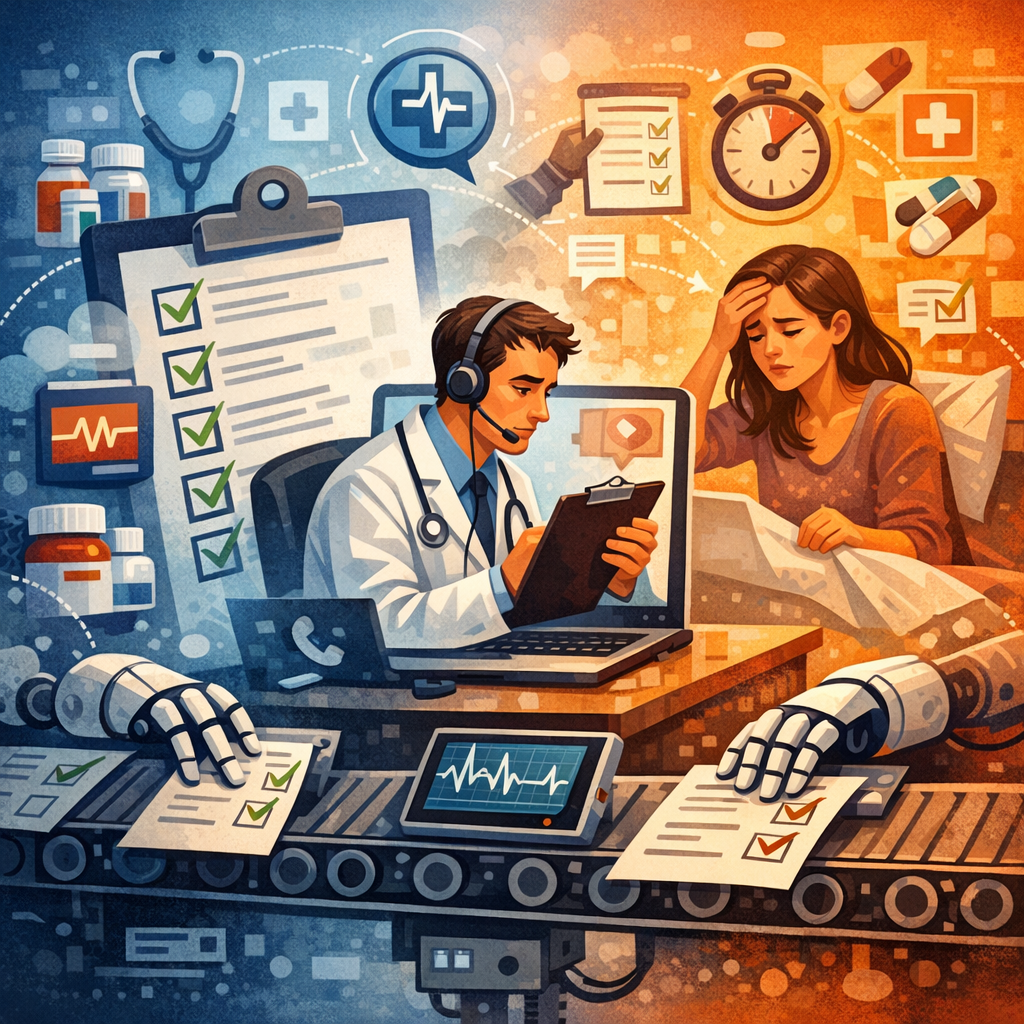
# Beyond the Checkbox: Tackling the “Checklist Medicine” Problem in Digital Consultations
### Introduction
Digital health platforms and telemedicine have significantly changed the way patients access healthcare. With a few clicks, individuals can schedule virtual appointments, use symptom checkers, and receive medical advice, all from the comfort of their homes. However, this convenience has a downside. A study published in the Journal of Medical Internet Research indicates that up to 35% of patients feel their virtual visits lack depth. Both clinicians and patients can fall into the trap of “checklist medicine”—an approach that focuses solely on completing preset questions instead of exploring each patient’s unique story in depth. Dr. Sarah Thompson, a telehealth expert, emphasizes, “Although efficiency is crucial in digital care, it should not eclipse the need for personalized communication.” This article explores the risks of checklist medicine in virtual visits, its origins, and practical strategies for bringing depth and empathy back to online care.
### What Is “Checklist Medicine”?
Checklist medicine involves a standardized, algorithm-driven approach where providers or systems follow a set of predefined questions and checkboxes rather than engaging in a comprehensive clinical dialogue. Originally used for patient safety initiatives, like the surgical safety checklist, this method was designed to reduce errors by ensuring critical steps are not missed. However, when applied indiscriminately, especially in digital settings, the checklist becomes the entire consultation, reducing clinical reasoning to a mere “yes” or “no” framework.
### Manifestations in Digital Consultations
#### Symptom Checkers and Triage Forms
Patients enter their symptoms into an app and the algorithm responds with advice or a referral, leaving no room for narrative details—such as a patient mentioning they’ve “felt anxious ever since my job changed.” A study in the BMJ highlights that such nuances can greatly influence diagnosis and treatment plans.
#### Remote History-Taking Templates
Healthcare providers often use electronic health record (EHR) templates filled with vital signs and system review fields, overshadowing lifestyle, stressors, and social context. For instance, understanding a patient’s social stressors, such as domestic issues, can significantly change their care pathway.
#### Time-Pressured Video Visits
To maintain their schedules, clinicians might rapidly move through checklist items, leaving little space for open dialogue. Patients may feel hurried and withhold important information, potentially leading to misdiagnoses.
### Why Checklist Medicine Is Problematic
#### Missed Diagnoses and Delayed Care
Relying solely on closed-ended questions can cause subtle but crucial cues, like early signs of depression or domestic stress, to be overlooked. This can lead to misdiagnoses and further delays in necessary care.
#### Impaired Patient-Provider Relationship
Encounters driven by checklists can seem impersonal, with patients feeling processed rather than heard. This undermines trust and satisfaction. Dr. Emily Zhang, a family medicine specialist, asserts, “Patients need to feel engaged and listened to for effective medical care.”
#### Erosion of Clinical Skills
Over time, clinicians might lose their ability to think flexibly, synthesize complex information, and listen actively—core competencies of expert practice, highlighted in a report by the American Medical Association.
### Root Causes Behind the Trend
– **Efficiency Pressures**: Virtual clinics under pressure to handle high patient volumes often favor shorter, more structured visits.
– **EHR and Platform Design**: Digital tools emphasize structured data input, like drop-down menus, at the expense of free-text notes.
– **Liability Concerns**: Fear of overlooking a critical question can lead to an excessive reliance on comprehensive checklists.
– **Limited Training in Virtual Communication**: Many clinicians receive insufficient training on adapting their bedside manner to video or chat-based encounters.
### Strategies to Overcome Checklist Medicine in Digital Care
#### Redesign Digital Workflows Around Narrative First
Before starting with a symptom checklist, allow patients a chance to share their main concern in their own words. Prompt with questions like, “Can you tell me more about how this issue is affecting your daily life?”
#### Integrate Open-Ended Prompts Into EHR Templates
Modify templates to begin each section—symptoms, medical history, lifestyle—with a free-text field. Encourage clinicians to note down patients’ exact words.
#### Schedule Flex Time for Complex Cases
Not every virtual visit can fit into a 15-minute slot. Provide longer appointments for patients with multiple conditions or social complexities.
#### Train Clinicians in Telehealth Communication Skills
Provide workshops or online modules covering:
– Active listening techniques via video or phone.
– Strategies for building rapport remotely.
– Balancing structured data collection with empathic conversation.
#### Leverage Patient-Reported Narrative Tools
Use digital pre-visit questionnaires that combine checklist items with narrative prompts, such as “What worries you most about your health this week?” Use these responses to guide the live consultation.
#### Encourage Reflective Practice
After each digital session, clinicians should reflect on questions like, “Did I miss any important narrative elements?” or “How could I have encouraged more patient input?” This practice can help counteract the checklist-driven mindset.
### Case in Point: Mrs. Alvarez’s Virtual Visit
Consider the case of Mrs. Alvarez, a 68-year-old with hypertension and type 2 diabetes, who attended a 20-minute telehealth appointment complaining of “a bit of chest tightness.” The platform’s default cardiovascular template prompted the provider to quickly verify risk factors and schedule an ECG. However, an initial question—“How has your day-to-day life been lately?”—revealed her rising stress due to her daughter’s recent relocation abroad. This deeper conversation highlighted her new insomnia and palpitations due to anxiety, not angina. By resisting the checklist impulse, the clinician crafted a personalized management plan including stress reduction, sleep counseling, and follow-up—avoiding unnecessary tests and strengthening the therapeutic relationship.
### Conclusion
Digital consultations hold significant promise for enhancing access and convenience, but they cannot become mere checkbox exercises. By emphasizing patient narratives, redesigning workflows, and investing in telehealth communication training, clinicians can preserve the art of medicine even in a digital world. As Dr. John Stevens eloquently puts it, “Focusing on empathy and listening will ensure that each virtual visit remains just as rich, empathic, and diagnostically sound as an in-person encounter.” For further guidance on improving digital consultations, visit edrugstore.com.