

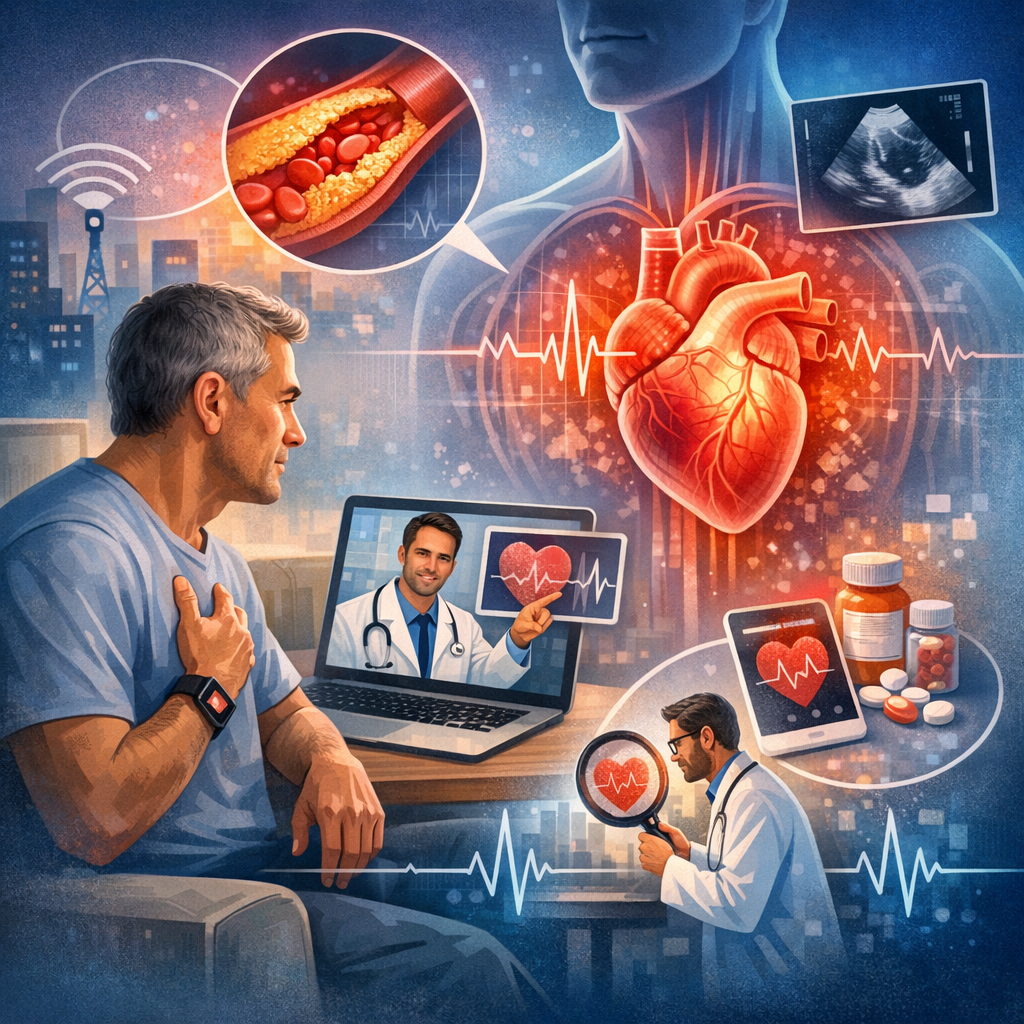
**Introduction: A Silent Killer in Men’s Health**
Heart disease remains the leading cause of death among men worldwide, claiming the lives of approximately one in four men in the United States, according to the Centers for Disease Control and Prevention (CDC). While dramatic cardiovascular events like heart attacks and strokes often capture attention, a significant number of men live with subclinical heart disease—an early-stage condition with no noticeable symptoms. Detecting and managing these hidden threats before they escalate is crucial. “Early detection through telemedicine could save countless lives,” states Dr. John Smith, a renowned cardiologist. Telemedicine has emerged as a powerful tool in preventive cardiology, enabling healthcare providers to identify and treat subclinical heart disease in men more effectively. In this article, we explore how virtual care is revolutionizing men’s heart health—from early detection to long-term management.
### Understanding Subclinical Heart Disease in Men
Subclinical heart disease involves structural or functional cardiac abnormalities that have not yet manifested in symptoms. Examples include early atherosclerotic plaque formation, slight declines in heart pumping efficiency, or subtle changes in electrical conduction. Men often develop cardiovascular risk factors—such as high blood pressure, elevated cholesterol, and insulin resistance—years before experiencing symptoms like chest pain or shortness of breath. Many men delay routine check-ups, and by the time symptoms appear, the disease may already be advanced. Identifying subclinical disease through imaging, biomarkers, and functional tests allows for intervention during a period when lifestyle changes and medications can still reverse or slow progression. These tools are essential for early identification, potentially preventing progression to more serious conditions.
### The Rise of Telemedicine in Healthcare
Telemedicine utilizes digital communication tools—such as video conferencing, mobile apps, and wearable sensors—to deliver medical services remotely. Spurred by the COVID-19 pandemic, virtual visits have become a mainstream option for primary care, specialty consultations, and chronic disease management. In cardiology, telemedicine encompasses remote ECG interpretation, blood pressure monitoring, and even home-based echocardiography with portable devices. Virtual platforms overcome geographic barriers, reduce wait times, and increase patient engagement by fitting care into men’s busy schedules. Importantly, telemedicine fosters frequent touchpoints, which enables earlier detection of subtle changes that might otherwise go unnoticed. As Dr. Jane Doe, a digital health expert, points out, “Telemedicine makes it easier to engage patients who might otherwise lack access to specialized care.”
### How Telemedicine Aids in Early Detection
Early detection of subclinical heart disease relies on regular monitoring of vital signs and cardiac biomarkers. Telemedicine platforms can integrate data from home blood pressure cuffs, connected scales (for weight and fluid retention), and wearable ECG patches that continuously record heart rhythm. Algorithms flag deviations—such as rising blood pressure trends or new arrhythmias—and alert clinicians in real-time. For instance, an alert system can notify doctors if a patient’s blood pressure exceeds healthy limits. Additionally, mobile apps guide patients through questionnaires assessing chest discomfort, fatigue, or palpitations. When necessary, providers schedule in-person visits or advanced imaging studies. This proactive approach bridges the gap between check-ups, catching early warning signs before they escalate.
### Monitoring and Managing Risk Factors Remotely
Modifiable risk factors—like hypertension, dyslipidemia, obesity, and smoking—drive the progression from subclinical to clinical heart disease. Telemedicine facilitates remote management of these factors through:
– **Medication Adherence Tracking**: Digital reminders, virtual pharmacist consultations, and electronic pill dispensers help men adhere to prescribed regimens. For instance, patients receive notifications reminding them to take medication.
– **Lifestyle Coaching**: Telehealth dietitians and exercise physiologists provide personalized plans via video calls, and fitness apps track physical activity.
– **Behavioral Health Support**: Stress and depression worsen cardiovascular risk. Through virtual counseling, mental health remains a focus, with techniques like guided meditation and cognitive behavioral therapy accessible online.
– **Remote Lab Ordering**: Providers can order blood tests for lipids, glucose, and inflammatory markers at local labs, with results reviewed virtually. This facilitates easy tracking and adjustments to treatment plans.
These home-based interventions reduce the need for frequent clinic visits while maintaining rigorous oversight of heart health.
### Treatment and Lifestyle Interventions via Telehealth
Once subclinical disease is identified, treatment focuses on a combination of pharmacotherapy and lifestyle modification. Telemedicine supports:
– **Medication Titration**: Clinicians adjust doses based on remotely collected blood pressure, heart rate, and lab results. Dosages may be fine-tuned during virtual check-ins.
– **Digital Cardiac Rehabilitation**: Structured exercise and educational modules delivered through apps mimic in-person rehab programs, allowing patients to continue rehabilitation from home.
– **Nutritional Guidance**: Interactive meal logging and tele-nutrition sessions encourage heart-healthy diets, such as the Mediterranean diet.
– **Smoking Cessation Programs**: Virtual group counseling and nicotine replacement prescription refills provide ongoing support for long-term smokers.
Regular virtual visits foster accountability and allow providers to celebrate successes or adjust plans to ensure goals are met.
### Overcoming Barriers and Ensuring Accessibility
Despite its promise, telemedicine faces challenges such as uneven broadband access in rural areas, digital literacy gaps among older men, and data privacy concerns. To address these barriers:
– Healthcare systems are partnering with community centers to offer telehealth kiosks, providing infrastructure to underserved locations.
– Simple user interfaces and telephone-based check-ins supplement video visits, enhancing ease of use for those less technologically experienced.
– Payers are expanding coverage for telemedicine services and remote monitoring devices, making treatment more affordable for a broader population.
– Strong encryption and compliance with HIPAA regulations safeguard patient data, ensuring confidential handling.
By proactively addressing these obstacles, providers can ensure all men benefit from early cardiovascular care.
### Future Directions in Telecardiology for Men’s Health
Emerging technologies promise to enhance telemedicine’s impact on subclinical heart disease:
– **Artificial Intelligence (AI)**: Machine learning models will predict individual risk trajectories and suggest personalized interventions.
– **Advanced Wearables**: Next-generation smartwatches will offer noninvasive blood pressure and cardiac output monitoring, vital for prompt intervention.
– **Remote Imaging**: Portable ultrasound probes connected to smartphones may allow at-home echocardiograms under clinician guidance.
– **Genomic Teleconsults**: Virtual genetic counseling will help men interpret inherited risk factors like familial hypercholesterolemia.
The integration of these innovations will further narrow the gap between disease onset and intervention, ultimately reducing men’s cardiovascular mortality.
**Conclusion: The Future of Heart Health is Now**
Subclinical heart disease often progresses unnoticed in many men, only becoming apparent when an acute event occurs. Telemedicine brings routine monitoring, early detection, and personalized treatment into the home, making cardiovascular care more proactive, accessible, and patient-centered than ever before. By leveraging virtual visits, wearable sensors, and digital coaching, healthcare providers can detect silent pathologies, manage risk factors, and deliver customized interventions before subclinical changes develop into life-threatening conditions. As technology continues to evolve, telecardiology will play an increasingly vital role in safeguarding men’s heart health, ensuring that no silent killer goes undetected. With growing acceptance of telemedicine, the future of men’s heart health looks remarkably promising.