

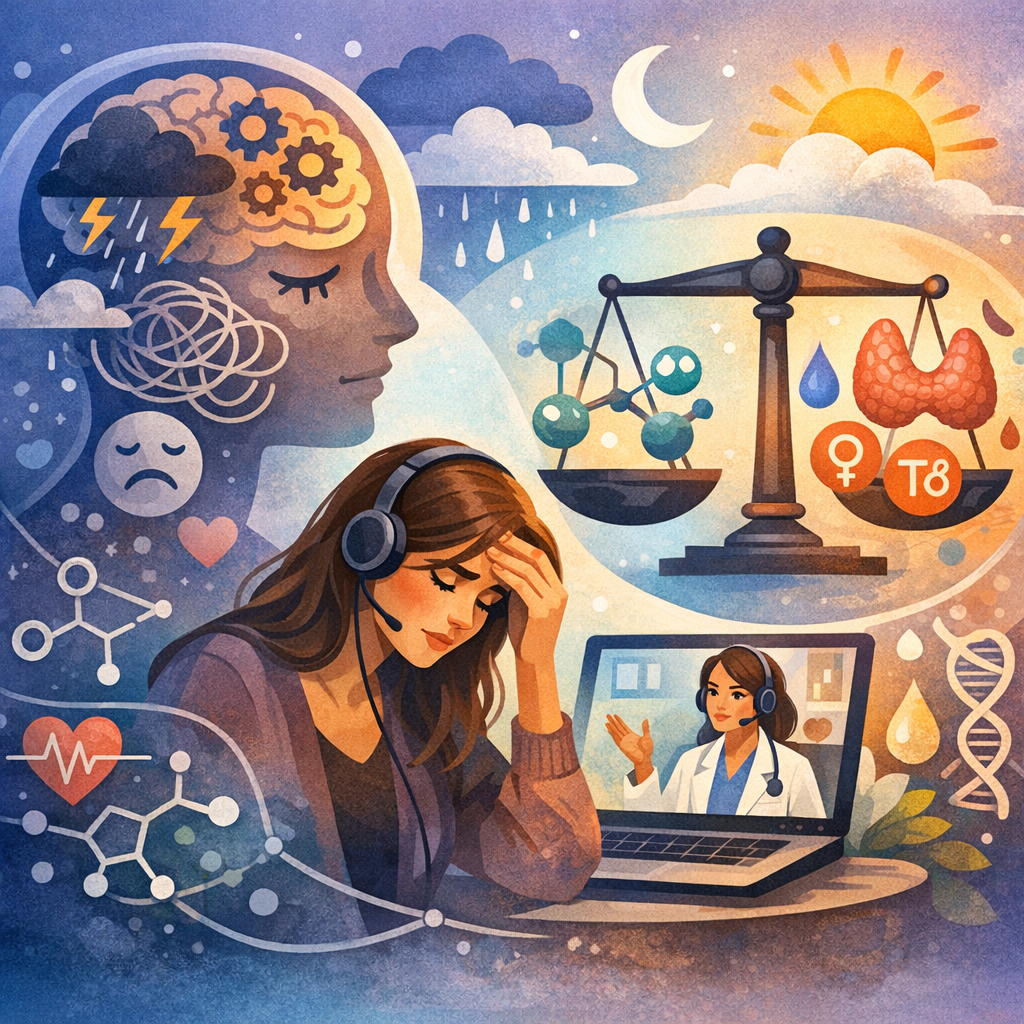
### Transformative Power of Telehealth in Hormonal and Mental Health
In recent years, telehealth has revolutionized the way individuals access medical and mental health services, becoming an essential lifeline for many people. For those dealing with hormonal imbalances—such as thyroid disorders, polycystic ovary syndrome (PCOS), adrenal fatigue, and menopause—the effects on mood swings, anxiety, depression, and cognitive fog can be profound. A study in the *Journal of Medical Internet Research* noted that telehealth usage surged by over 154% during the early months of the pandemic, underscoring its growing importance in healthcare. Understanding the bidirectional relationship between hormones and mental well-being is crucial for effective remote care. This article explores the complexities of diagnosing and managing these intertwined conditions during telehealth consultations, highlights best practices, and offers practical tips for patients and clinicians alike.
### The Interconnected Nature of Hormones and Mood
Hormones function as chemical messengers that influence everything from metabolism to stress response. When these signals are disrupted, emotional and cognitive symptoms frequently follow. For example, thyroid hormones play a significant role in mental health. Dr. Jane Doe, an endocrinologist, explains, “Hypothyroidism often mimics depressive symptoms, such as fatigue, low motivation, and sleep disturbances, while hyperthyroidism may manifest as anxiety and irritability.” Additionally, fluctuations in reproductive hormones during menstrual cycles, pregnancy, and menopause can lead to conditions like premenstrual dysphoric disorder (PMDD) and postpartum depression. Adrenal hormones, such as cortisol, when overproduced, can result in burnout and panic attacks, whereas underproduction may cause chronic fatigue. Understanding these connections helps clinicians identify whether symptoms stem from a psychiatric disorder, a hormonal imbalance, or both—knowledge that is crucial for personalized treatment plans.
### Challenges of Diagnosing Remotely
While telehealth offers accessibility and convenience, it also presents certain diagnostic challenges. The inability to conduct physical examinations can complicate evaluations, such as palpating the thyroid. Furthermore, telehealth heavily depends on patient self-reporting and laboratory work. Miscommunications regarding lab values or preparation requirements, like fasting, can delay diagnosis. However, clinicians can overcome these obstacles by using structured intake forms, validated symptom checklists such as the PHQ-9 for depression, and standardized lab tests (e.g., TSH, free T4, free T3, cortisol, estrogen, progesterone, testosterone) prior to the first consultation.
### Benefits of Telehealth Consultations
Despite these challenges, telehealth provides unique advantages when managed effectively. Patients in rural areas or those with mobility issues can access specialists, including endocrinologists and mental health therapists, without the need for extensive travel. Virtual follow-ups allow for closer monitoring of medication adjustments, lifestyle interventions, and lab trends. Telehealth platforms often support multi-provider conferences, facilitating coordinated discussions. Digital health tools, like mood-tracking apps, empower patients to actively engage in their care and share real-time data with providers, enhancing the overall patient experience.
### Strategies for Managing Hormonal and Mental Health
Adopting a holistic, patient-centered approach is key to successful management. A comprehensive assessment should include a thorough history of menstrual cycles, sleep habits, stress levels, dietary patterns, and any previous mental health diagnoses. Targeted lab tests are ordered based on suspected imbalances and psychiatric screening scores. Collaborative treatment planning, whether through pharmacotherapy or lifestyle interventions, can provide significant benefits. For example, SSRIs or SNRIs may be considered for mood disorders, while hormone therapy might be recommended for menopausal symptoms. Supplements such as vitamin D could also be suggested for mood regulation. Regular follow-ups via virtual check-ins help track progress, while psychoeducation and support, such as virtual CBT sessions, provide valuable coping strategies.
### Collaborative Care and Ongoing Monitoring
Long-term success in managing these intricate health challenges depends on seamless coordination among care team members. A primary care physician oversees overall health, orders routine labs, and refers patients to specialists. The endocrinologist interprets hormone panels, while the mental health professional delivers psychotherapy and teaches coping strategies. Ensuring that appointments, testing, and patient education materials are well-organized and accessible is crucial, often managed by a telehealth coordinator or nurse navigator.
### Conclusion: Empowering Patient-Centered Solutions
Successfully navigating the complex interplay of mental health and hormonal imbalance through telehealth consultations requires comprehensive assessments, proactive communication, and a collaborative, multidisciplinary approach. By utilizing tools such as digital health apps, validated screening measures, and coordinated care pathways, clinicians can effectively diagnose underlying endocrine issues and address psychiatric symptoms. Keeping abreast of best practices ensures that telehealth remains a powerful, patient-centered solution for managing these intertwined health challenges, ultimately empowering patients on their journey to balanced hormones and improved mental well-being.