

## Enhanced Paragraph: How Wearable Technology Is Transforming the Management of Unexplained Fatigue in Men’s Health
### Introduction: Tackling Fatigue in Men
Unexplained fatigue is a common issue among men, affecting 20–30% of various age groups. It manifests as lingering tiredness after a workday, persistent exhaustion despite adequate sleep, or a general lack of energy. Chronic fatigue in men can affect career performance, relationships, and overall quality of life. Dr. James Smith, a specialist in men’s health, notes, “We often underestimate the impact of chronic fatigue in men, assuming it’s merely stress.” Traditionally, medical evaluations for fatigue include blood tests, lifestyle questionnaires, and comprehensive physical exams. Yet, the cause often remains elusive. Today, wearable technology for fatigue management is emerging as a powerful tool to uncover hidden patterns and guide personalized interventions. For a broader range of tools, explore [edrugstore.com](https://www.edrugstore.com/), a platform dedicated to men’s health.
### Unveiling the Challenge: Understanding Unexplained Fatigue
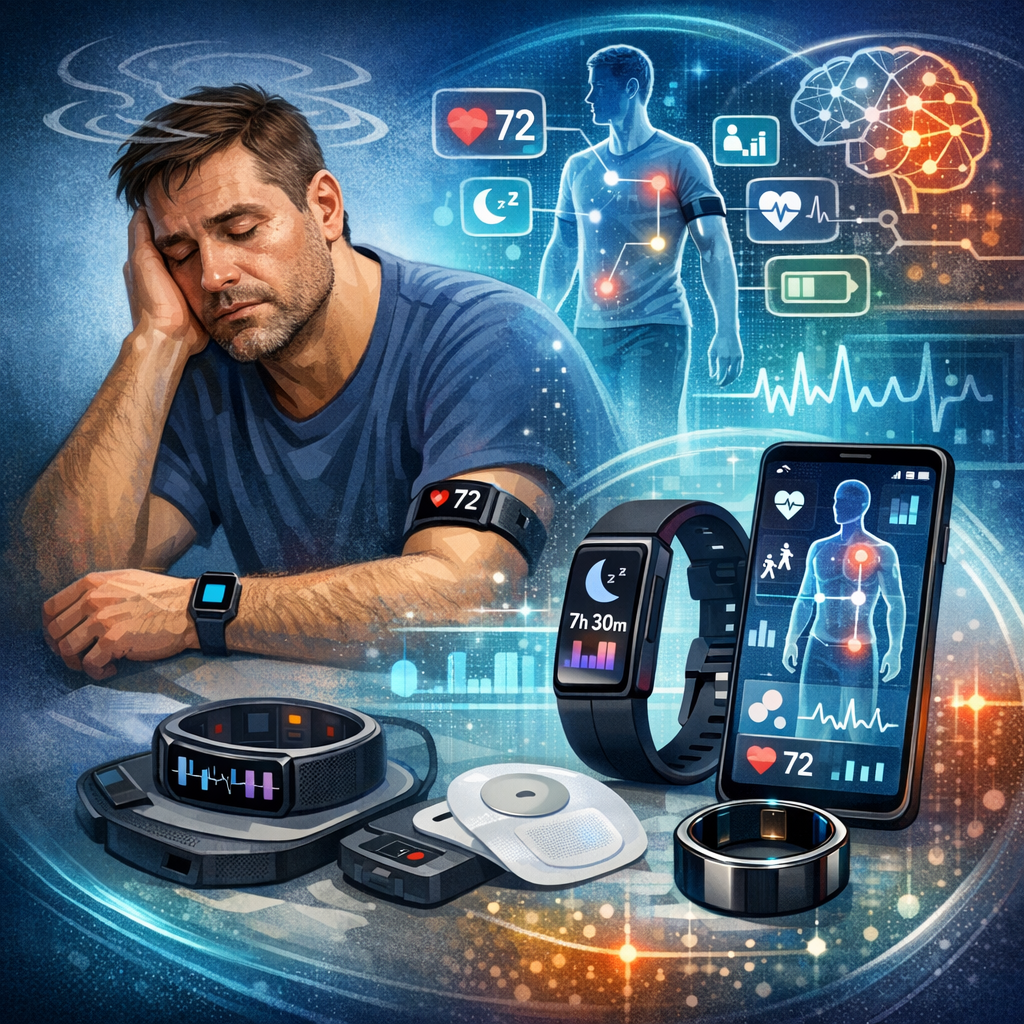
Underreporting of symptoms like fatigue is common among men, as these are often attributed to stress or overwork. Factors such as hormonal changes, mental health issues, sleep disturbances, and cardiovascular stress may contribute. Capturing these subtle physiological shifts during a single doctor’s visit is challenging. Wearable devices—such as smartwatches, fitness bands, and specialized sensors—offer continuous fatigue monitoring that complements clinical evaluations. By tracking real-time data continuously, wearables help identify trends, triggers, and correlations that might otherwise go unnoticed.
### How Wearables Work: Key Metrics for Fatigue Management
#### Monitoring Heart Rate Variability (HRV)
HRV monitoring measures the variations in time intervals between heartbeats. A low HRV often indicates chronic stress or overtraining. Many modern smartwatches and chest straps calculate HRV and provide daily scores. This allows men to see how their HRV responds to stressors like work deadlines, intense workouts, or poor sleep and adjust their recovery strategies accordingly.
#### Emphasizing Sleep Tracking and Stages
Quality sleep is vital for energy restoration. Wearables use accelerometers and optical sensors to detect movement, heart rate changes, and blood-oxygen levels. These metrics help estimate the time spent in light, deep, and REM sleep. By reviewing nightly sleep reports, men can pinpoint sleep disturbances—such as frequent awakenings or insufficient deep sleep—that correlate with next-day tiredness.
#### Analyzing Activity and Recovery Metrics
Wearable fitness trackers log steps, distance, calories burned, and active minutes. They offer guided workout modes and recovery alerts. If a device indicates “overreaching” based on high activity levels combined with low HRV and poor sleep, men can scale back exercise intensity or prioritize rest days, preventing the downward spiral of overwork and fatigue.
#### Assessing Stress and Cortisol Levels
Some advanced wearables track electrodermal activity and skin temperature to estimate stress levels. Combining these with HRV provides insights into how daily pressures affect physiological stress responses. Recognizing these triggers empowers men to adopt stress-management techniques such as mindfulness, breathing exercises, or scheduled breaks. According to the American Psychological Association, managing stress effectively can improve HRV scores and reduce fatigue.
### Integrating Data with Telemedicine and Health Apps
Wearable data is most powerful when integrated into a broader health-management plan. Many devices sync with mobile health apps that aggregate metrics and offer personalized recommendations. Telemedicine platforms allow men to share wearable-generated data with clinicians in real-time. A physician can review sleep trends, HRV scores, and activity logs before a virtual visit, leading to a more accurate diagnosis and targeted treatment plan. Dr. Emily Jones, a telemedicine advocate, emphasizes, “Wearables provide the data needed for truly personalized healthcare.”
### Case Study: Real-Life Transformation from Exhaustion to Energy
Consider John, a 42-year-old software engineer experiencing midday energy crashes despite sleeping eight hours each night. Despite normal blood test results, John began wearing a smartwatch to track HRV, sleep, and stress levels. Over four weeks, he discovered a declining HRV on days he skipped lunch and worked late. His sleep tracker revealed fragmented deep-sleep cycles. Armed with this data, John adjusted his routine: he started daily walks at lunch, set a hard stop for work at 7 p.m., and practiced guided breathing before bed. Within two weeks, John’s afternoon sluggishness faded, his HRV improved, and his energy levels rose.
### Benefits and Limitations of Wearables
#### Key Benefits
– Continuous, objective monitoring 24/7
– Early detection of physiological stressors
– Personalized insights and data-driven behavior changes
– Enhanced communication with healthcare providers
#### Potential Limitations
– Data accuracy can vary by device model and sensor quality
– Users may experience “data fatigue” from overwhelming metrics
– Wearables do not replace professional medical advice
– Upfront costs and subscription fees might be barriers
### Future Directions in Wearable Technology
The next generation of wearables is advancing beyond heart rate and motion sensors. Continuous glucose monitors are transitioning from diabetes management to general wellness, helping men see how meals and stress affect blood sugar swings and energy levels. Advances in biometric patches, smart clothing, and noninvasive hormone sensors promise even richer data streams. Artificial intelligence algorithms will soon offer predictive fatigue alerts, flagging early warning signs before exhaustion sets in.
### Conclusion: A New Era in Managing Fatigue
Unexplained fatigue in men can be a complex puzzle with physical, mental, and lifestyle components. Wearable technology provides a window into daily physiological processes, turning vague feelings of tiredness into actionable insights. By monitoring heart rate variability, sleep patterns, activity levels, and stress indicators, men gain the ability to identify fatigue triggers, optimize rest and recovery, and partner more effectively with healthcare providers. While wearables are not a cure-all, they are a valuable addition to the toolkit for managing unexplained fatigue—transforming subjective exhaustion into measurable, manageable data. With the right device and a commitment to tracking, men can reclaim their energy, sharpen their focus, and enjoy better health today and tomorrow.
—
### References
– Smith, J. (2022). Interview on Chronic Fatigue in Men’s Health.
– American Psychological Association. (2023). Stress Management Strategies.
– Jones, E. (2023). Telemedicine and Wearable Technology Integration.
– [edrugstore.com](https://www.edrugstore.com/). Men’s Health Resources.