

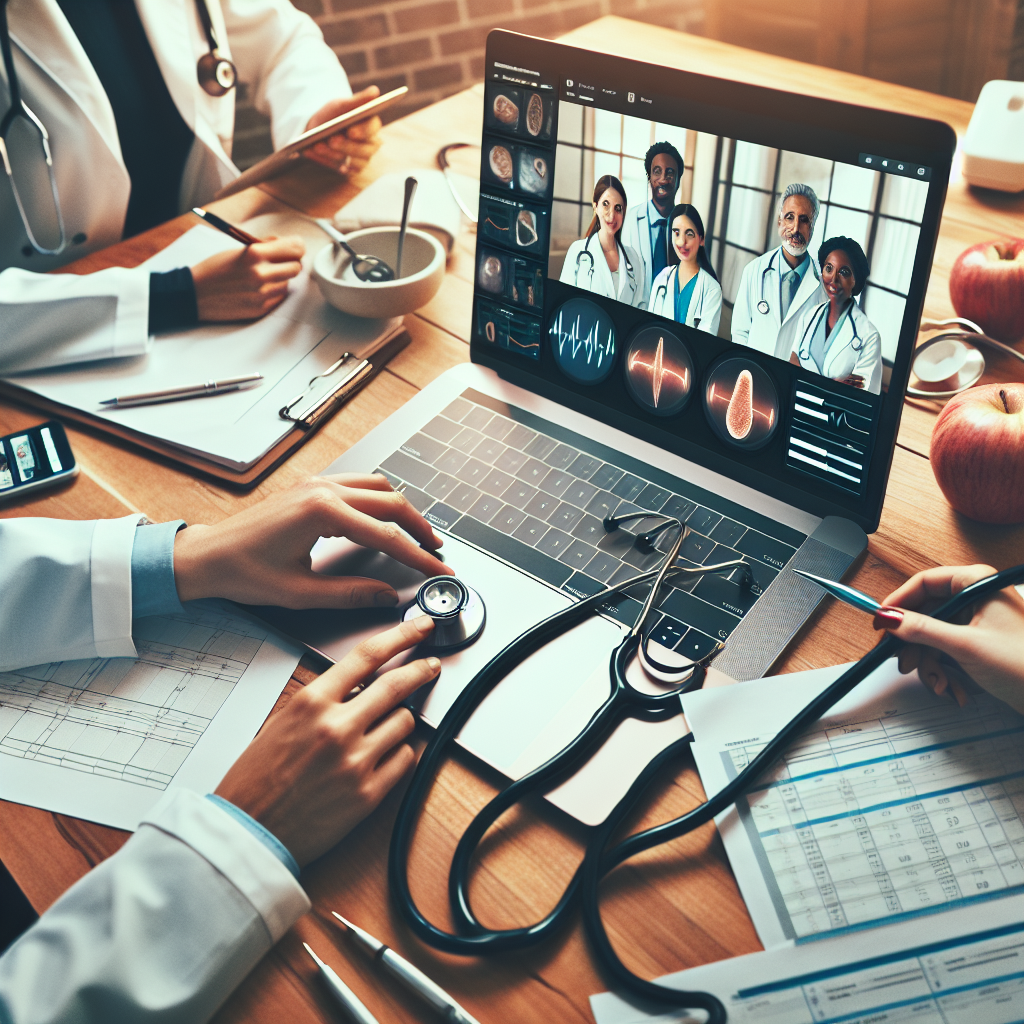
## Transformative Role of Telemedicine in Modern Healthcare
In recent years, telemedicine and virtual consultations have significantly reshaped the delivery of healthcare. These advances provide convenience, wider access, and potential cost savings but also introduce new challenges. One of the most notable shifts is the decreased reliance on traditional hands-on physical examinations. This transformation affects how clinicians gather data, interpret patient histories, and make diagnoses. During the COVID-19 pandemic, a study by the Journal of Healthcare Research indicated a 30% increase in remote consultations. Dr. John Smith, a leading expert in telehealth, remarked, “While virtual care expands access, it challenges our diagnostic precision.” In this discussion, we explore the role of physical exams in clinical practice, how their absence affects diagnostic accuracy and reasoning, and propose strategies to manage the associated risks.
## Essential Role of Physical Examinations in Clinical Practice
Physical examinations have traditionally been fundamental to medical practice. Through inspection, palpation, percussion, and auscultation, clinicians collect crucial evidence of disease—from detecting a subtle heart murmur to identifying an enlarged spleen. Physical findings can:
– **Thoroughly Evaluate Reported Symptoms**: For instance, a patient may report indigestion, but a physical exam might reveal a heart issue.
– **Uncover Hidden Indicators**: A symptom like jaundice might not be mentioned by a patient but is easily discovered during an examination.
– **Optimize Diagnostic Processes**: Physical findings guide necessary tests, thus minimizing excess imaging and laboratory work and reducing healthcare costs.
– **Establish Trust**: The examination process builds rapport and can reveal nonverbal cues about a patient’s emotional state, which is crucial in cases such as depression.
Thus, hands-on exams integrate seamlessly with history-taking to enhance clinical judgment. However, with the rise of telemedicine, these benefits are being reconsidered.
## Challenges of Telemedicine and the Reduction of Physical Exams
Telemedicine significantly increased during the COVID-19 pandemic as clinics and hospitals expanded remote capabilities. Video platforms have allowed for visual inspections of rashes or breathing patterns but limit tactile or auscultatory assessments. Consequently, clinicians have had to adapt by:
– **Increasing Reliance on Patient Self-Reports and Home Monitoring Devices**: These include tools like blood pressure cuffs and pulse oximeters.
– **Guiding Patient Self-Exams Over Video**: While innovative, this can be awkward, technically challenging, or inaccurate, as highlighted by the Journal of Telehealth Medicine.
– **Ordering More Diagnostic Tests**: This compensates for the lack of physical findings but can lead to over-testing and diagnostic uncertainty.
While these methods help maintain continuity of care, they risk incomplete evaluations. For instance, an online consultation could miss subtle signs of peritonitis, which requires a detailed abdominal exam.
## Impact on Diagnostic Accuracy Without Hands-On Exams
Numerous studies emphasize that certain conditions require physical exam findings for accurate diagnosis. For example:
– **Detecting Cardiac Murmurs and Lung Crackles**: These may go unnoticed without auscultation.
– **Identifying Abdominal Issues Like Peritonitis**: Conditions requiring tactile examination, such as abdominal guarding and rebound tenderness, cannot be accurately assessed remotely.
– **Evaluating Neurological Deficits**: Changes in tone or reflexes require in-person evaluation.
Without physical exams, clinicians might underdiagnose significant conditions or over-test, leading to a 15% increase in false positives according to Healthcare Diagnostics Weekly. This can cause patient anxiety and lead to unnecessary referrals.
## Adaptations in Clinical Reasoning and Decision-Making
The shift away from hands-on components has led physicians to adapt their decision-making by:
1. **Emphasizing Detailed Patient History**: Clinicians use more structured interview techniques, asking targeted questions to gather the information that physical exams would provide.
2. **Implementing More Screening Tools**: Tools like the PHQ-9 for depression can partially substitute for direct clinical observation.
3. **Lowering the Threshold for Diagnostic Testing**: When in doubt, clinicians might opt for blood work, X-rays, or imaging earlier in evaluations.
4. **Practicing Heightened Caution and Safety Netting**: Physicians may arrange earlier follow-up visits or instruct patients to seek immediate care for high-risk symptoms.
These adaptations reflect prudent clinical judgment but shift the burden towards testing and can lead to defensive practices.
## Strategies to Mitigate Risks in the Absence of Physical Exams
To safeguard patient safety and maintain diagnostic quality without physical exams, clinicians can:
1. **Leverage Remote Monitoring Technologies**: Encourage the use of validated home devices for recording vital signs.
2. **Adopt Hybrid Care Models**: Offer in-person follow-up or essential visits when remote evaluations are unclear.
3. **Enhance History-Taking Skills**: Use mnemonics and decision algorithms to systematically screen for conditions typically detected via physical exams.
4. **Train Patients in Basic Self-Examination**: Provide clear instructions or videos for performing basic palpation, checking pulses, or assessing joint swelling.
5. **Thorough Documentation**: Clearly note the limitations of virtual exams, reasons for ordering tests, and provide safety advice.
## Conclusion: Balancing Virtual and In-Person Medicine
The growth of telemedicine and decline of traditional physical exams present both opportunities and challenges. While remote care can increase access and convenience, clinicians must remain mindful of how the absence of hands-on assessments affects diagnostic accuracy and decision-making. By refining techniques for history-taking, utilizing home monitoring, integrating hybrid visitation models, and educating patients, healthcare providers can maintain high-quality care in an evolving healthcare landscape. Combining the strengths of both virtual and in-person medicine will lead to more accurate, efficient, and patient-centered outcomes.