

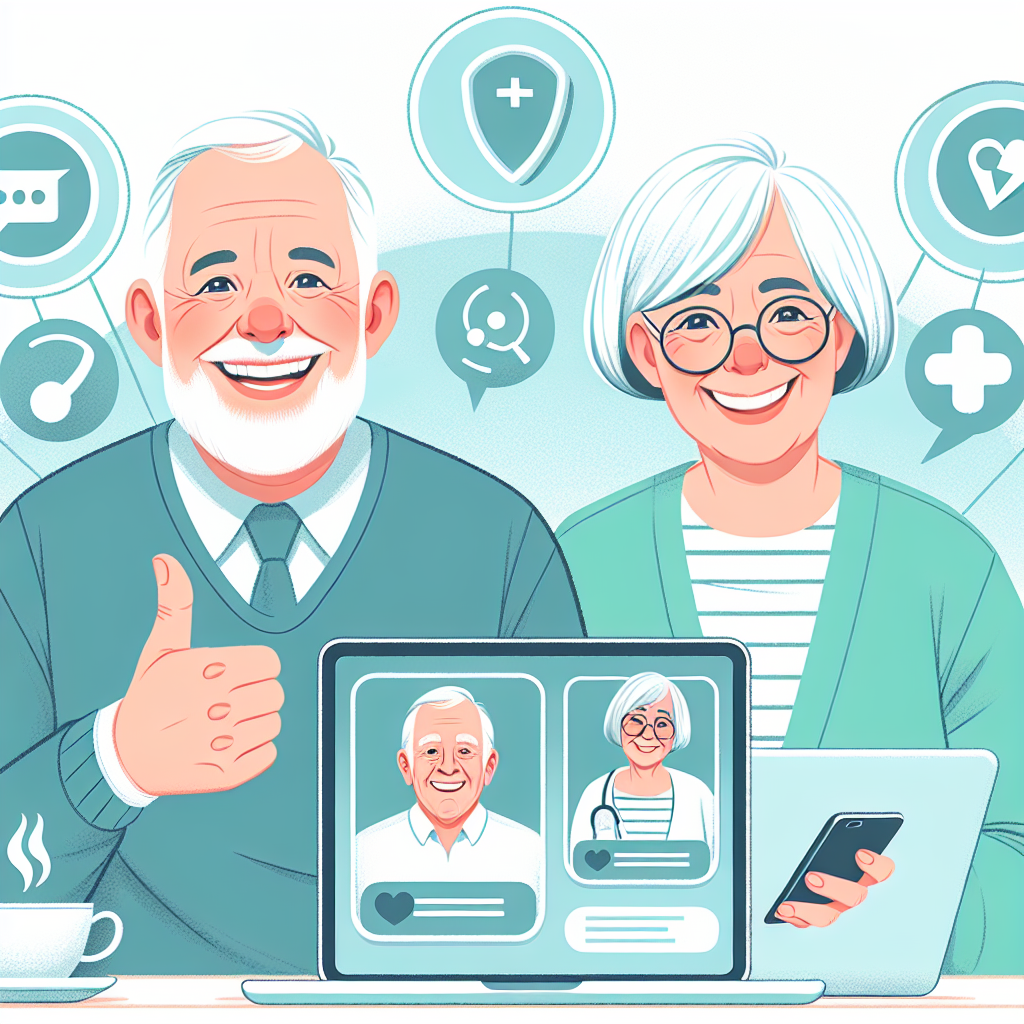
Introduction: Telehealth and the Senior Population
The COVID-19 pandemic sparked a surge in telehealth, offering both promise and challenges for older adults. While virtual appointments provided a safer and more convenient way to receive care, they also introduced new obstacles. Seniors who aren’t “digital natives” often find today’s telemedicine platforms overwhelming. Confusing icons, complicated logins, and technology not designed with older users in mind can create unnecessary barriers.
According to the Pew Research Center, only 61% of adults over 65 own a smartphone, compared to 95% of those under 50. This gap highlights the urgent need to design telehealth platforms that accommodate users with limited tech experience. As geriatric care expert Dr. Kristen Smith explains, “We can’t assume every patient is tech-savvy—especially our older population. The technology must serve them, not frustrate them.”
This article explores the unique challenges seniors face, outlines features of senior-friendly telehealth platforms, and provides actionable strategies for healthcare providers aiming to support this growing demographic.
Understanding the Digital Divide Among Seniors
The term “digital divide” refers to unequal access to technology and varying levels of comfort using it—an issue that disproportionately affects older adults. Recognizing these disparities is the first step toward creating inclusive telehealth systems.
Key challenges include:
– Device familiarity: Many seniors prefer landlines or basic cell phones and may be unfamiliar with app stores, downloads, or software updates.
– Visual and dexterity limitations: Nearly 1 in 3 adults over age 65 reports a vision problem, and conditions like arthritis can make using small screens difficult.
– Poor connectivity: Seniors in rural or underserved areas often experience slow or unreliable internet, disrupting virtual care.
– Fear of technology: Worries about “breaking something” can lead seniors to avoid using technology altogether, even when it could improve their healthcare access.
Acknowledging these challenges is essential to building telehealth solutions that are truly user-friendly and accessible for all.
Why Telehealth Is Crucial for Older Adults
Telemedicine goes beyond convenience; it has the potential to significantly enhance health management for seniors who often juggle multiple conditions.
Benefits include:
– Easier access to specialists: Virtual visits eliminate the need for long-distance travel, especially for seniors in remote areas.
– Reduced physical strain: Avoiding icy sidewalks or public transit makes check-ins safer for people with mobility aids.
– Enhanced family involvement: Platforms that allow multiple participants enable adult children to join appointments, even from different states, and contribute to care planning.
– Better chronic disease management: A 2023 study published in the Journal of Aging & Health found that regular virtual visits improved blood pressure and glucose control in seniors managing hypertension and diabetes.
These advantages underscore the importance of designing systems that work for older users, rather than around them.
Common Telehealth Challenges for Seniors
The best medical advice won’t help if patients cannot access it. Unfortunately, many telehealth platforms are designed with younger users in mind, leaving seniors behind.
Frequent obstacles include:
– Overly complex navigation: Menus are often buried under several tabs without clear directional cues, making it difficult to complete simple tasks.
– Complicated login processes: Multi-step logins or two-factor authentication can be too cumbersome, especially for those dealing with memory issues.
– Unclear symbols and terminology: Vague icons and technical jargon such as “grant camera permissions” can confuse users.
– Lack of real-time support: Without someone to assist them immediately, seniors may miss appointments or feel discouraged from using telehealth again.
These barriers demonstrate the need for purpose-built platforms designed specifically for the older population.
Essential Features of Senior-Friendly Telehealth Platforms
To bridge the digital gap, telehealth platforms should be thoughtfully designed with older users in mind. The key is intuitive, accessible technology that doesn’t sacrifice security or functionality.
Important features include:
1. Streamlined Interface
– Use bold, high-contrast buttons with straightforward language like “Start Video Call” or “Talk to Your Doctor.”
– Avoid clutter and busy backgrounds that can overwhelm the screen.
2. One-Click Access
– Provide direct appointment links via email or text—no downloads, no hosted apps, and no multiple logins. For instance, Sunrise Senior Care uses browser-based appointments with a single tap.
3. On-Screen Guidance
– Integrate voice prompts or tooltips that walk the user through each step: “Tap here to turn on your microphone.”
– Include “Help Now” buttons that instantly connect patients to live technical assistance.
4. Accessible Settings
– Allow for font size adjustment, voice commands, and customizable display settings.
– Support alternative input methods such as styluses or adaptive keyboards.
5. Simplified Security Features
– Use plain and reassuring language: “Would you like to share your health information with your doctor today?” instead of technical warnings and popup alerts.
These user-centered features help reduce frustration, increase confidence, and support broader adoption among older adults.
Effective Strategies to Help Seniors Transition to Telehealth
Thoughtful design is essential, but technology alone isn’t enough. Providers must create a supportive environment that builds digital confidence and comfort for older patients.
Strategies include:
– Pre-Appointment Technology Checks
Set up a brief call or virtual test with the patient 1–2 days before their appointment. Go over basic operations like muting a mic or adjusting the camera angle.
– Printed Guides with Visuals
Send clear, step-by-step instruction sheets prior to appointments. Use large font sizes, bold text, and annotated screenshots to point out critical steps.
– Community Volunteer Programs
Initiatives like “Tech Buddies” match seniors with trained volunteers—such as college students or retired professionals—who provide setup assistance either remotely or in person.
– Dedicated Tech Support Phone Lines
Maintain a simple helpline for virtual care support. Staff it with professionals who speak clearly, use simple terms, and offer screen-sharing when possible.
– Feedback Channels
Follow up post-visit with a quick call or survey to ask what worked or didn’t. Use this input to refine future services and interfaces.
Many clinics report significant improvements by implementing just a few of these elements.
Case Study: Sunrise Senior Care’s Telehealth Success Story
Sunrise Senior Care in Ohio faced a 40% no-show rate for its senior patients using telehealth. After transitioning to a simpler platform featuring color-coded buttons and one-click access, technical issues decreased by 70%.
They also implemented a “Telehealth Buddy” program, matching local nursing students with senior patients to provide hands-on training and support during appointments.
The transformation led to substantial improvements:
– Missed appointments dropped from 40% to just 12%
– Patient satisfaction improved—rising from 3.2 to 4.7 out of 5 within six months
– Family members felt more included and informed in ongoing care
This case illustrates how thoughtful platform design combined with empathetic support drives higher engagement and better outcomes.
Conclusion: Bridging the Gap for Better Senior Health
Creating truly inclusive virtual care requires us to prioritize the needs of older adults. Complex, tech-heavy systems leave seniors behind—preventing the very group that could benefit most from using telehealth.
When we focus on intuitive design, personalized support, and user education, we do more than close a technological gap—we build trust and empower seniors to take control of their health.
As Dr. Karen Lin of Rutgers Medical School aptly notes, “Closing the gap in digital health literacy is not only a technical challenge—it’s a moral one.”
For more tools, guides, and information on managing health through telemedicine, including support for medications and senior wellness, visit eDrugstore.com’s senior health section.
References
1. Journal of Aging & Health (2023). “Telehealth for Hypertension and Diabetes Control Among Older Adults.” Retrieved from https://journals.sagepub.com/home/jah
2. Pew Research Center (2021). “Tech Adoption Climbs Among Older Adults.” Retrieved from https://www.pewresearch.org/fact-tank/2021/
3. Centers for Disease Control and Prevention (CDC). “Vision Health Initiative,” 2022. https://www.cdc.gov/visionhealth/
4. AARP (2020). “Older Adults Technology Use and Attitude Survey.” https://www.aarp.org/research
5. Sunrise Senior Care Internal Report (2023). Provided by clinic administrator upon request.
For more insights into digital health and medication management tailored to aging populations, explore eDrugstore.com.