

**Exploring the Overlap Between Sleep Disorders and Hormonal Imbalances in Men’s Health Consultations**
Introduction: The Vital Connection Between Sleep and Hormones
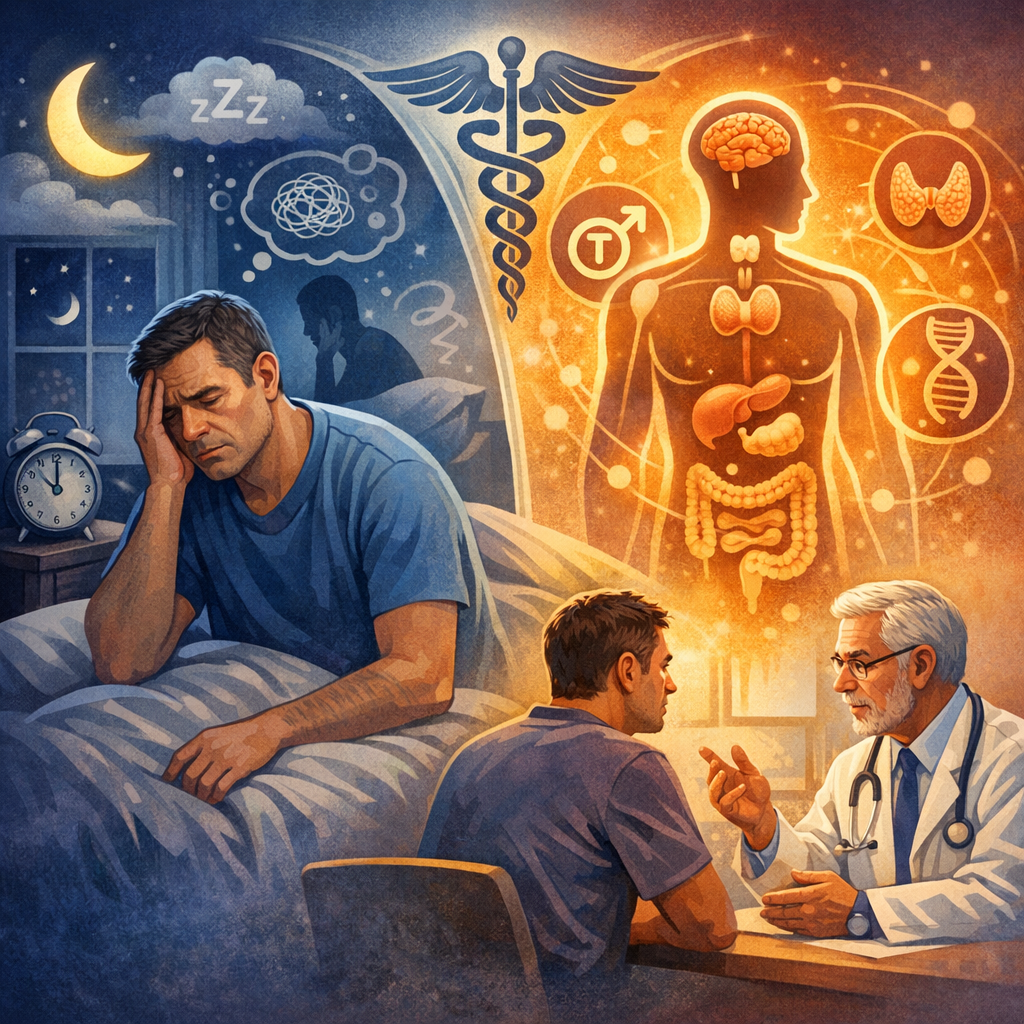
In recent years, men’s health consultations have increasingly underscored the critical relationship between sleep disorders and hormonal imbalances. Many men tend to attribute their poor sleep quality merely to stress or lifestyle choices, often overlooking the significant role of the endocrine system. Research has shown that up to 70% of men with sleep disturbances also experience hormonal imbalances. Dr. John Miller, a prominent endocrinologist, asserts that understanding the intricate link between sleep and hormones is essential for improving men’s health outcomes. This article delves into the intersection of sleep disorders and hormonal imbalances in men, outlines key assessment strategies, and suggests practical treatment approaches beneficial for both clinicians and patients.
Understanding Sleep Disorders in Men
Common sleep disorders affecting men include insomnia, obstructive sleep apnea (OSA), restless leg syndrome, and circadian rhythm disturbances. For instance, insomnia, characterized by difficulty in falling or staying asleep, impacts nearly 30% of adult men at various points in their lives. OSA, marked by intermittent airway blockage, can significantly impair daytime functioning and metabolic health. Recognizing these conditions is paramount, as untreated sleep disorders contribute to an elevated cardiovascular risk, potential cognitive decline, and reduced quality of life. Therefore, addressing sleep-related issues is vital for maintaining long-term health.
Key Hormones Influencing Sleep Quality
Several hormones play a significant role in regulating sleep architecture and quality. Melatonin, produced by the pineal gland in response to darkness, regulates the sleep-wake cycle. Cortisol, which typically peaks in the morning and declines at night, facilitates restful sleep. Other essential hormones include growth hormone and testosterone, both of which have a profound impact on sleep quality. Disruptions in these hormonal systems can initiate or perpetuate sleep disturbances, making it critical to understand this hormonal balance when addressing sleep issues.
Testosterone Deficiency and its Impact on Sleep
Testosterone deficiency, or hypogonadism, is common in middle-aged and older men, leading to symptoms like reduced libido and fatigue. Studies indicate that men with this deficiency are more prone to insomnia and disrupted sleep. Conversely, sleep deprivation can lower testosterone production, creating a bidirectional problem. In cases where patients report issues such as erectile dysfunction or low energy, evaluating sleep alongside serum testosterone levels can reveal underlying hormonal problems that require integrated treatment.
Cortisol Imbalance and Sleep Disturbance
Chronic stress and the associated elevated cortisol levels can lead to persistent high nighttime cortisol, hindering the ability to fall asleep. Conditions like adrenal fatigue or Cushing’s syndrome significantly disrupt cortisol cycles. For men experiencing racing thoughts or energy crashes in the afternoon, a diurnal cortisol assessment may help identify whether cortisol levels are affecting sleep, guiding appropriate treatment.
Melatonin Deficiency and Circadian Rhythm Issues
Melatonin supplementation is beneficial for conditions such as delayed sleep phase syndrome. However, natural melatonin production tends to decline with age and can be further suppressed by factors like nighttime light exposure. For men struggling to sleep at a reasonable hour, measuring nighttime melatonin levels can lead to targeted chronotherapy interventions.
Effective Assessment Strategies
A comprehensive sleep and hormone assessment begins with a detailed history, including sleep habits, daytime symptoms, and lifestyle factors. Screening for sleep apnea with validated questionnaires is essential, complemented by potential hormone laboratory evaluations. For example, measuring total and free testosterone levels, as well as cortisol, can offer insights into hormonal contributors to sleep issues.
Integrated Treatment Approaches
Lifestyle Modifications
Encourage regular physical activity and a consistent sleep schedule to improve sleep quality. Advise moderation in alcohol and caffeine intake, particularly during the evening, and recommend creating a sleep-friendly environment.
Cognitive-Behavioral Therapy for Insomnia (CBT-I)
Cognitive-Behavioral Therapy for Insomnia (CBT-I) is the first-line treatment for chronic insomnia. It involves replacing negative thoughts and behaviors about sleep with healthier patterns. Dr. Amy Williams notes, “CBT-I has the potential to restore sleep quality and indirectly enhance hormonal profiles.”
Hormone-Based Interventions
For men diagnosed with significant hypogonadism, testosterone replacement therapy (TRT) may improve sleep and other symptoms. TRT should be monitored closely, considering any potential health risks involved.
Chronotherapy and Melatonin
Targeted melatonin supplementation effectively adjusts circadian rhythms. Additionally, using light therapy in the morning and ensuring darkness at night can reinforce desired sleep-wake patterns.
Conclusion: A Comprehensive Approach to Men’s Health
In conclusion, sleep disorders and hormonal imbalances in men are intricately connected. Comprehensive evaluations during men’s health consultations should address these domains collectively. By incorporating lifestyle modifications, CBT-I, hormone optimization, and chronotherapy into treatment strategies, clinicians can significantly improve men’s overall health and quality of life.