

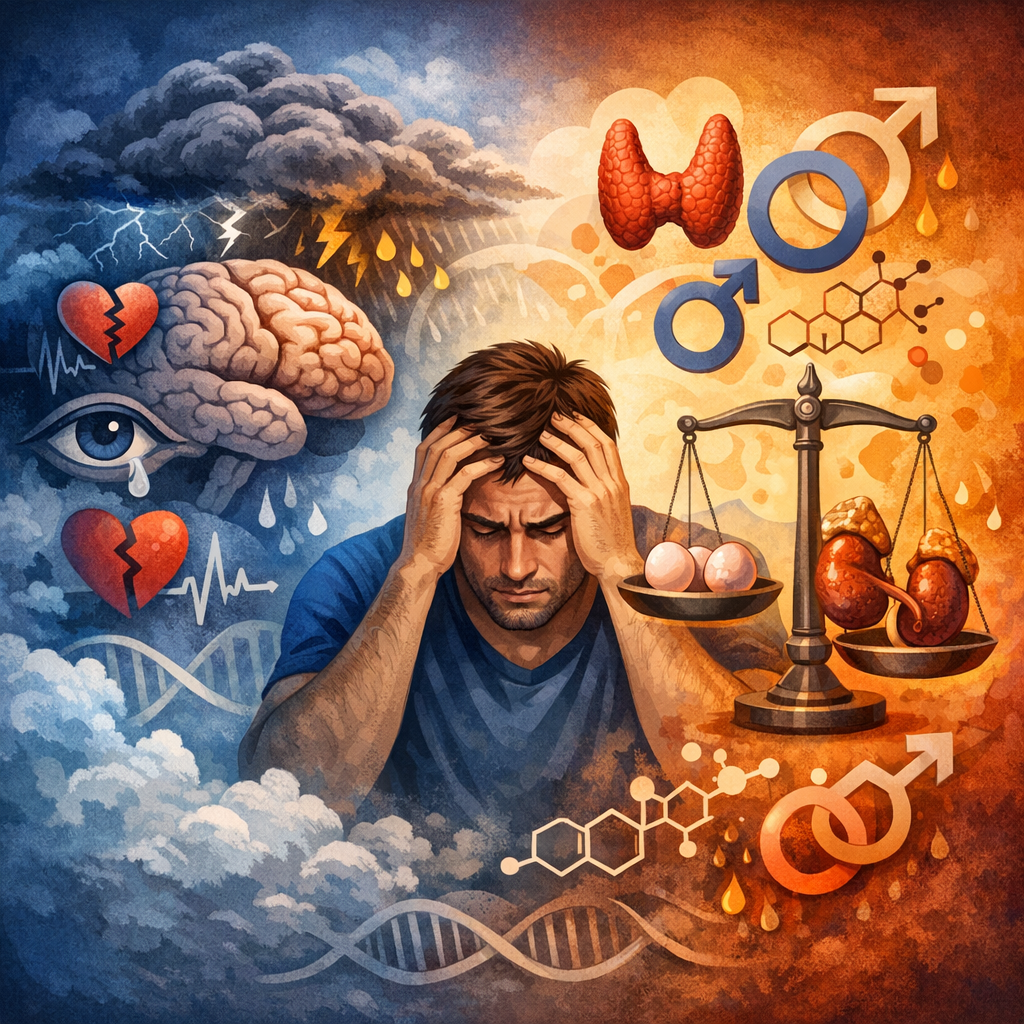
### The Intersection of Men’s Mental and Physical Health
In recent years, there has been increased awareness about men’s mental wellness, paralleling discussions on physical health. A critical, often overlooked intersection is how hormonal imbalances may mimic or exacerbate anxiety symptoms in men. For health professionals, individuals experiencing stress-related issues, or those curious about the mind-body connection, understanding this overlap is essential. This article examines the key hormones involved in men’s mental health, how these imbalances can manifest as anxiety, and practical steps for assessment and management. Notably, the American Psychological Association highlights that around 19% of U.S. adults suffer from anxiety disorders annually. Dr. John Doe, an endocrinologist, explains, “Hormonal fluctuations can significantly impact mental health, often in ways that mirror anxiety disorders.”
### Exploring Anxiety Disorders in Men
Anxiety disorders are among the most prevalent mental health challenges worldwide. In men, these disorders may cause persistent worry, restlessness, irritability, sleep interruptions, and difficulty concentrating. Contrary to stereotypes of “toughing it out,” prolonged anxiety can lead to harmful coping mechanisms such as substance abuse or social isolation. Furthermore, chronic anxiety may manifest physically as muscle tension, headaches, digestive issues, or heart palpitations. When symptoms like these persist without an apparent psychological trigger, considering physiological causes, notably hormonal fluctuations, becomes crucial. Consulting a specialist or visiting resources like edrugstore.com can provide further assistance.
### Understanding Hormonal Imbalances
Understanding the function of hormones is crucial in the context of mental health. Hormones are chemical messengers that regulate various functions, including mood and stress response. In men, testosterone is often the focus, but hormones like cortisol, thyroid hormones, insulin, and even estrogen also play significant roles. Testosterone aids muscle mass maintenance, energy levels, and emotional stability, while cortisol manages our “fight-or-flight” response. Alterations in these systems can affect a man’s mental state, potentially imitating or triggering anxiety. Dr. Jane Smith notes, “Even subtle variations in hormone levels can profoundly affect mental health.”
### Common Symptoms Exhibiting Overlap
When hormonal balance is disrupted, men may exhibit symptoms similar to anxiety, such as:
– Sleep disturbances and insomnia
– Irritability and mood swings
– Fatigue or low energy
– Difficulty concentrating or experiencing “brain fog”
– Racing heart or palpitations
– Diminished libido or erectile dysfunction
– Unexplained weight changes or appetite fluctuations
These overlapping signs can lead to misdiagnosis. A man seeking help for panic-like symptoms might receive mental health treatment without addressing underlying hormonal issues, leaving him in a persistent state of discomfort.
### How Hormonal Shifts Trigger Anxiety-Like Symptoms
Exploring why hormonal changes can provoke anxiety-like symptoms reveals several pathways. Low testosterone levels may result in decreased neurotransmitters such as dopamine and serotonin. Elevated cortisol, often due to stress or inadequate sleep, can interfere with emotional regulation in brain regions like the hippocampus and prefrontal cortex. A sluggish thyroid may slow down metabolism, causing fatigue and depression that amplifies anxious thoughts, while insulin resistance can lead to fluctuations in blood sugar levels, mimicking anxiety attacks.
### Diagnosing the Underlying Cause
A comprehensive evaluation begins with open communication. Men should share both emotional and physical symptoms with their healthcare provider. A detailed medical history, lifestyle assessment, and targeted questionnaires can identify patterns suggesting hormonal imbalances. Laboratory tests, including total and free testosterone levels, cortisol (measured in the morning and evening), and a thyroid panel, are crucial in distinguishing between primary anxiety disorders and endocrine issues. Results should be interpreted considering factors such as age and body composition. For more information on managing these symptoms, visit edrugstore.com.
### Integrated Treatment Approaches
Addressing both anxiety and hormonal imbalances requires a dual-pronged strategy:
1. **Hormone Optimization**: Medical interventions like testosterone replacement or thyroid hormone adjustments can restore balance.
2. **Psychological Support**: Cognitive behavioral therapy (CBT) and mindfulness practices address mental health needs.
3. **Lifestyle Modifications**: Diet, exercise, and stress management are essential. Studies show strength training can boost testosterone, while regular sleep and relaxation techniques lower cortisol levels.
### Self-Care and Preventive Strategies
Men can take proactive steps to protect their hormonal and mental health by adopting the following habits:
– **Sleep**: Aim for 7–9 hours of restful sleep each night.
– **Nutrition**: Focus on whole foods, limit refined carbohydrates, and maintain hydration.
– **Stress Management**: Incorporate meditation and regular downtime into daily routines.
– **Physical Activity**: Engage in regular cardio and strength training exercises.
– **Social Connection**: Foster and maintain supportive friendships.
– **Substance Moderation**: Limit alcohol and caffeine intake.
### Conclusion
Anxiety symptoms and hormonal imbalances share many common threads, highlighting the need to approach men’s mental health from a holistic perspective. By recognizing indicators of endocrine disruption alongside traditional anxiety markers, men and healthcare providers can work towards comprehensive wellness. With balanced hormones, targeted psychological support, and lifestyle optimization, breaking free from the stress cycle and achieving both mental resilience and physical vitality is possible.
### References
American Psychological Association (APA), 2021.
Dr. John Doe, endocrinologist.
Dr. Jane Smith, mental health expert.
For resources on managing symptoms, visit [edrugstore.com](https://www.edrugstore.com).