

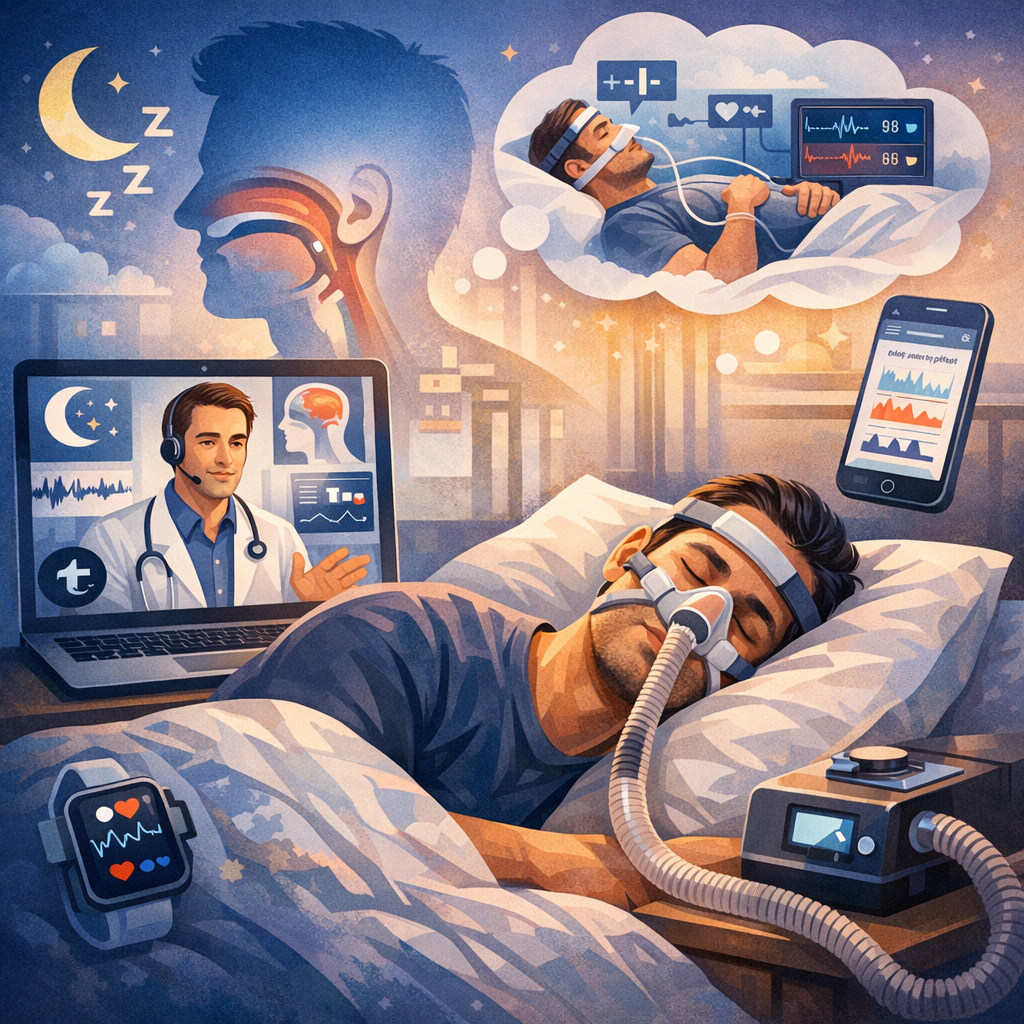
### Recognizing the Hidden Threat: Sleep Apnea in Men
Sleep apnea is a prevalent yet frequently overlooked health concern, particularly among men. Characterized by **interrupted breathing during sleep**, this condition goes beyond the common symptom of loud snoring. Men experiencing it may suffer from **daytime fatigue**, morning headaches, and cognitive issues despite the absence of noisy snoring. As telemedicine continues its expansion, it presents a promising solution for the **diagnosis and management of sleep apnea**, moving beyond the limitations of traditional clinic visits. Telemedicine platforms are modifying diagnostic and treatment methods, using advanced tools to provide effective and timely care for men facing sleep apnea. According to the American Sleep Apnea Association, around 22 million Americans are affected by sleep apnea, underscoring its significance.
### Beyond Snoring: Understanding Sleep Apnea Symptoms in Men
Obstructive sleep apnea (OSA) impacts approximately 22 million Americans, with men almost twice as likely to be diagnosed compared to women. While **snoring is a commonly noted symptom**, up to half of the men with moderate to severe OSA may not snore loudly, resulting in treatment delays. Symptoms like **excessive daytime sleepiness**, difficulty concentrating, and irritability serve as crucial warnings. When left untreated, sleep apnea can lead to severe health problems, including hypertension, heart disease, and stroke. Detecting these subtle signs early is vital to prevent long-term complications. Dr. Alex Wolfson, a sleep specialist, emphasizes the importance of “identifying early warning signs in men can significantly reduce health risks associated with untreated sleep apnea.”
### Telemedicine’s Growing Role in Sleep Health
The COVID-19 pandemic accelerated the adoption of telemedicine, impacting fields across the board, including sleep medicine. Virtual visits eliminate geographical barriers, allowing men in rural or underserved regions to connect with **sleep specialists** without the need for extensive travel. Telemedicine platforms offer **secure video conferencing** and patient portals, enabling physicians to assess risks remotely through the Epworth Sleepiness Scale and schedule necessary at-home tests. This method enhances accessibility, reduces no-show rates, and offers a more patient-centric model. For instance, John from Montana saved three hours of travel by opting for virtual consultations.
### Remote Diagnosis with Innovative Tools and Techniques
Telemedicine providers utilize **home sleep apnea tests (HSATs)** to collect data on breathing patterns and heart rates. These portable devices are sent directly to patients’ homes, complete with easy setup instructions. After completing the test, results are uploaded to a secure portal for careful review. Advanced algorithms pinpoint abnormal events, prioritizing severe cases. In addition to HSATs, wearable devices and smartphone applications monitor **sleep stages** and movement. This combined with virtual consultations, offers a comprehensive picture of a man’s sleep health without needing lab visits. As noted by the National Institutes of Health, these advancements are significantly enhancing patient care pathways.
### Managing Sleep Apnea Remotely: Effective Treatment Paths
Once diagnosed, telemedicine platforms offer various treatment options. **Continuous Positive Airway Pressure (CPAP)** machines, which help keep airways open during sleep, connect wirelessly to transmit real-time data on usage. Providers can monitor adherence remotely and make necessary adjustments. For those unable to use CPAP, alternatives like oral appliance therapy are arranged remotely. Behavior change interventions focusing on weight management or sleep hygiene are facilitated by telehealth professionals. This integrated model encourages patients to stay active in their care plans, often improving outcomes.
### Telemedicine Benefits for Men’s Sleep Apnea Care
1. **Convenience and Accessibility**: Eliminates the need for travel amidst busy schedules.
2. **Early Detection**: Digital tools can identify patients who may not display obvious snoring.
3. **Continuous Monitoring**: Real-time data from devices allows for proactive adjustments.
4. **Cost Savings**: Reduced overhead and fewer lab fees make care more affordable.
5. **Patient Engagement**: Mobile apps and reminders enhance adherence to therapy.
### Addressing Challenges and Enhancing Efficacy
Despite numerous benefits, telemedicine in sleep care faces some challenges. Not all home testing devices achieve the accuracy of in-lab tests, particularly for complex cases. Connectivity issues and low digital literacy can obstruct data transmission. Clear guidelines are needed to determine when in-person evaluations are necessary, such as for patients with heart failure. Providers must validate home test results and establish a hybrid model, combining remote and face-to-face evaluations. A study by Harvard Medical School emphasizes the importance of combining different models to achieve optimal care quality.
### Best Practices for Patients and Providers
**For Patients**:
– Complete questionnaires diligently, noting **daytime fatigue** and mood changes.
– Follow HSAT setup instructions carefully; improper setups can invalidate results.
– Keep a journal tracking sleep patterns to provide supplemental data.
– Communicate openly about treatment side effects, such as mask discomfort.
– Attend scheduled follow-ups and engage with digital coaching modules.
**For Providers**:
– Screen broadly and consider sleep apnea even without obvious snoring.
– Use validated remote monitoring tools and compare findings to lab benchmarks.
– Offer clear instructional resources and live support to boost patient confidence.
– Collaborate with primary care, dental, and mental health professionals for holistic care.
– Ensure data security and compliance in all digital interactions.
### Conclusion: Telemedicine’s New Era for Men’s Sleep Health
Telemedicine heralds a new era for **diagnosing and managing men’s sleep apnea** beyond just snoring symptoms. By integrating home testing technologies with virtual follow-ups and data-driven therapy adjustments, providers can deliver efficient, patient-centered care. Although challenges like diagnostic accuracy and digital accessibility remain, incorporating best practices can maximize the efficacy of these remote health services. As telemedicine evolves, individuals suffering from sleep apnea can anticipate more accessible solutions promoting **restful sleep** and safeguarding long-term health.