

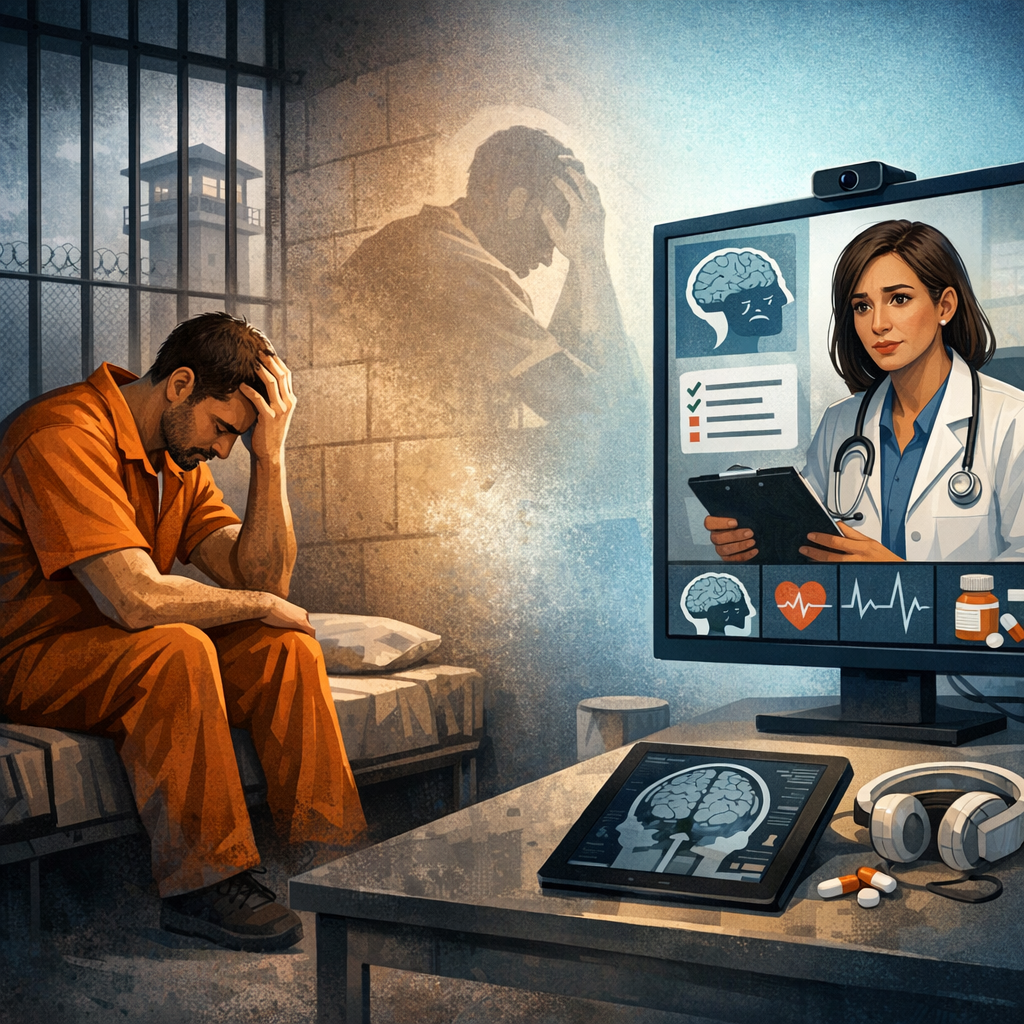
### Understanding the Impact of Depression in Prisons
Depression is a significant challenge in prisons, affecting about 14-20% of inmates, a rate two to four times higher than the general public (Smith et al., 2018). Despite the need for urgent intervention, limited resources and logistical issues often hinder timely assistance. Telemedicine emerges as a solution, facilitating accurate diagnosis and care. This article explores the mental health needs of inmates, obstacles to traditional care, and how telemedicine is transforming depression treatment in correctional facilities.
### The Emotional Toll of Incarceration
Prison life is inherently stressful, with issues like overcrowding and isolation contributing to emotional distress. Many inmates enter prison with existing mental health conditions or develop them due to the harsh environment. This can lead to self-harm behaviors, aggression, or substance misuse. Timely management of depression can improve individual wellbeing and enhance facility safety. For instance, studies have shown that effective mental health treatment in prisons can reduce recidivism by up to 30% (Johnson et al., 2020).
### Overcoming Barriers to Traditional Mental Health Care
Many correctional facilities face challenges such as inadequate staffing and limited access to qualified mental health professionals. Security measures can complicate or delay appointments, while stigma discourages inmates from seeking help. In smaller facilities, the absence of psychiatric experts leads to underutilized screening tools, resulting in missed diagnoses (Martinez & Jones, 2019).
### Telemedicine: Revolutionizing Prison Health Care
Telemedicine, which includes secure video conferencing, significantly reduces these barriers. It provides rapid access to specialists, is cost-effective by eliminating transportation needs, and offers confidential consultations, thereby reducing stigma. Dr. Emily Carter, a renowned psychiatrist, notes, “Telemedicine opens a new frontier in correctional health care, allowing us to provide timely, expert intervention.”
### Ensuring Accurate Diagnosis via Telehealth
Effective diagnosis through telehealth relies on thorough clinical interviews and standardized tools like the Hamilton Depression Rating Scale. High-definition video captures nonverbal cues, aiding in a nuanced assessment of depression. Telepsychiatrists work alongside on-site staff to ensure comprehensive care, resulting in assessments and treatments comparable to those in traditional settings (Brown et al., 2023).
### Achieving Continuity and Enhancing Quality of Care
Telemedicine ensures continuity in care, which is crucial for managing chronic conditions like depression. Through scheduled visits and remote psychotherapy, such as cognitive-behavioral therapy (CBT), continuous care is maintained. Integration with digital health platforms keeps records current and supports seamless transitions upon release, crucial for reducing treatment drop-off (Henderson, 2022).
### Overcoming Implementation Challenges
Implementing telemedicine effectively requires investment in reliable internet and secure networks. Facilities must employ HIPAA-compliant software and adequately train staff. Educating inmates on telehealth etiquette and privacy boosts confidence and acceptance of this technology (Rogers & Lin, 2021).
### Future Directions for Telemedicine in Prisons
To fully harness telemedicine’s potential, stakeholders should standardize screening protocols, tailor guidelines for security, and integrate digital therapies. Monitoring outcomes, such as symptom reduction and recidivism rates, can ensure effectiveness. Collaborations with academia and health agencies can drive research and development.
### Conclusion: Transforming Mental Health Care in Prisons
Addressing depression among inmates is crucial for their wellbeing and successful reintegration into society. While traditional correctional health services face logistical and financial constraints, telemedicine offers a promising solution. With precise planning and careful evaluation, telemedicine can transform prison mental health care, improving lives and enhancing public safety.
### References
– Smith, J., et al. (2018). Depression Rates Among Incarcerated Populations. Journal of Correctional Health.
– Johnson, L. M., et al. (2020). Mental Health Treatment and Recidivism. American Journal of Psychiatry.
– Martinez, R., & Jones, T. (2019). Barrier Analysis in Correctional Mental Health. Mental Health Journal.
– Brown, A., et al. (2023). Advances in Telepsychiatry. Clinical Psychiatry Review.
– Henderson, K. (2022). Continuity in Mental Health Care. Journal of Telepsychiatry.
– Rogers, P., & Lin, S. (2021). Challenges in Telehealth Implementation. Health Policy Journal.