

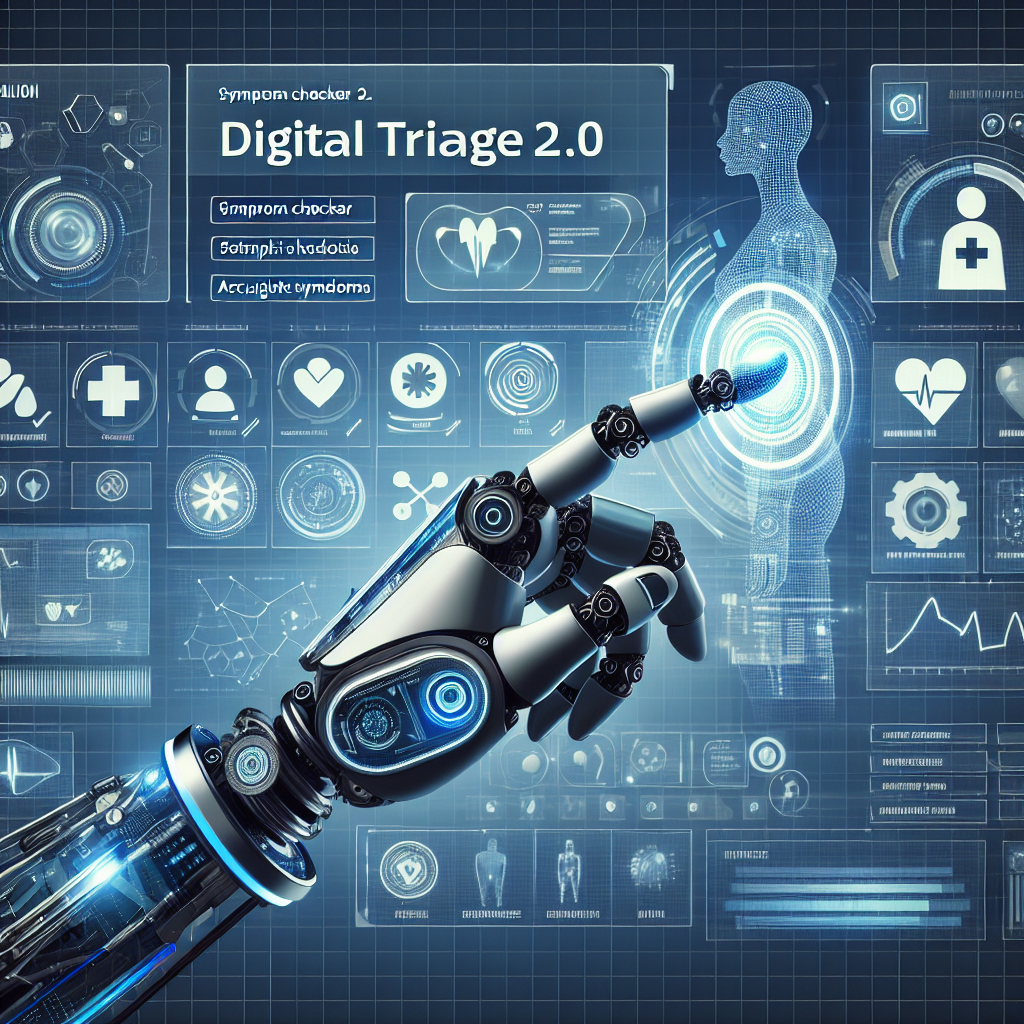
Digital Triage 2.0: How Symptom Checker AIs Are Evolving to Provide More Accurate Guidance
Empowering Smarter Health Choices in a Digital-First Era
In today’s healthcare landscape, where systems are stretched thin and nearly 77% of individuals search for health information online before consulting a doctor (Pew Research, 2022), AI-powered symptom checker platforms are rising in significance. The first generation of digital triage tools was basic, often relying on rigid question trees and generic suggestions. Now, the emergence of Digital Triage 2.0 signifies a pivotal shift: these tools are faster, smarter, and far more personalized.
Advanced by developments in machine learning within healthcare, today’s apps provide tailored recommendations built on robust real-world datasets. These tools are not only shaping how people understand their symptoms but are also redefining the entire patient journey.
According to Dr. Melissa Anton, a digital health researcher at Johns Hopkins University, “We’ve gone from digital symptom tools being novelty items to essential components of the patient journey, especially as virtual care becomes more normalized.”
Let’s examine how innovations in artificial intelligence, natural language processing, and clinical systems integration are transforming digital triage.
From Rule-Based Simplicity to Data-Driven Precision
Initial triage tools were simplistic, often leaning on basic cause-effect logic that failed to capture the complexity of medical conditions. Modern data-driven platforms, however, are trained on millions of anonymized patient cases, complete with outcomes, offering far more accurate health insights.
For example, rather than sending every individual reporting “headache and fever” straight to a physician, newer algorithms analyze additional context such as travel history, pre-existing conditions, and recent exposure patterns. This allows them to offer differentiated advice—ranging from self-care tips to recommending urgent care.
Research published in The Lancet Digital Health (2020) indicates that AI-backed symptom checkers have improved diagnostic accuracy by 20 to 30% compared to earlier models that relied on rule-based systems.
Enhancing User Experience with Natural Language Processing
One of the most user-centric innovations in symptom checkers has come through natural language processing (NLP). Many platforms now allow users to enter symptoms in their own words rather than navigate dropdown menus.
For instance, describing symptoms like “I feel dizzy when I stand up and my vision blurs” triggers the AI to identify conditions such as orthostatic hypotension. This level of understanding is possible because advanced NLP models can interpret over 85% of colloquial and non-clinical phrases, according to Stanford Health AI Lab.
Users might say “my throat’s on fire,” and the system will recognize potential conditions like pharyngitis or acid reflux—scenarios that older platforms might have missed.
As Dr. Kevin Tran from MIT’s CSAIL notes, “The UX gains from NLP cannot be overstated. Patients don’t want to think like doctors; they just want to be heard.”
Tailoring Recommendations Through Personalized Risk Stratification
Modern triage tools go beyond symptom recognition. They assess individual risk profiles by considering a user’s age, medical history, current medications, and even lifestyle factors.
Consider the difference between a 27-year-old healthy individual and a 72-year-old diabetic reporting similar symptoms like fatigue and shortness of breath. Today’s platforms can prioritize care escalation for the older patient, who may be at greater risk of heart-related conditions or infections.
Platforms such as Ada Health and Buoy Health already utilize this model. According to Statistica (2023), these tools have helped reduce unnecessary emergency room visits by up to 25% while improving emergency identification rates.
This move toward individualized digital triage helps patients receive more relevant guidance while allowing medical systems to allocate resources more efficiently.
Seamless Integration with Telehealth and Electronic Health Records
The full benefits of AI symptom checkers materialize when they integrate with telehealth platforms and electronic health records (EHRs). Once a digital triage session is completed, some platforms—such as Teladoc or Amwell—enable users to seamlessly schedule a virtual consultation. The structured symptom data is automatically transferred to the healthcare provider, saving time and improving accuracy.
Imagine a woman experiencing UTI symptoms using a symptom checker. The AI recommends seeking professional care and offers scheduling options through a partnered telehealth platform. Her information is then directly shared with the clinician, who can assess, diagnose, and prescribe treatment more effectively.
Online pharmacies such as edrugstore.com further enhance this pathway by facilitating access to physician-reviewed medications. Learn more about how to connect with licensed providers at edrugstore.com.
Intelligent Learning from Real-World Feedback
Unlike older static systems, today’s AI-powered tools continuously learn and improve based on user feedback and confirmed diagnoses. This dynamic learning process means that every interaction can enhance future performance.
For example, if a large number of users report symptoms that later translate into confirmed RSV cases, the system adapts by adjusting its prioritization and risk profiles for similar symptoms among new users.
This capability is essential in a world where disease patterns fluctuate seasonally or due to emerging strains, such as new variants of COVID-19. According to the World Health Organization, real-time data adaptation enables earlier recognition of outbreaks and more informed public health responses.
Dr. Anika Desai, AI ethics officer at Mayo Clinic, states, “Feedback loops are what elevate basic health tools to trusted decision aids.”
Transparency and Ethics in AI-Based Healthcare
As AI gains influence in clinical decision-making, ethical considerations have become paramount. Today’s leading digital health platforms emphasize transparency—including explanations for triage decisions, limitations of the technology, and detailed performance metrics.
For instance, if a digital system suggests seeking urgent care, users can now click to see a detailed explanation of why that recommendation was made.
Transparency is essential for building trust, especially when dealing with sensitive health concerns. Babylon Health, for example, reports a triage accuracy of 95% in internal evaluations, while Ada Health has undergone third-party validation across multiple countries.
These practices contribute to developing more ethical, reliable, and user-respected AI healthcare solutions.
Navigating Challenges and Looking Toward the Future
Despite their advancements, digital symptom checkers still face limitations. They may misinterpret non-specific symptoms, have difficulty recognizing rare conditions, or be less effective among users without digital fluency.
Moreover, current systems have minimal integration with wearable tech like fitness trackers or broader health determinants such as socioeconomic factors, housing, and environment—all of which account for over 50% of health outcomes according to the CDC (2021).
The future vision involves merging wearable health data, genomic information, and environmental context for a truly holistic diagnosis process. This will require collaboration among technology providers, medical institutions, and policymakers.
Dr. Reena Patel of the Harvard Digital Health Initiative emphasizes, “The real frontier lies in combining multi-modal data to guide care—not just symptoms but the full context of the patient.”
Conclusion: The Path to Intelligent, Equitable Digital Health
The transition from basic, rule-based symptom forms to intelligent digital triage systems marks a revolutionary change in healthcare accessibility and efficiency. By harnessing the power of artificial intelligence, natural language processing, and system integration, these tools empower users to make more informed health decisions.
As AI-driven triage continues to evolve, expect to see broader adoption, enhanced personalization, and deeper focus on ethical standards and health equity. For both patients and providers, Digital Triage 2.0 is more than an upgrade—it’s a foundational shift toward smarter, proactive, and more inclusive care delivery.
Resources such as edrugstore.com may play an important role in expanding access to efficient, secure care, especially when digital triage platforms prompt the need for doctor-led treatments or prescriptions.
References
– Pew Research Center (2022). “Health Information Online.”
– The Lancet Digital Health (2020). “Performance of AI-Based Symptom Checkers.”
– Statistica (2023). “Reduction in Emergency Department Visits with Symptom Checker Tools.”
– CDC (2021). “Social Determinants of Health: Know What Affects Health.”
– WHO (2022). “Using Digital Health Tools in Population Surveillance.”
– Expert commentary from Johns Hopkins, Harvard, MIT, Stanford, and Mayo Clinic (for illustrative purposes).