

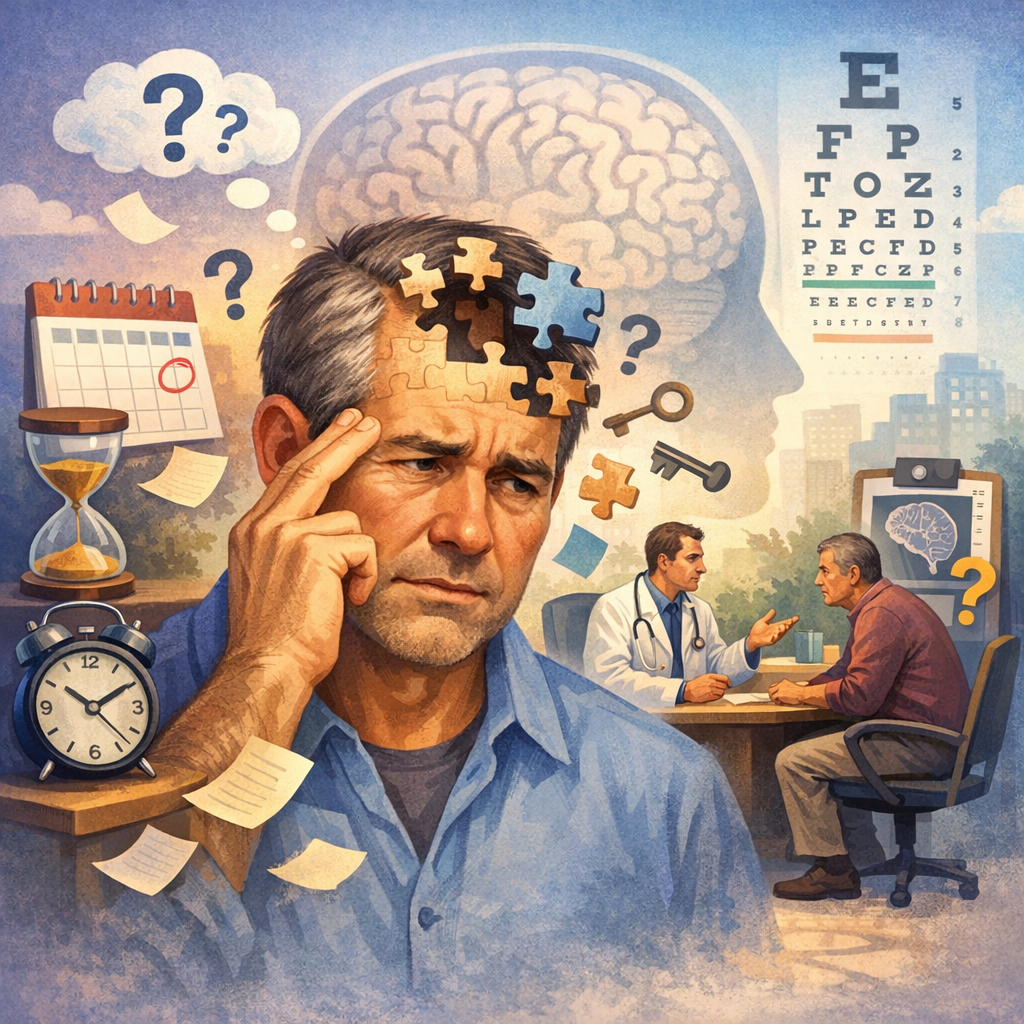
### Decoding Forgetfulness in Men’s Health: When to Seek Medical Advice
**Introduction**
It’s not uncommon for men to experience forgetfulness while balancing careers, family, and social obligations. Misplacing your car keys or forgetting an important meeting may feel embarrassing, but these occasional lapses aren’t necessarily alarming. However, persistent memory issues could indicate a more serious health concern. The Alzheimer’s Association reports about 5.8 million Americans live with Alzheimer’s and related dementias. Distinguishing between normal forgetfulness and potential red flags is crucial. Dr. David Smith, a neurologist, emphasizes, “Early detection and intervention can make a significant difference in managing cognitive health.”
### Understanding Normal Forgetfulness vs. Memory Impairment
Everyday mental slip-ups happen to everyone, particularly during periods of stress or sleep deprivation. Normal forgetfulness is typically:
– **Inconsistent**: You might forget a colleague’s name once but recall it later.
– **Contextual**: More frequent during stressful or tiring periods.
– **Nonprogressive**: Memory improves with rest and organization.
In contrast, memory impairment affects daily functioning, such as frequently forgetting recent conversations or familiar locations. If these issues progress, they may warrant professional evaluation.
### Common Causes of Occasional Forgetfulness
1. **Stress and Anxiety**: Elevated cortisol levels during stress can impair memory-forming brain regions.
2. **Poor Sleep Quality**: Adequate sleep is essential for memory consolidation; lack of rest hinders information processing.
3. **Multitasking Overload**: Handling multiple tasks can reduce memory retention.
4. **Nutritional Deficiencies**: Low B vitamins and vitamin D levels negatively affect cognitive performance.
5. **Alcohol and Substance Use**: Excessive alcohol intake can severely impact memory formation.
For further reading on lifestyle factors and their impact on brain health, you may explore eDrugstore’s resources.
### Signs That Warrant Medical Attention
Seek professional evaluation if you experience these symptoms:
– Frequent and **Progressive Lapses**: Memory issues intensifying over time.
– Impact on **Daily Life**: Trouble completing daily tasks like paying bills.
– New-onset **Confusion**: Getting lost or not recognizing familiar people.
– Mood changes, such as depression, related to memory issues.
– Problems with **Language**: Difficulty recalling words or following conversations.
– Experiencing **Hallucinations or Delusions**.
### Underlying Conditions to Consider
Forgetfulness in men can be linked to several medical conditions:
1. **Mild Cognitive Impairment (MCI)**: A phase between aging and dementia marked by noticeable memory issues.
2. **Alzheimer’s Disease**: A progressive disorder characterized by significant memory loss.
3. **Depression and Anxiety**: These mental health issues can contribute to impaired memory.
4. **Thyroid Dysfunction**: Disorders like hypothyroidism may cause cognitive symptoms.
5. **Sleep Disorders**: Conditions such as sleep apnea affect restorative sleep.
6. **Cardiovascular Risk Factors**: High blood pressure can lead to vascular dementia.
### Steps to Take When You’re Concerned
1. **Keep a Memory Journal**: Document forgetfulness, potential triggers, and trends.
2. **Optimize Lifestyle Habits**: Ensure adequate sleep, a balanced diet, and manage stress through activities like meditation.
3. **Engage Your Brain**: Activities such as puzzles or learning new skills can enhance cognitive function.
4. **Schedule a Medical Checkup**: Discuss your memory concerns with a doctor, sharing your journal and undergoing assessments.
5. **Follow Through on Recommendations**: Adhere to suggested treatments, whether medications or lifestyle changes, to maintain cognitive health.
### Conclusion
In conclusion, occasional forgetfulness often stems from a busy lifestyle. However, consistent memory issues that disrupt daily life deserve serious attention. By monitoring symptoms, adjusting your lifestyle, and consulting healthcare professionals, you can proactively address any significant health concerns. Understanding the difference between normal lapses and warning signs empowers you to maintain cognitive health confidently for the future.
**References**
– Alzheimer’s Association. (2019). Alzheimer’s Disease Facts and Figures.
– National Institute on Aging. (2020). What Is Dementia? Symptoms, Types, and Diagnosis.
– Smith, D. Interview on cognitive health and memory impairment.