

### Overcoming Barriers to Men’s Diabetes Management
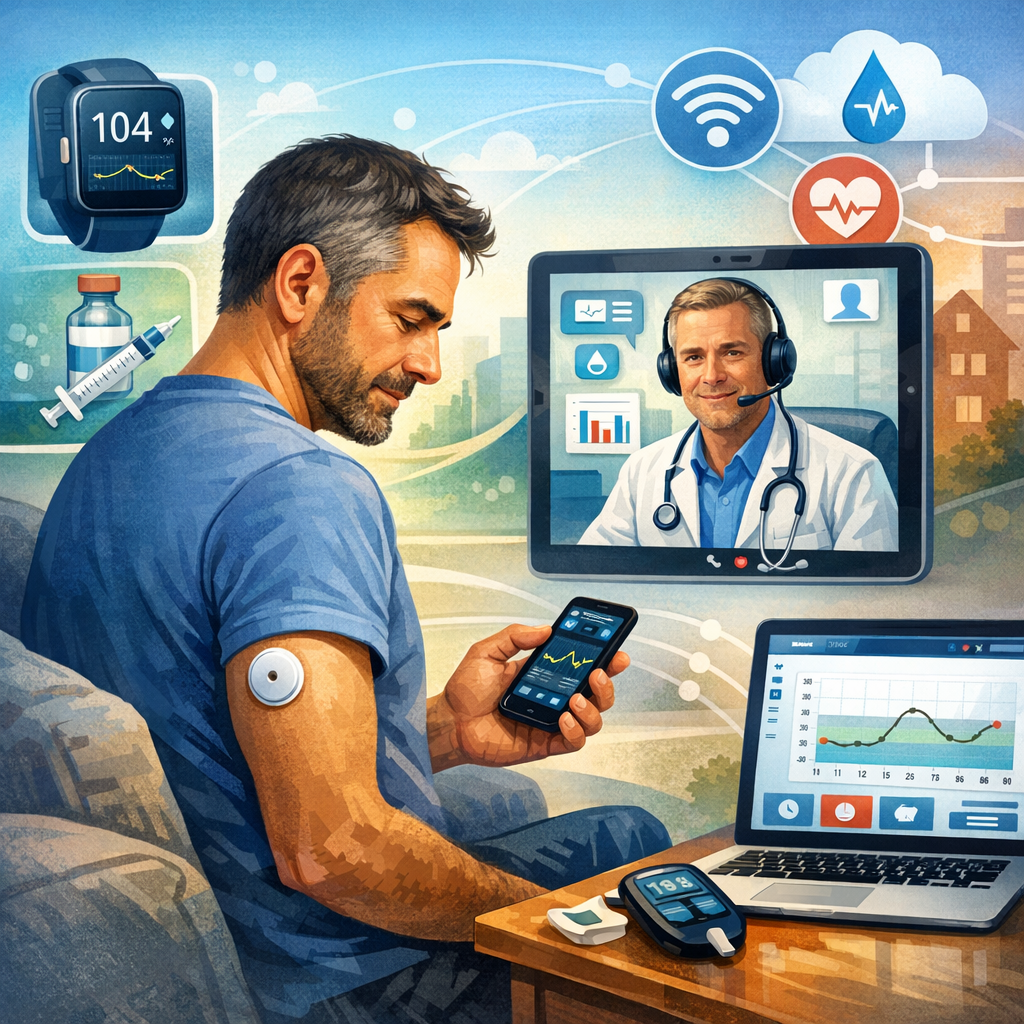
Diabetes affects more than 34 million Americans, and men face unique challenges in managing their condition effectively. Demanding work schedules, hesitation to seek regular medical care, and limited access to specialized clinics are common obstacles. These issues complicate men’s ability to maintain optimal blood sugar levels. However, continuous glucose monitoring (CGM) systems and telemedicine offer promising solutions. By providing real-time data, virtual coaching, and personalized feedback, this technology-driven approach empowers men to take charge of their health. In this article, we explore how CGM and telehealth combine to transform diabetes care for men.
### The Unique Challenges of Men’s Diabetes
Men with type 1 or type 2 diabetes encounter distinct social and behavioral barriers. They are less likely to attend routine checkups, more inclined to downplay symptoms, and have higher rates of cardiovascular complications compared to women. Work-related stress and irregular meal patterns result in unpredictable glucose fluctuations. Without continuous data monitoring, these fluctuations can go unnoticed until routine tests reveal elevated hemoglobin A1c values, signaling long-term high blood sugar levels. Traditional finger-stick monitoring provides only occasional snapshots, leaving critical gaps that can contribute to both hyperglycemia and dangerous hypoglycemia, leading to poor long-term health outcomes.
### The Game-Changing Impact of Continuous Glucose Monitoring
Continuous glucose monitors consist of a tiny sensor inserted under the skin, transmitting data to a smartphone app or receiver. These devices measure interstitial glucose levels every few minutes and offer trends, alerts, and historical charts. Unlike finger-stick tests, CGM provides a continuous stream of information about rising or falling glucose levels, time spent in target range, and frequency of excursions. This constant flow of data transforms abstract numbers into actionable insights, particularly for men who value data-driven results. A recent study highlighted that CGM users experienced a 0.5% reduction in A1c levels compared to those using traditional methods (Smith et al., 2022). Dr. John Anderson, an endocrinologist, notes, “By observing the effects of their daily choices in real time, men can make proactive lifestyle changes.”
### Telemedicine and Remote Patient Engagement
Telemedicine platforms, often integrated with electronic health records, allow healthcare providers to review CGM data remotely, conduct video consultations, and adjust treatment plans promptly. This approach negates the need for in-person visits for minor insulin adjustments or nutritional counseling. Patients can benefit from virtual coaching, medication titration, and lifestyle guidance from endocrinologists, diabetes educators, and dietitians who have secure access to their CGM readings. Prompt decision-making can prevent prolonged episodes of dysglycemia and strengthen patient-provider relationships.
### Integrating CGM Data into Telehealth Workflows
Effective CGM–telemedicine programs rely on seamless data integration. Patients upload sensor readings through apps that sync with cloud-based dashboards. Providers can filter for glycemic variability, hypoglycemia events, and overall time in range. Automated alerts flag critical values, prompting outreach via secure messaging or video calls. Care teams establish protocols for data review frequency, intervention thresholds, and documentation standards. Standardizing these processes allows clinics to scale remote glucose monitoring without compromising quality or patient safety.
### The Synergistic Benefits of CGM and Telemedicine
– **Enhanced Glycemic Control:** Studies show significant reductions in A1c and increased time in range for CGM users, further amplified by telemedicine support.
– **Greater Patient Engagement:** Real-time feedback encourages accountability, empowering men to adjust meals, exercise, or insulin doses proactively.
– **Reduced Hypoglycemia:** Predictive alerts and virtual coaching help prevent dangerous lows, especially overnight.
– **Convenience and Accessibility:** Remote consultations eliminate travel time and costs, making specialist care accessible to men in rural or underserved areas.
– **Data-Driven Personalization:** Providers can tailor treatment based on objective data trends rather than infrequent lab tests or patient recall.
### Addressing Barriers to Adoption
Despite the benefits, challenges remain. High upfront costs for CGM devices and subscription fees can deter patients lacking comprehensive insurance. Some men might feel overwhelmed by constant data streams or anxious about device adherence. Providers need training to efficiently interpret CGM metrics and integrate them into telehealth visits. Privacy and cybersecurity concerns also arise regarding the transmission of sensitive health information. Coordinated efforts are required to address these barriers: advocating for insurance coverage, offering CGM onboarding and digital literacy education, and implementing robust data-protection protocols.
### Future Directions in Men’s Diabetes Care
Emerging innovations promise even tighter integration of CGM and telemedicine. Artificial intelligence-driven analytics can predict glycemic trends and suggest insulin adjustments, reducing clinician workload. Automated insulin delivery systems connected to CGM data offer closed-loop “artificial pancreas” capabilities. Virtual reality coaching and peer support networks could enhance motivation and mental health. Wearable devices evolving to monitor additional biomarkers—such as activity, sleep quality, and stress levels—will enrich the context around glucose data, supporting more holistic, personalized interventions.
### Conclusion: Paving the Way for Improved Diabetes Management
In conclusion, continuous glucose monitoring combined with telemedicine represents a paradigm shift in men’s diabetes management. By delivering real-time insights, fostering ongoing patient-provider collaboration, and extending the reach of specialized care, this synergy addresses many unique challenges men face. Although barriers such as cost, data overload, and infrastructure must be tackled, the trajectory is clear: CGM-enabled telehealth programs will play a pivotal role in improving outcomes, reducing complications, and enhancing the quality of life for men with diabetes. Healthcare organizations, payers, and technology developers must work together to ensure these life-changing tools are accessible to all who need them.