

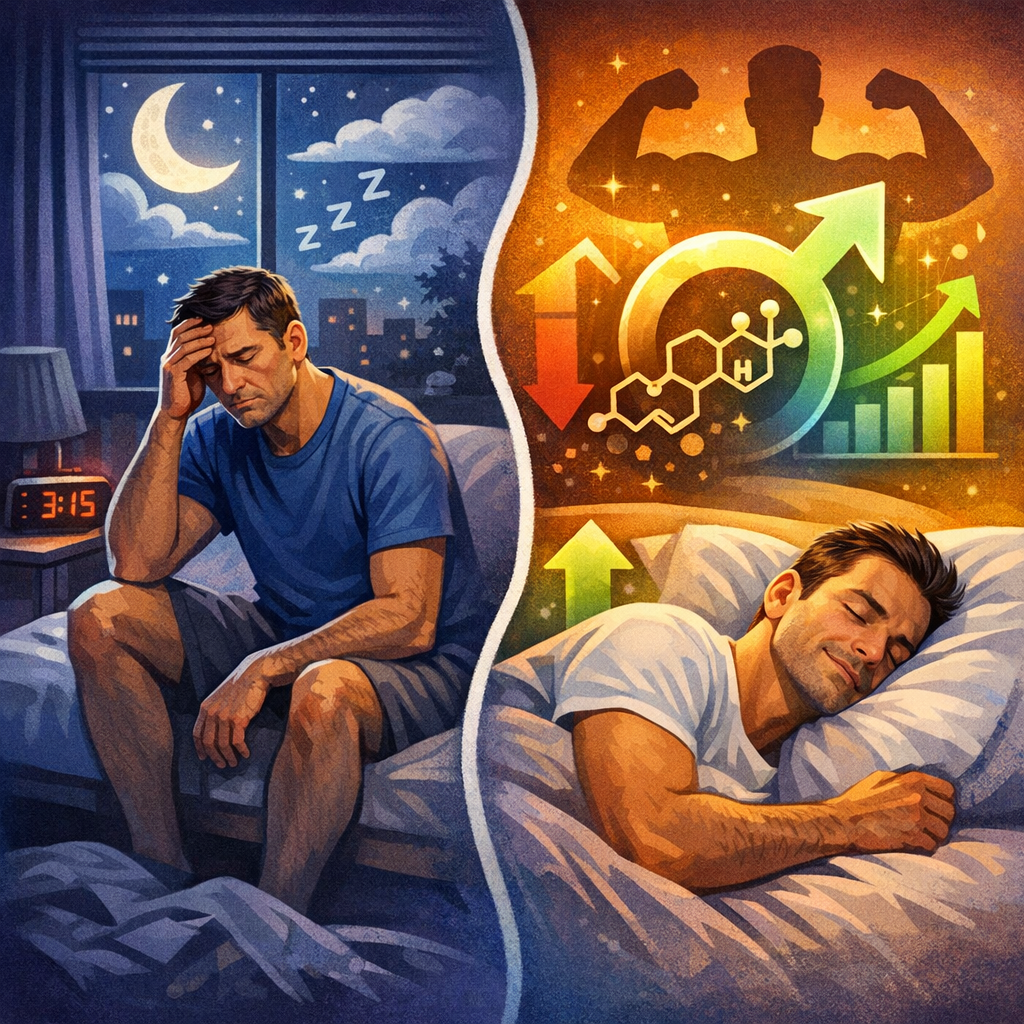
### Addressing the Link Between Sleep Disturbances and Testosterone Levels: What Men Need to Know
**Introduction**
Sleep is not only vital for rest and recovery; it is a cornerstone of hormonal balance for men. Testosterone is crucial for muscle mass and libido, but it also regulates mood and energy levels. Largely regulated during sleep, this essential hormone can be negatively impacted by disrupted sleep patterns caused by stress, technology, or underlying conditions. This article explores the connection between sleep disturbances and testosterone levels, identifies common causes, and offers practical strategies to optimize both sleep and hormonal health.
### The Role of Testosterone in Men’s Health
Testosterone is critical for multiple bodily functions, such as muscle growth, bone density, and mental well-being. As men age, natural declines in testosterone can lead to reduced energy, loss of muscle mass, weight gain, and mood swings. Poor sleep may accelerate this decline, underscoring the importance of addressing sleep issues to prevent exacerbating natural hormonal changes. According to the Endocrine Society, maintaining healthy testosterone levels is vital for aging men.
### How Sleep Disturbances Impact Hormone Regulation
Deep, non-REM sleep enhances testosterone production. Disruptions from insomnia, sleep apnea, or irregular schedules can inhibit the nightly surge in testosterone. Research indicates that men who sleep fewer than five hours a night might experience a 15% reduction in testosterone levels compared to those getting seven to nine hours of rest. Over time, diminished hormone production can contribute to fatigue, low muscle mass, and reduced libido.
### Scientific Evidence Linking Sleep and Testosterone
A 2011 study published in the Journal of the American Medical Association followed healthy young men through one week of normal sleep and one week of restricted sleep (five hours nightly). Those with limited sleep showed a 10-15% drop in daytime testosterone. Other studies reveal that even a single night of disturbed sleep can temporarily reduce testosterone, affecting mood and performance. Dr. Matthew Walker, a sleep expert, aptly noted, “Sleep is the Swiss Army knife of health.” These findings underscore the significant impact sleep has on hormonal health.
### Common Sleep Disturbances That Affect Testosterone
1. **Sleep Apnea**: Characterized by breathing pauses, this condition results in fragmented sleep and reduced testosterone.
2. **Insomnia**: Difficulty sleeping raises cortisol levels, suppressing testosterone synthesis.
3. **Poor Sleep Hygiene**: Erratic schedules, excessive screen time, caffeine, and alcohol disrupt deep sleep.
4. **Stress and Anxiety**: They trigger “fight or flight” responses, preventing restorative sleep.
### Lifestyle Tips to Improve Sleep and Boost Testosterone
Improving sleep habits naturally supports testosterone levels. Consider these strategies:
– **Establish a Consistent Sleep Schedule**: Aim to sleep and wake up at the same time each day, including weekends.
– **Optimize Your Sleep Environment**: Keep the bedroom dark, cool, and quiet. Invest in a comfortable mattress and pillows.
– **Limit Screen Time**: Blue light can disrupt melatonin; power down devices an hour before bed.
– **Monitor Caffeine and Alcohol**: Avoid caffeine after the afternoon and limit evening alcohol intake.
– **Manage Stress**: Incorporate relaxation techniques like meditation into your night routine.
– **Get Regular Exercise**: Moderate activity can improve sleep; avoid intense workouts three hours before bed.
– **Consider Natural Aids**: Consult a healthcare provider about supplements like magnesium for sleep.
For more strategies, visit [eDrugstore.com](https://www.edrugstore.com) for expert advice.
### When to Seek Professional Help
If lifestyle changes aren’t effective or if you suspect sleep apnea, consult a medical professional. A sleep study or clinical assessment can diagnose disorders needing treatment. Hormone testing can determine if testosterone replacement therapy (TRT) is necessary, given TRT’s risks and appropriateness only for confirmed low testosterone with significant symptoms.
### The Role of Nutrition in Sleep and Testosterone
Diet significantly impacts sleep and hormone synthesis. Foods rich in zinc, like oysters and beef, along with vitamin D from fatty fish, support testosterone production. Additionally, complex carbohydrates such as whole grains aid serotonin and melatonin production. Avoid heavy, spicy, or sugary meals at night to prevent indigestion from disrupting sleep.
**Conclusion**
Sleep disturbances and low testosterone can create a vicious cycle: inadequate rest lowers testosterone, leading to fatigue, mood changes, and sleep issues. Fortunately, small, consistent lifestyle adjustments can break this cycle. By prioritizing sleep hygiene, managing stress, and staying active, you can enhance hormonal health, restoring energy and well-being. Start enhancing your sleep routine tonight—your body and testosterone levels will thank you.
**References**
– The Endocrine Society: [Testosterone Therapy in Men with Androgen Deficiency Syndromes](https://www.endocrine.org)
– Walker, M. (2017). Why We Sleep: Unlocking the Power of Sleep and Dreams. Scribner.
– Journal of the American Medical Association, 2011 Study on Sleep and Testosterone.
– [eDrugstore.com](https://www.edrugstore.com)