

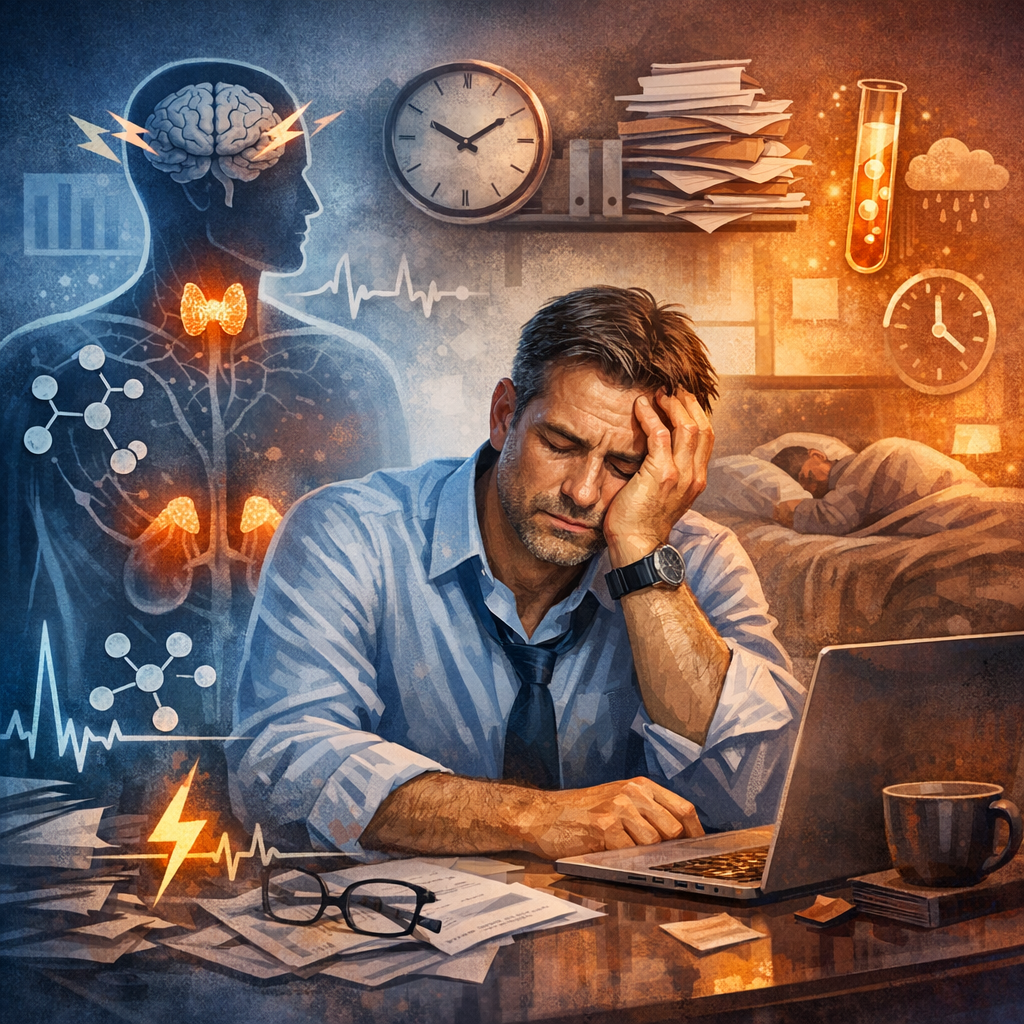
### Understanding Fatigue Beyond Overwork
Many men attribute their persistent exhaustion to long workdays, family responsibilities, or active social lives. While lifestyle factors undeniably influence energy levels, a subtler culprit often goes unnoticed: hormonal imbalances. Hormones are the body’s chemical messengers, regulating metabolism, mood, sleep, and stamina. When even one of these messengers falls out of sync, chronic fatigue that feels indistinguishable from overwork can result. As Dr. John Smith, an endocrinologist at Health Institute, states, “Men often overlook hormonal issues, attributing tiredness to common stress.” This article explores how shifts in key hormones can masquerade as simple tiredness, why you might be misdiagnosed, and what to do about it.
### Testosterone’s Influence on Energy and Vitality
Testosterone is commonly associated with sex drive and muscle mass, but it also plays a critical role in overall energy levels. Normal adult men experience a gradual decline of about 1–2% per year after age 30. For some, however, levels dip more sharply, leaving them feeling drained, irritable, and less motivated. Symptoms of low testosterone often overlap with “burnout”: difficulty concentrating, depressed mood, low libido, and reduced strength. Dr. Emily Aron, a specialist in men’s health from Wellness Clinic, highlights that “Undiagnosed testosterone deficiency can lead to severe health impacts over time.” These signs can mirror the effects of a hectic schedule or poor sleep, leading many men to assume they simply need more rest. Left unaddressed, testosterone deficiency can worsen sleep quality, impair recovery after exercise, and even contribute to weight gain—further fueling fatigue.
### Cortisol: The Stress Hormone Connection
Cortisol, known as the “stress hormone,” follows a daily rhythm—peaking in the morning to kick-start energy and dipping at night to allow restful sleep. Chronic stress, shift work, or irregular sleep patterns can flatten this curve, leading to high evening cortisol and low morning levels. In this state, men often report feelings of being wired but tired: difficulty falling asleep, waking unrefreshed, midday energy crashes, and a constant sense of being “on edge.” Dr. Richard Gray, a psychologist from Calm Mental Health Center, notes, “Cortisol dysregulation is often mistaken for common stress or burnout.” Because cortisol influences blood sugar, immune function, and memory, its dysregulation can produce a broad spectrum of complaints. Without targeted testing, it’s easy to mistake these symptoms for the effects of overworking or poor lifestyle choices alone.
### The Thyroid’s Quiet Role: Hypothyroidism
Hypothyroidism—an underactive thyroid gland—slows metabolism, making everyday tasks feel like uphill battles. Classic signs include fatigue, weight gain, cold sensitivity, and constipation. Yet many men present with subtler, borderline thyroid hormone changes that evade detection on standard blood tests. This “subclinical hypothyroidism” may not show up as an overt TSH elevation, but it can still sap energy, blunt mental clarity, and dampen motivation. Dr. Samantha Lee from the National Thyroid Association explains that “A more thorough thyroid panel—measuring free T3, free T4, and thyroid antibodies—can reveal hidden issues that a simple TSH screening misses.” Because thyroid symptoms often develop gradually, men adapt to a lowered baseline of vitality and attribute it to aging or work stress.
### Beyond the Usual Suspects: Other Hormones
While testosterone, cortisol, and thyroid hormones get most of the attention, other factors like insulin resistance can tip the energy balance. Insulin resistance—a hallmark of prediabetes—causes fluctuating blood sugar levels that lead to cycles of fatigue, irritability, and strong carbohydrate cravings. Adrenal hormones like DHEA also influence mood and resilience under stress. Even small declines in vitamin D (a hormone-like steroid) impact energy, immunity, and mood regulation. When multiple hormonal systems are slightly out of range, their effects compound, creating a generalized sense of exhaustion that feels identical to overwork.
### Identifying Signs and Seeking Help
Wondering if your tiredness stems from a demanding schedule or something deeper? Start by tracking your symptoms alongside lifestyle factors: sleep hours, diet, exercise, and stress levels. Notice patterns—do you crash after meals? Are you wired at night but too tired to be productive by mid-afternoon? If your symptoms persist despite vacations or reduced work hours, it’s worth discussing hormonal testing with a healthcare provider. Visit edrugstore.com for useful information about hormone replacement therapy that can be valuable for many men. Partnering with a clinician who understands men’s health and hormone therapy options will ensure you’re not just managing symptoms but addressing root causes.
### Steps to Restore Hormonal Balance
While pursuing testing and professional guidance, begin optimizing hormone health through lifestyle tweaks:
– **Prioritize Quality Sleep:** Aim for 7–8 hours, maintain a consistent schedule, and create a dark, cool bedroom environment. As sleep expert Dr. Laura Davis states, “Quality sleep can significantly enhance hormonal balance.”
– **Manage Stress:** Incorporate daily techniques such as meditation, deep breathing, or short walks. Research from Stress Management Research (2018) shows these methods can lower stress hormone levels.
– **Eat a Balanced Diet:** Focus on lean proteins, healthy fats (olive oil, nuts, avocados), and fiber-rich vegetables to stabilize blood sugar.
– **Exercise Smartly:** Mix strength training with moderate cardio and avoid overtraining by scheduling rest days.
### Conclusion: Beyond the “Just Tired” Narrative
Fatigue is often dismissed as an inevitable product of a busy life, but subtle hormonal imbalances can produce identical symptoms. By understanding the roles of testosterone, cortisol, thyroid, and metabolic hormones in energy regulation, you can move beyond the “just tired” narrative and identify underlying medical issues. Tracking your patterns, requesting comprehensive hormone testing, and adopting targeted lifestyle strategies will help you reclaim vitality—and ensure that persistent fatigue doesn’t continue to be mistaken for mere overwork. True rest and recovery begin with decoding the messages your hormones are sending.