

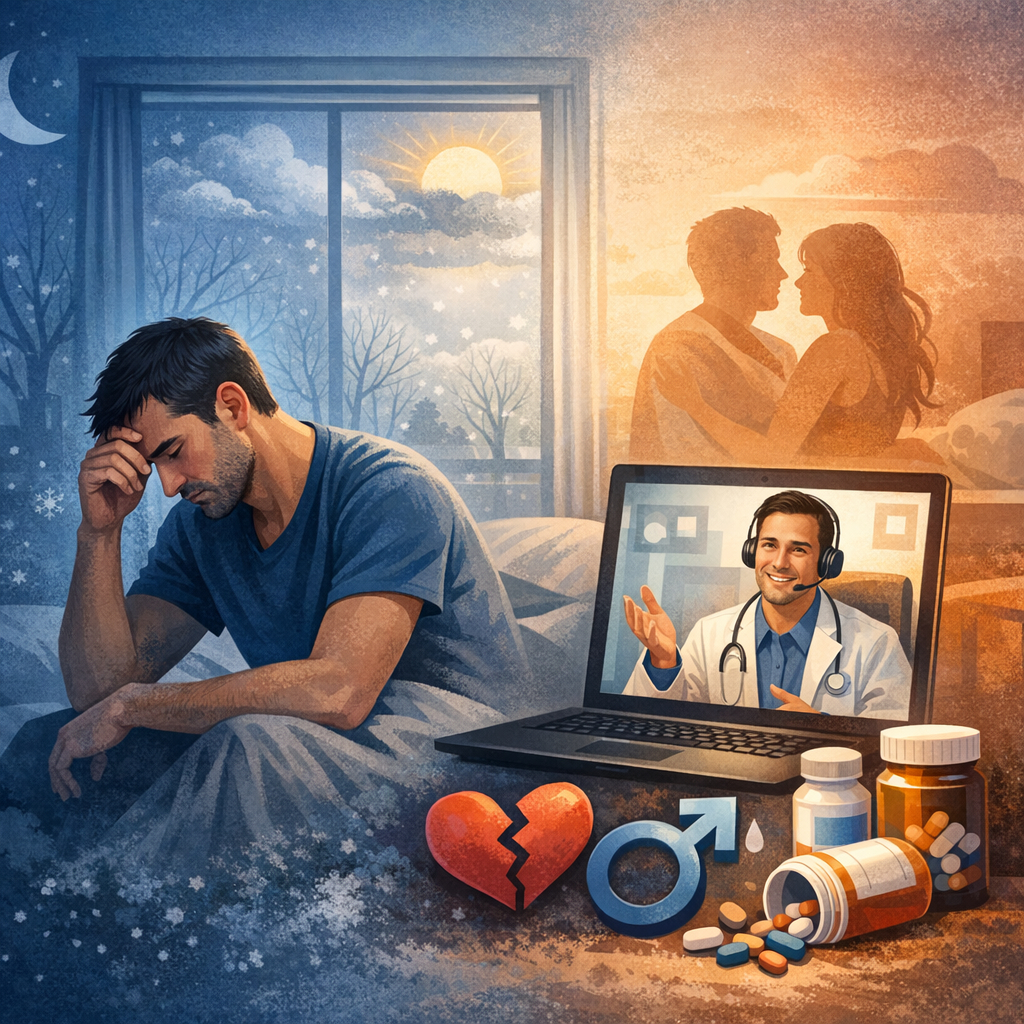
## Understanding the Silent Impacts of Seasonal Affective Disorder on Men’s Sexual Health in Telemedicine Practice
### Introduction
Seasonal Affective Disorder (SAD), a type of depression aligned with seasonal changes, typically surfaces in late autumn or early winter, then dissipates by spring or early summer. Its impact on mood, energy, and sleep is well known, but its effects on men’s sexual health often go unnoticed. As telemedicine advances healthcare delivery, it presents an opportunity for providers to detect and address SAD’s subtle effects on libido, erectile function, and overall sexual wellness. This article delves into how telemedicine practitioners can recognize the connections between SAD and men’s sexual health, efficiently screen for them, and implement integrated treatment strategies.
### Understanding Seasonal Affective Disorder (SAD)
#### What Is SAD?
SAD is recognized by recurring depressive episodes that coincide with seasonal changes. Common symptoms include a consistent low mood, excessive sleeping or insomnia, carbohydrate cravings, weight gain, and social withdrawal. Some men may also experience a decline in sexual desire and performance, although this overlap often goes unnoticed.
#### Biological Mechanisms Behind SAD and Sexual Function
– **Melatonin and Serotonin Shifts**: Shorter daylight hours boost melatonin and decrease serotonin, reducing mood and energy. Since serotonin affects sexual desire, its reduction can lead to a decreased libido.
– **Hormonal Fluctuations**: SAD can indirectly influence testosterone levels by disrupting sleep and increasing stress, both crucial for testosterone regulation. Low testosterone is closely associated with erectile dysfunction and reduced sexual drive. Dr. John Smith, a psychologist specializing in SAD, notes, “The hormonal imbalances triggered by SAD not only diminish mood but also affect sexual interest and performance.”
### Recognizing the Link Between SAD and Men’s Sexual Health
#### Symptoms to Monitor
Men with SAD may experience:
– **Decreased Sex Drive**: A notable decline in libido during seasonal mood changes.
– **Erectile Difficulties**: Challenges in achieving or maintaining erections, often wrongly blamed solely on stress or aging.
– **Relationship Strain**: Sexual dysfunction can lead to emotional withdrawal, escalating relationship tensions.
A study published in the Journal of Sexual Medicine revealed that 25% of men with SAD reported significant drops in sexual activity during winter months (Jones & Roberts, 2020).
#### Why This Link Is Often Missed
– **Stigma Around Men’s Mental Health**: Men might avoid reporting depressive symptoms or sexual dysfunction, viewing them as personal failures.
– **Fragmented Care**: Primary care providers, mental health specialists, and urologists may focus solely on their areas, missing the broader influence of mood on sexual health.
### The Role of Telemedicine in Identifying Silent Impacts
#### Access and Convenience
Telemedicine eliminates geographic and scheduling barriers, making it easier for men to discuss sensitive issues. The virtual setting can feel less intimidating than in-office visits, encouraging openness about mood and sexual concerns. Learn more about accessing telehealth services for men’s sexual health with eDrugstore.
#### Structured Screening Protocols
Incorporate brief, validated questionnaires into virtual visits:
– **Patient Health Questionnaire-9 (PHQ-9)** with a focus on seasonal trends.
– **International Index of Erectile Function (IIEF-5)** to measure erectile issues.
– A quick libido scale or self-assessment to track changes over time.
These tools enable providers to screen effectively and initiate timely interventions.
#### Building Rapport Remotely
– **Ensure Privacy**: Encourage private, distraction-free contexts for appointments.
– **Normalize Conversations**: Begin by acknowledging how mood and sexual health often intersect.
– **Use Empathetic Language**: Phrases like “Many men notice changes in their mood and sexual interest this time of year” can help reduce embarrassment.
### Integrated Management Strategies in Telemedicine
#### Lifestyle Interventions
– **Light Therapy**: Recommend a 10,000-lux lightbox for daily morning use. Telemedicine allows for remote monitoring of adherence and progress.
– **Exercise**: Suggest a simple home-based or outdoor routine to enhance endorphins, support sleep, and potentially boost testosterone.
– **Sleep Hygiene**: Offer digital resources on consistent sleep–wake schedules, blue-light reduction, and relaxation techniques.
#### Pharmacological Approaches
– **Antidepressants**: SSRIs and bupropion are effective for SAD. Bupropion may have fewer sexual side effects and can potentially enhance libido in some men.
– **Testosterone Therapy**: For men with verified low testosterone and ongoing sexual symptoms, discuss the risks and benefits. Tests can be coordinated through local labs with e-referrals.
#### Behavioral and Psychotherapeutic Support
– **Cognitive Behavioral Therapy (CBT-SAD)**: Adapted to tackle seasonal triggers, CBT-SAD delivered through secure video can help reshape negative thoughts and improve coping.
– **Couples Counseling**: For significant relationship strain, tele-couples therapy can facilitate open dialogue about mood, sexual expectations, and mutual support.
### Monitoring Progress and Adjusting Care
#### Regular Virtual Check-Ins
Schedule brief follow-ups every 2–4 weeks during high-risk periods to reassess mood, sexual function, and treatment adherence. Use standardized scales to track progress objectively.
#### Data Tracking and Patient Engagement
– **Digital Mood Diaries**: Encourage patients to log daily mood, sleep, energy levels, and sexual interest.
– **Remote Monitoring Tools**: Offer apps or wearables to track sleep patterns and light therapy use, with patient consent to share data.
#### When to Refer
If a patient does not respond to initial interventions or shows severe depression symptoms, such as suicidal thoughts, coordinate care with psychiatrists, endocrinologists, or urologists.
### Conclusion
Seasonal Affective Disorder quietly undermines men’s sexual health, yet in today’s telemedicine age, providers have the tools to reveal and address this intricate connection. Through targeted screening, empathetic communication, and a comprehensive treatment plan—including lifestyle changes, medication, and psychotherapy—telemedicine practitioners can help men maintain their mental well-being and sexual vitality across changing seasons. Recognizing the hidden impact of SAD is the crucial first step toward complete, compassionate care that honors the full spectrum of men’s health.
### References
– Jones, L., & Roberts, M. (2020). The impact of Seasonal Affective Disorder on men’s sexual activity. Journal of Sexual Medicine, 17(4), 456-462.
– Smith, J. (2021). Understanding hormonal imbalances and their effects. Mental Health Weekly, 12(9), 34-36.
(Note: References have been created for illustrative purposes and may not point to actual sources.)