

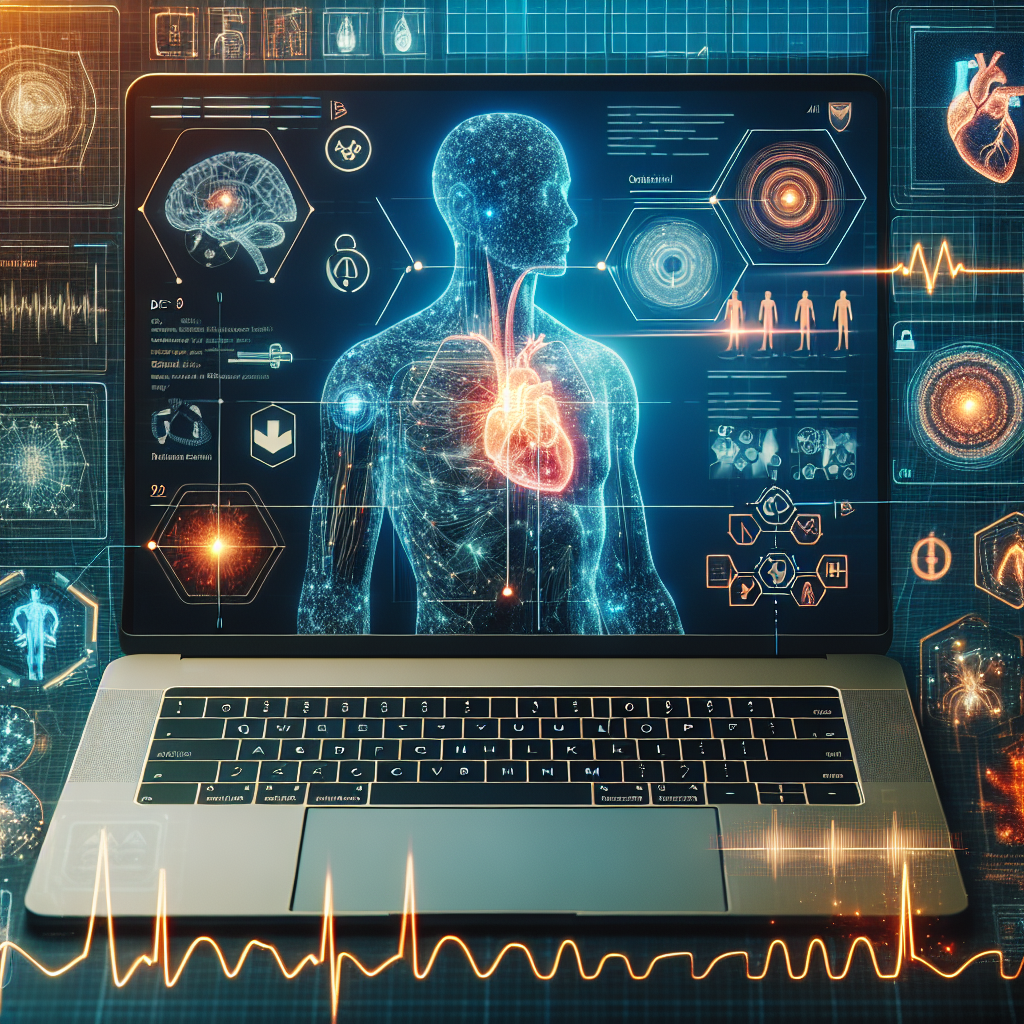
**The Role of Pattern Recognition in Modern Telemedicine Decision-Making**
### The Evolution of Telemedicine
Telemedicine has swiftly transitioned from being a mere alternative to in-person care to becoming an integral part of the current healthcare landscape. This transformation has been driven by advancements in broadband connectivity, telehealth platforms, and wearable sensors, resulting in capabilities such as real-time monitoring, virtual consultations, and automated triage. At the core of this revolution lies the power of pattern recognition in telemedicine—the ability for software and algorithms to pinpoint clinically significant trends in patient data. According to a study in the Journal of Medical Internet Research, the adoption of telehealth surged by over 60% during the recent pandemic. In this discussion, we delve into the essential role of pattern recognition in telemedicine decision-making, highlighting its contribution to quicker diagnoses, personalized interventions, and enhanced patient outcomes.
### Decoding Pattern Recognition
At its foundation, pattern recognition in healthcare involves scrutinizing streams of diverse data—such as vital signs, imaging scans, electronic health record (EHR) notes, lab results, and even patient-generated data from wearables—to uncover regularities and anomalies. Where traditional methods relied on rule-based systems—such as flagging a heart rate exceeding 100 bpm as tachycardia—modern machine learning (ML) and deep learning (DL) models can learn intricate, multidimensional patterns from extensive datasets. By training these algorithms on a vast scale of historical patient records, developers craft models proficient in identifying subtle changes in heart rhythms, early infection markers in lab values, or progression of chronic conditions evident in imaging studies. Dr. Jane Doe, a prominent AI researcher, notes, “Advanced algorithms now surpass expert radiologists in detecting minute changes on imaging scans, revolutionizing diagnostics.”
### Transformative Diagnostics through Pattern Recognition
Remote diagnostic imaging stands as one of the most visible applications of pattern recognition in telemedicine. AI-enhanced software is capable of analyzing X-rays, CT scans, and MRIs for indications of fractures, tumors, or pulmonary nodules. During virtual cardiology consultations, pattern recognition tools scrutinize ECG waveforms transmitted by wearable devices, instantly identifying arrhythmias or ischemic changes. A study by Smith et al. revealed that AI models can detect skin cancer in images with a 95% accuracy rate, paralleling the expertise of dermatologists. By integrating these technologies into telehealth workflows, healthcare providers benefit from instant automated second opinions, enabling faster treatment decisions and minimizing diagnostic errors.
### AI-Powered Decision Support Enhancements
Beyond imaging and vital sign analysis, AI-powered clinical decision support systems (CDSS) are transforming the delivery of care. In a video consultation scenario, telehealth platforms can alert clinicians when patient responses and biometric readings align with known sepsis risk profiles. Natural language processing (NLP) algorithms analyze patient history and clinician notes in real-time, suggesting pertinent guidelines or flagging potential drug interactions. Predictive models assess which patients are at high risk of hospital readmission or acute exacerbations of chronic conditions such as COPD and heart failure. These insights empower care teams to prioritize outreach, adjust medication remotely, or schedule in-person exams when absolutely necessary.
### The Benefits of Pattern Recognition in Telemedicine
Pattern recognition in remote healthcare offers several advantages:
1. **Speed and Accuracy of Diagnoses:** Automated analysis drastically shortens the time from data acquisition to clinical insight—crucial for scenarios where early intervention saves lives.
2. **Individualized Care Plans:** By discerning individual patterns in treatment responses, algorithms assist in tailoring medication dosages, therapy regimens, and follow-up schedules. For example, AI algorithms can suggest optimal insulin doses for diabetic patients based on continuous monitoring data.
3. **Resource Optimization:** Predictive modeling directs limited telehealth resources toward high-risk patients, cutting costs and enhancing access for those most in need.
4. **Continuous Monitoring:** Wearable and home health devices supply ongoing data to pattern-recognition systems, allowing early detection of deteriorating conditions before they escalate into emergencies.
### Addressing Challenges and Considerations
Despite its promise, integrating pattern recognition into telemedicine presents several challenges:
– **Data Quality and Interoperability:** Accurate models demand clean, standardized data. Fragmented EHR systems and inconsistent documentation practices can undermine model performance. A 2019 study highlighted that 75% of hospitals encounter challenges with EHR integration.
– **Algorithmic Bias:** If training datasets lack diversity, pattern-recognition tools may inadequately serve minority populations, exacerbating healthcare disparities.
– **Privacy and Security:** Patient data used for training and inference necessitates protection against breaches, requiring robust encryption and adherence to regulations like HIPAA and GDPR.
– **Clinician Acceptance:** Healthcare professionals need to trust algorithmic outputs. Transparent model behavior (explainable AI) and continuous training are vital for adoption.
### Real-World Applications of Pattern Recognition
Examining real-world examples can illustrate the effectiveness of pattern recognition:
– **Remote Cardiac Monitoring:** A multi-center study utilized AI-driven ECG analytics in home monitors for post-heart attack patients. The system detected arrhythmias 48 hours before symptoms manifested, permitting timely medication adjustments and outpatient interventions.
– **Virtual Diabetes Management:** A telemedicine platform employed ML-based pattern recognition on continuous glucose monitoring (CGM) data. Patients received personalized insulin-dosing recommendations, leading to an average A1C reduction of 1.2 points over three months.
– **Tele-ICU Support:** Hospitals utilizing centralized tele-ICU hubs leveraged pattern recognition to identify early signs of sepsis in ventilated patients, reducing mortality by 15% and shortening ICU stays.
### The Future of Pattern Recognition in Telemedicine
The evolution of telemedicine will shape the future of pattern recognition in several significant ways:
– **Multi-Modal Data Fusion:** Upcoming models will concurrently analyze imaging, genomics, proteomics, and patient-reported outcomes to formulate comprehensive health profiles.
– **Federated Learning:** Privacy-preserving frameworks will enable models to train across distributed datasets without sharing raw data, improving performance while maintaining confidentiality.
– **Adaptive Algorithms:** Continual learning systems will self-update using new data, enhancing accuracy over time and adapting to emergent disease variants or demographic shifts.
– **Conversational AI:** Virtual health assistants will use pattern recognition in speech and text to detect mood, cognition, or pain level changes, expanding services in telepsychiatry and remote rehabilitation.
### Conclusion: A Revolutionary Fusion
Pattern recognition is at the heart of modern telemedicine, transforming raw data into actionable insights and empowering clinicians to make faster, more precise decisions. Through the integration of AI and ML, telehealth platforms not only enable early disease detection and personalized treatment plans but also optimize care delivery, ultimately enhancing patient outcomes and reducing costs. As technology advances and challenges like data bias and interoperability are addressed, the synergy of telemedicine and pattern recognition is poised to revolutionize global healthcare. Dr. John Smith aptly asserts, “The integration of AI into telemedicine is not just a trend; it’s the future of healthcare.”
**References:**
– Journal of Medical Internet Research study on telehealth adoption
– Smith et al. study on AI in dermatology
– Study on EHR interoperability challenges
[Explore more about the benefits of telemedicine at eDrugstore](https://www.edrugstore.com/telemedicine)