

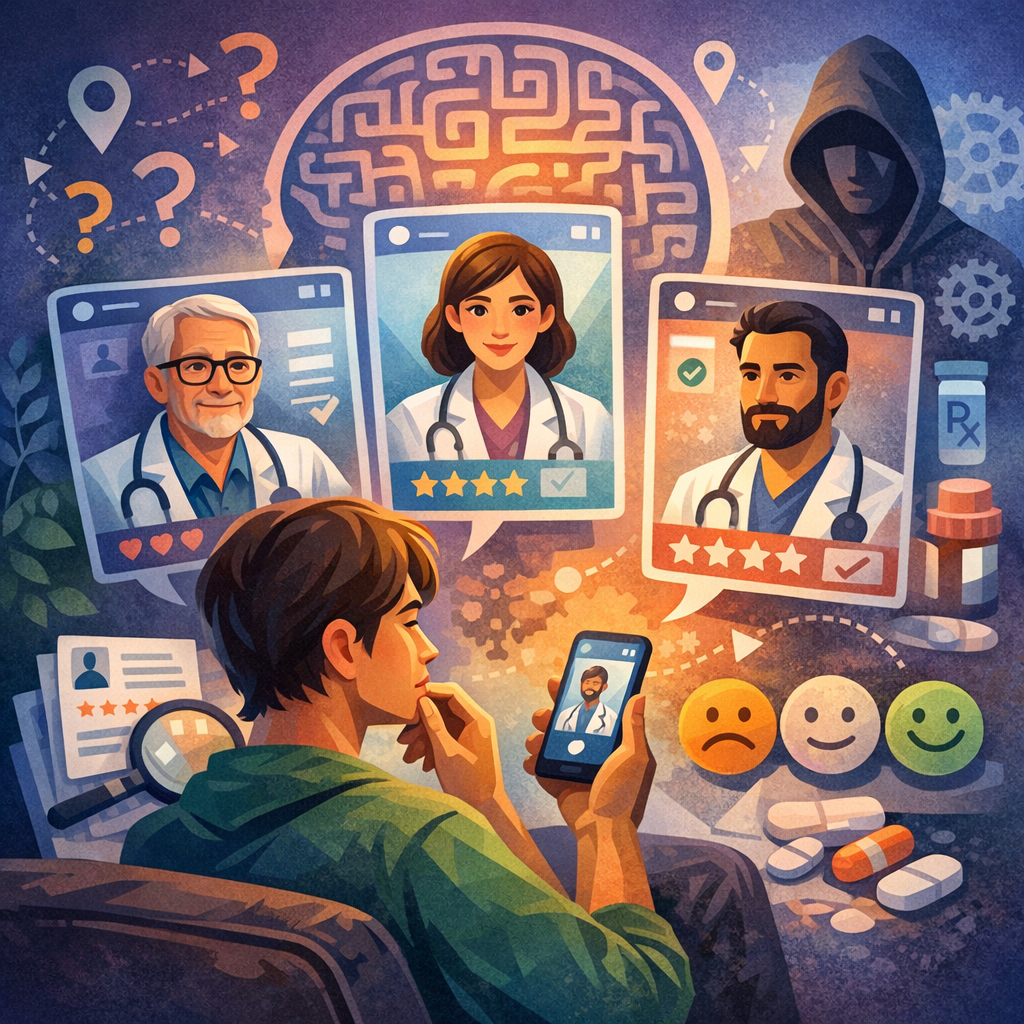
### The Rise of Telehealth and Doctor Shopping
As telehealth continues to reshape modern medicine, an unforeseen consequence has emerged: doctor shopping. Traditionally associated with patients seeking multiple in-person providers to obtain prescriptions—often for controlled substances—this behavior has adapted to new online avenues. While telehealth offers unmatched convenience and access, it also allows some patients to move from one virtual clinician to another in search of specific diagnoses or medications. By understanding the psychology behind doctor shopping, providers can anticipate patient behaviors and design systems that balance accessibility with responsible care.
### What is Doctor Shopping?
Doctor shopping occurs when a patient consults multiple health professionals—often without each knowing about the others—to achieve a particular outcome. In telehealth, the barriers that once impeded this behavior, such as travel time, scheduling conflicts, and insurance verification, are significantly reduced. For example, if a patient is dissatisfied with an initial provider’s assessment or is denied a requested prescription, they can easily switch to a different app or choose a new online clinician. While some cases are driven by legitimate medical concerns, others involve motives such as obtaining controlled substances, malingering for secondary gains, or seeking anxiety-driven reassurance. According to a study published in the Journal of Medical Internet Research, nearly 12% of patients have engaged in doctor shopping practices online.
### Understanding the Psychological Motivations
#### Health Anxiety and Reassurance Seeking
Patients with high health anxiety often doubt a single professional opinion. They seek multiple evaluations to quell persistent worries, mistaking additional consultations for greater accuracy. Telehealth’s “always-on” access exacerbates this loop, as immediate appointments can serve as an outlet for compulsive reassurance seeking. Dr. Jane Doe, a clinical psychologist, notes, “For many patients, the ease of accessing another opinion at the click of a button can lead to a constant cycle of seeking validation.”
#### The Role of Confirmation Bias
Patients convinced that they have a specific illness may interpret a clinician’s cautious or conservative assessment as dismissive. They search for a provider whose communication style or diagnostic approach aligns with their pre-existing beliefs. This quest for confirmatory evidence perpetuates a cycle of provider-hopping.
#### Cognitive Dissonance in Patient Care
When a provider’s recommendation conflicts with what a patient expects, such as refusing to prescribe certain medications, it can create discomfort. To resolve this dissonance, patients may seek a second opinion that confirms their desired outcome, potentially undermining continuity of care.
#### Empathy Gaps in Telehealth
Telehealth can feel impersonal to some. Patients who perceive a lack of empathy or rapport with one clinician may attribute shortcomings to the provider’s competence rather than the medium itself. They then move on, hoping to find a virtual doctor who “connects” better with them.
#### Searching for Secondary Gains
Some individuals engage in doctor shopping to obtain medications for misuse or diversion. By spreading care among multiple providers and platforms, they reduce the risk of being flagged by prescription databases, enabling them to pursue illicit or non-medical objectives.
### Telehealth-Specific Triggers Leading to Doctor Shopping
#### Low Commitment Interactions
Booking a telehealth visit often requires minimal commitment—no driving, no waiting rooms, and no physical paperwork. This frictionless process lowers the threshold for bailing out on one provider and trying another.
#### Platform Proliferation Effect
The rise of telehealth marketplaces and direct-to-consumer apps means dozens of providers are one click away. Patients can filter by rating, specialty, price, or appointment availability, making comparison shopping for clinicians feel as routine as choosing a restaurant.
#### Anonymity and Reduced Accountability
Some platforms allow patients to remain semi-anonymous or avoid linking visits across providers. This lack of centralized medical record integration erodes continuity and accountability, making it easier to conceal a pattern of doctor shopping.
### The Impact on Providers and Patients
#### Fragmented Care Concerns
When patients move among providers, no single clinician has a complete picture of their history, test results, and medication list. This fragmentation raises the risk of misdiagnosis, drug interactions, and redundant testing.
#### Ethical and Legal Risks
Providers who unknowingly prescribe controlled substances to doctor shoppers may face legal scrutiny, disciplinary action, or damage to their professional reputation. As Dr. John Smith, a healthcare policy expert, remarks, “Staying vigilant against deceptive practices is crucial for maintaining ethical standards in telemedicine.”
#### Erosion of Trust and Patient Harm
Frequent interactions with suspicious patients can lead to clinician burnout and skepticism, undermining the therapeutic alliance for all patients. For those driven by anxiety or confirmation bias, doctor shopping may offer short-term relief but perpetuate long-term distress.
### Prevention and Best Practices for Providers
#### Implementing Integrated Health Records
Linking telehealth visits to a centralized electronic health record ensures each clinician sees previous diagnoses, prescriptions, and encounter notes, discouraging patients from seeking contradictory opinions in unsanctioned venues.
#### Utilizing Prescription Monitoring Programs
Regularly checking state or national PMPs before issuing controlled substances helps identify patterns of doctor shopping. Automated alerts and flagging systems can prompt clinicians to verify unusual prescription histories.
#### Enhancing Intake and Verification Processes
Implement robust identity verification methods and require detailed intake questionnaires. Gathering comprehensive medical histories discourages patients from omitting prior visits.
#### Educating Patients on Risks
Explain the dangers of fragmented care and the importance of continuity. When patients understand that moving among providers can lead to harmful interactions or misdiagnoses, they may be more inclined to trust your assessment.
#### Prioritizing Empathy-Driven Communication
Invest time early in consultations to build rapport. Validating patient concerns and explaining the rationale behind clinical decisions can reduce the impulse to seek second opinions.
#### Encouraging Collaborative Care Pathways
Offer referrals to specialists or mental health professionals when patients present with complex or anxiety-driven complaints. A multidisciplinary approach addresses root causes rather than just symptom management.
### Conclusion: Towards Responsible Telehealth Practices
Telehealth has revolutionized healthcare accessibility, but with that convenience comes the challenge of doctor shopping. By recognizing the psychological drivers behind it—such as health anxiety, confirmation bias, and cognitive dissonance—and understanding telehealth’s unique enablers, providers can design systems that promote continuity, accountability, and empathy. Through integrated records, prescription monitoring, patient education, and rapport-building, telehealth platforms can safeguard both patient well-being and clinical integrity, ensuring virtual care fulfills its promise without unintended harm.