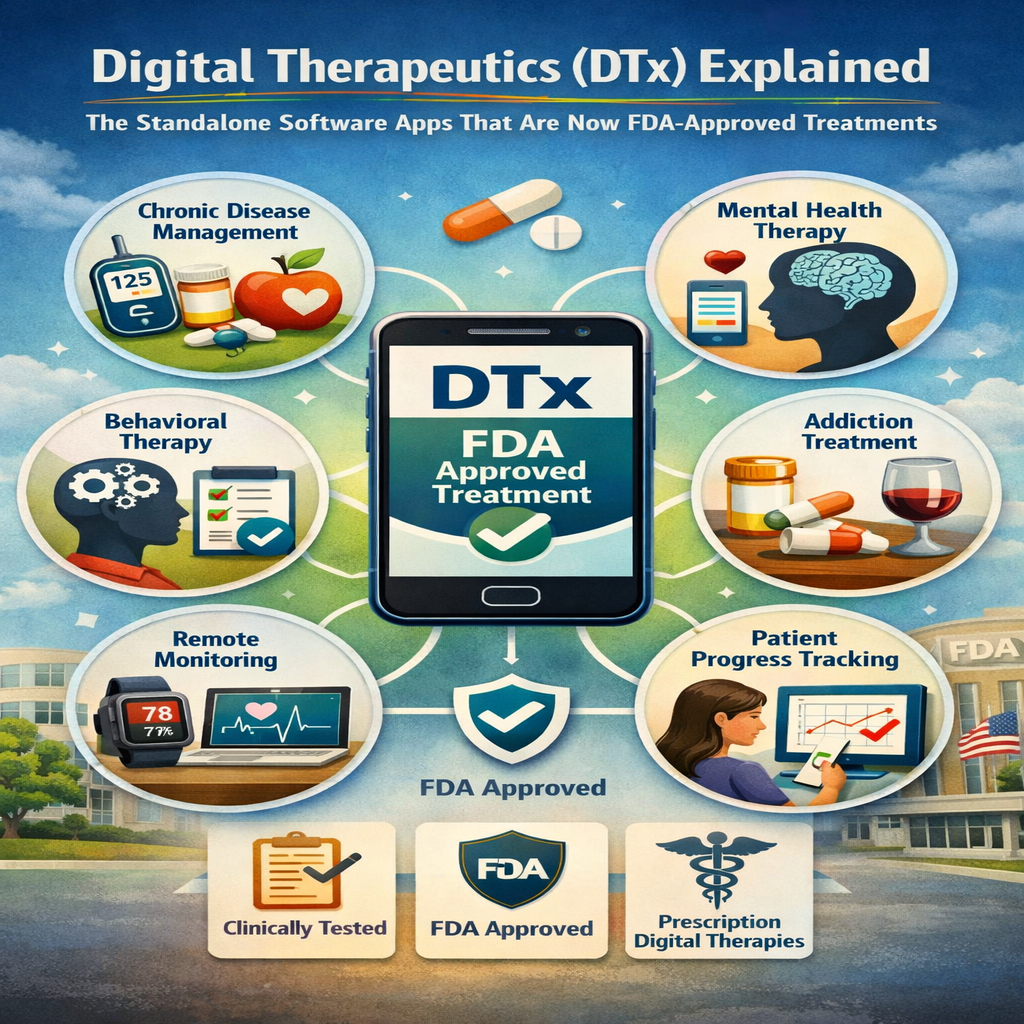
Digital Therapeutics (DTx) Explained
Introducing a New Era of Medicine
Digital therapeutics (DTx) are revolutionizing the healthcare landscape by delivering clinically validated health interventions through software. Unlike traditional pharmaceuticals or physical medical devices, DTx tools are delivered via mobile or tablet applications. In recent years, the U.S. Food and Drug Administration (FDA) has approved several of these digital products as standalone treatments, recognizing their safety, efficacy, and potential to transform patient care. This guide will explore what digital therapeutics are, how they become FDA-approved, real-world examples, and their growing role in modern healthcare.
What Are Digital Therapeutics?
Digital therapeutics go far beyond conventional health and wellness apps. These are FDA-reviewed, evidence-based software solutions designed to treat or manage medical conditions such as insomnia, ADHD, anxiety, and substance use disorders. Unlike apps that simply track fitness data or send reminders, DTx platforms often integrate cognitive behavioral therapy (CBT) methods, behavioral science, and real-time data collection to deliver custom treatment experiences.
“Digital therapeutics combine the rigor of clinical trials with the power of software to deliver personalized care at scale,” explains Megan Coder, PharmD, founder of the Digital Therapeutics Alliance.
Key features of DTx apps include user interactivity, adaptive treatment plans based on real-time feedback, and rigorous development protocols. To meet regulatory standards, DTx developers must demonstrate both safety and clinical effectiveness, akin to prescription medications.
How Do Digital Therapeutics Get FDA Approval?
FDA approval for digital therapeutics involves a comprehensive evaluation of clinical effectiveness, software integrity, data security, and health outcomes. These products must undergo robust, peer-reviewed clinical trials and submit detailed documentation under one of several review pathways: the 510(k) process, de novo classification, or Pre-Market Approval (PMA), depending on the device’s novelty and risk level.
For example, Somryst for chronic insomnia received de novo clearance after randomized controlled trials demonstrated compelling health improvements. Similarly, reSET-O for opioid use disorder met FDA standards and is eligible for insurance reimbursement. These approvals mark a significant shift: software is increasingly being prescribed just like medication.
The Advantages of Digital Therapeutics
Digital therapeutics provide numerous benefits compared to traditional treatment methods:
– Accessibility and Reach: With over 85% of U.S. adults owning a smartphone, DTx solutions can be widely adopted. They eliminate geographical or travel constraints, giving users access to therapy from home.
– Personalized Interventions: Many DTx apps adapt dynamically to users’ behavior. For instance, EndeavorRx for pediatric ADHD modifies game complexity in real time based on cognitive responses, offering a personalized therapeutic experience.
– Objective Progress Tracking: Unlike self-reported symptoms, DTx tools collect accurate, data-driven insights through digital journals and sensors, improving clinical decision-making.
– Cost Efficiency: Preliminary data suggests that digital therapeutics can reduce healthcare costs by as much as 20%, primarily through improved therapy compliance and reduced hospital visits.
– Higher Patient Engagement: DTx apps often include gamification, coaching support, and interactive dashboards to keep users invested in their treatment, leading to better long-term outcomes.
FDA-Authorized Digital Therapeutics in Action
Here are some key examples of DTx products currently authorized by the FDA:
– reSET and reSET-O by Pear Therapeutics: These digital CBT-based tools treat Substance Use Disorder (SUD) and Opioid Use Disorder (OUD) with high success rates. Clinical trials revealed a 71% increase in abstinence compared to traditional approaches.
– Somryst: Designed for chronic insomnia, Somryst deploys CBT techniques including sleep restriction and relaxation strategies. Patients reported a 60% improvement in sleep efficiency during trials.
– EndeavorRx: Created by Akili Interactive, this is the first FDA-authorized video game therapeutic. It targets pediatric ADHD by blending cognitive challenges with engaging gameplay, resulting in measurable attention span improvements.
– NightWare: Targeting PTSD-related nightmares, NightWare detects sleep disruptions and gently awakens users using vibrations, ultimately promoting restful sleep.
– Deprexis: While not yet FDA-approved in the U.S., this European-authorized platform has demonstrated a 50% reduction in depressive symptoms. Its success in Germany showcases the broader global appeal of digital therapeutic treatment.
Bringing Digital Therapeutics into Healthcare Practices
Integrating DTx solutions into day-to-day clinical routines involves adjusting healthcare workflows. This includes training providers to prescribe digital tools, monitoring progress via integrated platforms, and supporting patient onboarding. Fortunately, many modern Electronic Health Record (EHR) systems can now interface directly with DTx platforms, making the integration seamless.
“Digital therapeutics align perfectly with value-based care models by offering measurable, data-driven outcomes,” emphasizes Dr. John Torous, a digital psychiatry expert from Harvard Medical School.
Insurers are also beginning to incorporate DTx apps into their formularies, with some implementing outcome-based reimbursement. This shift supports evidence-based care while offering patients access to tailored digital treatments.
Barriers and Challenges in Widespread Adoption
Despite their promise, several hurdles limit the broad implementation of digital therapeutics:
– Reimbursement Structure: Not all insurance companies have billing systems in place for digital therapy codes. This complicates accessibility and affordability.
– Technology Access Gaps: Roughly 14% of U.S. adults lack internet access at home, limiting reach for underserved populations.
– Data Security and Privacy: As DTx apps handle sensitive health information, developers must adhere to HIPAA regulations and implement robust cybersecurity measures.
– Provider Hesitation: Some clinicians may be unfamiliar with digital tools or hesitant to recommend non-pharmaceutical options.
– User Engagement: Like many app-based solutions, dropout rates can be high. Features such as coaching, reward systems, and progress notifications can help maintain motivation.
A Glimpse into the Future of Digital Therapeutics
The future looks bright for digital therapeutics, with new treatments in development for chronic pain, cardiovascular rehabilitation, and AI-enhanced mental health care. Advances in machine learning are paving the way for hyper-personalized interventions that respond to a user’s mood, biometrics, and historical data in real time.
Integration with wearable devices such as fitness trackers, glucose monitors, and heart rate sensors is expected to create a continuous feedback loop between physical input and digital output—enhancing real-time therapeutic adjustments.
Meanwhile, regulatory bodies like the FDA are working on streamlined approval pathways to support more efficient global rollouts of digital therapeutic tools.
Conclusion: The Digital Revolution in Healthcare
Digital therapeutics have moved beyond novelty to become powerful, clinically validated tools with real patient benefits. Today, several FDA-approved DTx apps are changing the way we treat conditions traditionally managed only with medication and in-person therapy. While challenges like reimbursement structures and digital equity remain, the momentum is undeniable.
As DTx platforms continue to evolve, patients and providers will have more resources than ever to manage health proactively, affordably, and effectively. The future of personalized care lies in innovative, secure, and clinically proven software solutions.
To explore accessible prescription services and virtual treatment options, visit eDrugstore.com.