

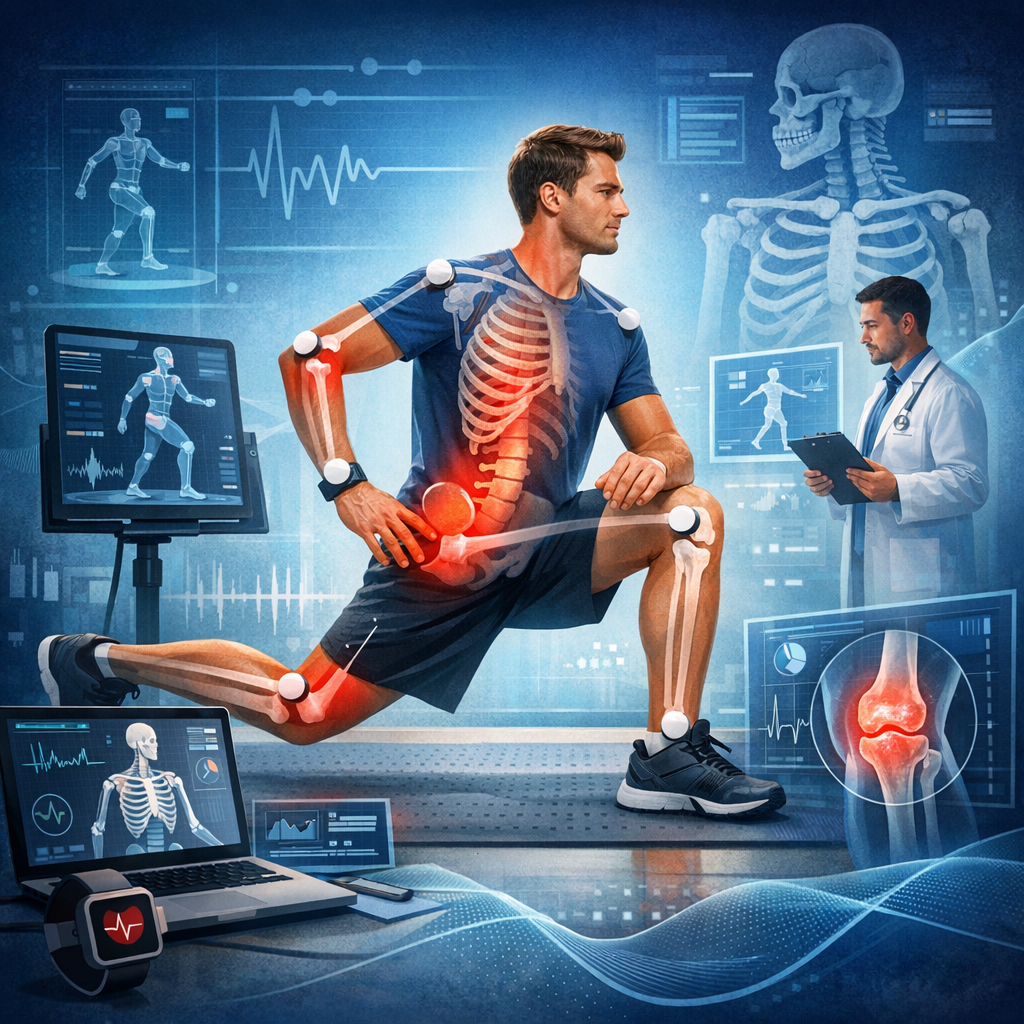
### Unveiling the New Frontier in Musculoskeletal Diagnostics
Musculoskeletal conditions, such as lower back pain, knee osteoarthritis, and shoulder impingement, affect millions of men worldwide. According to the World Health Organization, about one in five adults grapple with these issues, impacting their quality of life. Early detection can drastically improve treatment outcomes, reduce long-term disability, and support patients in leading active, pain-free lives. Traditional diagnostic methods, like X-rays and manual physical exams, often miss subtle biomechanical changes that precede symptoms. Enter motion-sensing technology: a series of revolutionary tools capable of capturing and analyzing human movement in real-time. Dr. Jonathan Smith, a sports medicine expert, asserts, “The future of musculoskeletal care lies in early and accurate detection.” This article explores how these innovations are transforming men’s musculoskeletal care by identifying issues before they advance.
### Understanding Motion-Sensing Technology
**Inertial Measurement Units (IMUs)**
IMUs are compact, wearable devices equipped with accelerometers, gyroscopes, and magnetometers. When attached to limbs or the torso, they capture data such as acceleration, angular velocity, and orientation. Advanced algorithms transform this raw input into detailed metrics, including joint angles, range of motion, and gait symmetry. For clinicians, these metrics are invaluable in designing personalized rehabilitation programs for knee osteoarthritis patients, offering tailored exercises to restore balance and function.
**Marker-less Motion Capture Systems**
Utilizing depth-sensing cameras and computer vision, these systems track body landmarks without the need for reflective markers. They produce real-time 3D models illustrating posture, alignment, and subtle movement deviations, making them ideal for both clinical and at-home use. For example, depth-sensing cameras can identify incorrect shoulder alignment in athletes, preventing chronic shoulder issues.
**Pressure and Force Plates**
Integrated into floors or portable mats, these tools measure ground reaction forces during activities such as walking, running, and jumping. They track zero-point shifts, weight distribution, and asymmetries, highlighting compensatory patterns associated with early injury stages. This technology aids in diagnosing conditions like foot disorders by analyzing weight distribution during gait.
### The Benefits of Early Diagnosis via Motion Sensing
**Objective, Quantifiable Data**
By replacing subjective assessments like “The pain is 7 out of 10” with precise metrics, such as a 15-degree reduction in hip flexion, clinicians can set data-driven goals and monitor progress. According to a study in the Journal of Orthopaedic Research, motion-sensing technology boasts a 30% improvement in diagnostic accuracy over traditional methods.
**Personalized Intervention Plans**
By pinpointing specific muscles or joint movements needing correction, these tools guide the creation of personalized exercise programs, ergonomic adjustments, or bracing strategies. For those showing early signs of lower back pain, specific exercises can be recommended to enhance lumbar mobility and alleviate discomfort.
**Preventing Chronic Progression**
Detecting micro-alterations, such as a slight limp, can precede visible injuries, allowing early intervention to halt or even reverse degenerative changes in cartilage, tendons, and ligaments. Dr. Lisa Turner observes, “Intervening sooner rather than later can mean the difference between a temporary setback and a chronic condition.”
### Real-World Applications in Men’s Musculoskeletal Health
**Lower Back Pain**
IMUs can identify improper lumbar-pelvic rhythm during bending and lifting tasks. Biofeedback systems encourage patients to correct their posture in real time, reducing disc compression. This is particularly beneficial for office workers who remain seated for extended periods.
**Knee Osteoarthritis**
Gait analysis exposes medial or lateral loading imbalances, potentially accelerating cartilage wear. Personalized gait retraining, such as adjusting step length or foot strike during walking, slows joint degeneration and reduces the need for corrective surgeries.
**Shoulder Impingement and Rotator Cuff Strains**
3D motion capture tracks scapular tilt and humeral rotation during arm abduction. Early detection of abnormal scapulohumeral rhythm leads to targeted stabilization exercises, helping athletes avoid long-term shoulder damage.
### Remarkable Case Studies
**The Active Commuter**
A 45-year-old male office worker who cycled to work began experiencing intermittent knee discomfort. A marker-less motion capture assessment revealed a 10% shift in lateral knee loading on his dominant side. Through guided gait retraining and strength exercises for the hip abductors, his pain resolved within six weeks, allowing him to return to cycling pain-free.
**The Weekend Warrior**
A 52-year-old amateur basketball player developed chronic lower back stiffness. IMU sensors detected reduced lumbar range of motion and asymmetrical pelvic tilt during shooting motions. A focused core-stability regimen, combined with posture cues, minimized compensatory spine movements and prevented game-related flare-ups.
**The Aging Laborer**
A 60-year-old construction worker complained of shoulder soreness when lifting heavy objects overhead. 3D motion sensing revealed early scapular dyskinesis and restricted external rotation. Using guided mobility drills and rotator cuff strengthening, he regained full, pain-free overhead reach.
### Overcoming Challenges and Considerations
**Data Accuracy and Calibration**
Wearable sensors must be properly positioned and occasionally recalibrated to ensure accuracy. Moreover, marker-less systems can be influenced by ambient lighting and clothing, requiring careful setup.
**Privacy and Data Security**
Motion data can reveal personal health information, so clinics and telehealth platforms need to comply with HIPAA and GDPR standards to safeguard patient privacy.
**Accessibility and Cost**
While high-end motion capture labs can be costly, consumer-grade wearables and smartphone apps are becoming more affordable, broadening access and allowing more individuals to benefit from these technologies.
### The Future of Motion-Sensing in Healthcare
**AI Integration and Remote Monitoring**
Machine-learning models are poised to identify complex movement patterns and predict injury risks with enhanced precision, according to a report from McKinsey & Company. AI-driven virtual coaches could offer real-time corrective feedback during workouts, boosting exercise effectiveness.
**Tele-Rehabilitation**
Patients can engage in guided exercises at home, with clinicians reviewing motion data remotely. This hybrid model not only improves adherence but also extends specialist reach to rural areas where access to care may be limited.
**Multi-Modal Health Platforms**
By combining motion data with biometrics such as heart rate and muscle oxygenation, a comprehensive picture of physical health emerges. Integrated platforms may eventually detect musculoskeletal issues alongside cardiovascular or metabolic concerns, offering a holistic health assessment.
### Conclusion: A New Era in Proactive Health
Motion-sensing technology is revolutionizing the diagnostic landscape for men’s musculoskeletal issues, allowing for the early detection of subtle biomechanical changes before they result in debilitating pain. By employing wearables, 3D capture systems, and AI analytics, clinicians can develop personalized, data-driven interventions that prevent chronic progression and restore function. As sensor technology becomes more affordable and accessible, men of all lifestyles—from weekend warriors to aging laborers—will benefit from early diagnosis and smarter treatment. Embrace the motion-sensing revolution today and take the first step toward proactive musculoskeletal health.