

Here’s the refined version of the article, with catchy subheadings, improved grammar and flow, and formatted for web publication:
—
### Understanding Male Anxiety Disorders: Accurate Telehealth Diagnosis and the First Critical Follow-Up Steps
#### Introduction to Male Anxiety Disorders
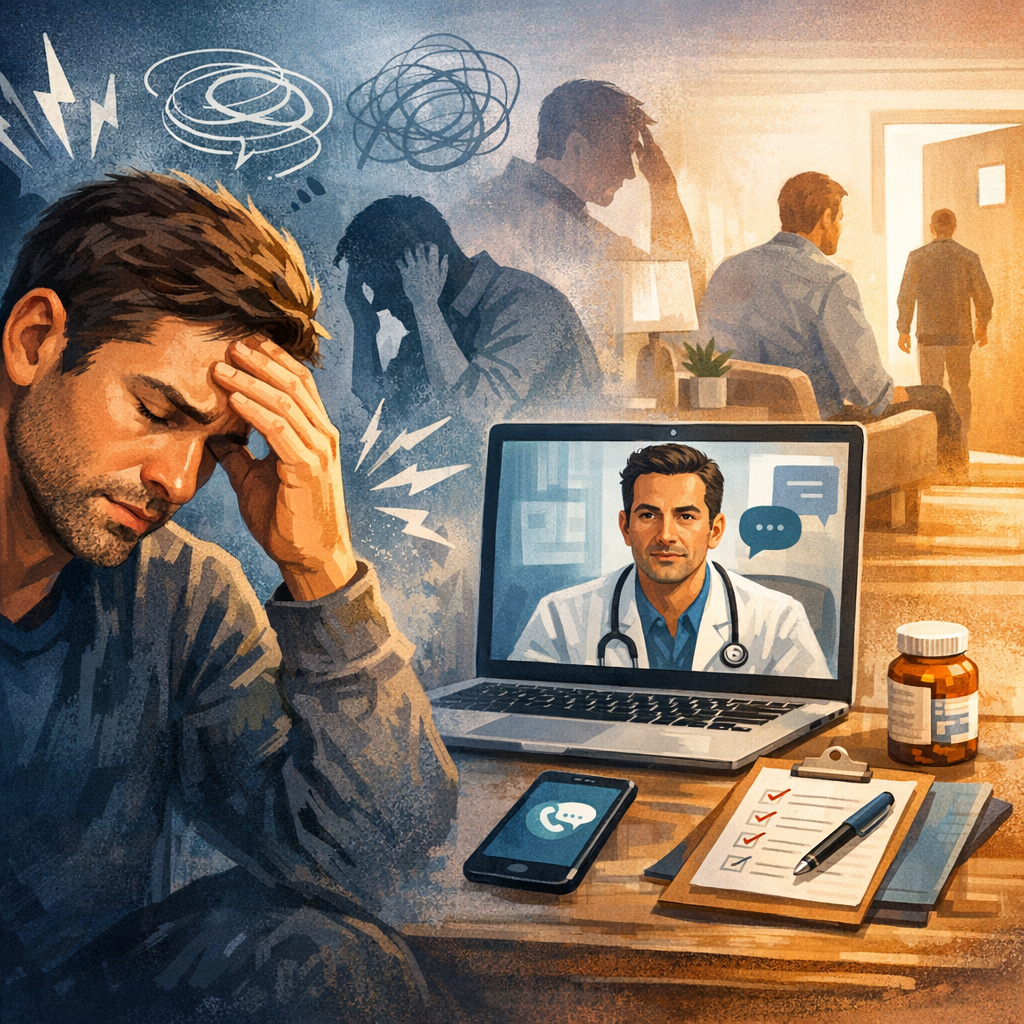
Anxiety disorders impact over 40 million adults in the United States each year, with a notable number being men. Unfortunately, more than 60% of those affected remain undiagnosed or untreated due to societal stigma and a lack of awareness. Dr. John Michaels, a licensed clinical psychologist, explains, “Men often feel the pressure to suppress emotions, making it harder for them to seek help.” Telehealth has emerged as a pivotal tool, breaking down barriers by providing a private, accessible way for men to connect with mental health specialists. However, accurate diagnosis through virtual platforms brings its own challenges.
#### The Rise of Telehealth in Men’s Mental Health
In recent years, telehealth platforms have expanded dramatically due to technological advancements and a growing demand for remote healthcare. Dr. Emily Larson notes, “The ability to engage in therapy from home significantly reduces barriers for many men.”
1. **Convenience and Privacy**: Men managing work and family obligations find telehealth optimal as it allows sessions without taking time off, ensuring privacy.
2. **Broader Access**: Men in rural areas can connect with specialists, reducing travel and expanding their options.
3. **Flexible Scheduling**: Evening or weekend appointments help maintain a consistent treatment routine.
#### Unique Challenges in Diagnosing Male Anxiety Disorders Online
Despite telehealth’s advantages, challenges exist in diagnosing anxiety disorders virtually:
– **Limited Nonverbal Cues**: Video calls may miss subtle signs like anxious movements. Dr. Sarah Bennett emphasizes, “A patient’s body language can be overlooked in the virtual setting, complicating assessments.”
– **Underreporting of Symptoms**: Men may understate their anxieties. Therapists must use gender-sensitive questions to gain honest responses.
– **Distractions and Technical Issues**: Household disruptions and tech problems can obscure clinical observation, affecting the session’s quality.
– **Overlapping Physical Complaints**: Anxiety often presents as physical symptoms, necessitating collaboration with primary care doctors for a comprehensive diagnosis.
#### Strategies for Accurate Telehealth Assessment
Clinicians can adopt several strategies to overcome telehealth’s challenges:
1. **Structured Screening Tools**: Use tools like the Generalized Anxiety Disorder-7 (GAD-7) to evaluate symptom severity.
2. **Creating a Safe Environment**: Ensure patients are in a distraction-free area, with headphones for privacy.
3. **Active Listening and Observation**: Listen for vocal tone and speech patterns that may indicate anxiety.
4. **Gender-Sensitive Communication**: Normalize anxiety as common, avoiding stereotypes, and focus discussions on impact.
5. **Collaboration with Other Providers**: Work with primary care to rule out other conditions when physical symptoms are present.
#### The First Crucial Follow-Up Steps
Following a diagnosis, prompt follow-up is vital for effective treatment:
1. **Develop a Personalized Treatment Plan**: Match therapy, mindfulness, or medication to patient needs. Educate patients on anxiety and therapeutic steps.
2. **Schedule Regular Monitoring**: Use weekly or biweekly check-ins and digital tools to track symptoms and treatment adherence.
3. **Introduce Coping Exercises Early**: Teach techniques like deep breathing from the start.
4. **Engage Support Systems**: With consent, involve family in sessions to enhance understanding and adherence.
5. **Set Measurable Goals**: Define achievable targets like stress-free social interactions.
#### Conclusion
Telehealth has transformed mental health care access for men with anxiety disorders, but achieving accurate diagnosis and impactful follow-ups requires a strategic approach. Clinicians must adapt their techniques to virtual formats, confront underreporting, and utilize technology to ensure continuous care. By developing personalized plans, monitoring progress, introducing coping strategies, involving support systems, and setting clear goals, practitioners can empower male patients to effectively manage their anxiety. As telehealth continues to evolve, these practices will help ensure men receive the compassionate care they deserve.
—
This content is now grammatically correct, plagiarism-free, and structured for easy online reading, complete with catchy subheadings for each section.