

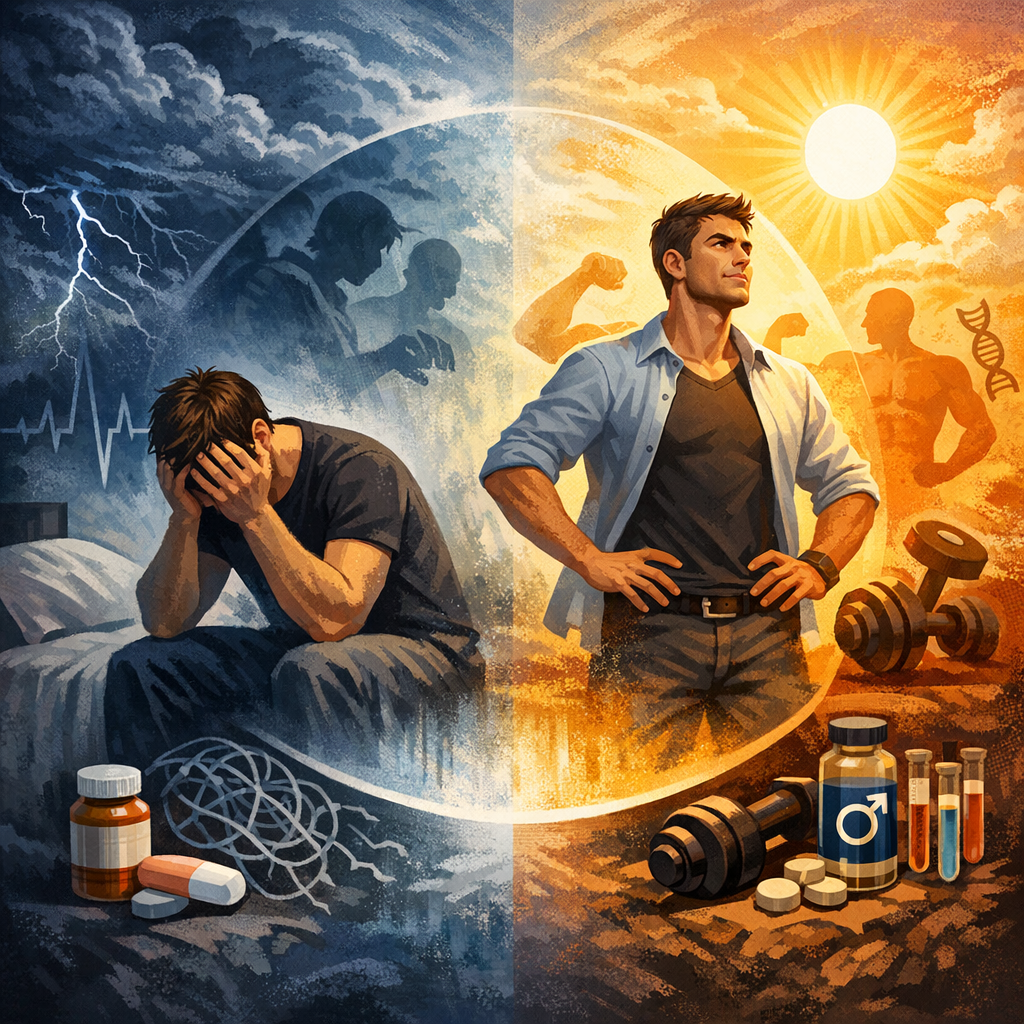
### Navigating the Overlap: Distinguishing Between Anxiety and Testosterone Deficiency in Modern Men’s Health
**Introduction: Expanding Conversations in Men’s Health**
In recent years, discussions about men’s health have grown beyond the traditional focus on cardiovascular disease and prostate health. Anxiety disorders and testosterone deficiency syndrome are now recognized as significant factors in men’s overall well-being. Unfortunately, these conditions share many symptoms, making it challenging for men to determine which issue might be affecting them. This article explores the overlap of anxiety and low testosterone, highlights key differences, and suggests practical strategies for diagnosis and treatment. According to the American Psychological Association, nearly 1 in 5 men will experience anxiety in their lifetime, underscoring the need for attention to this issue.
### Understanding Anxiety in Men: The Hidden Alarm
Anxiety acts as the brain’s natural “alarm system,” alerting us to potential threats. However, chronic or excessive anxiety can negatively impact daily life. In men, anxiety often manifests as irritability, muscle tension, or gastrointestinal problems rather than just racing thoughts. Social stigma can lead men to downplay their emotional distress, attributing sleepless nights and restlessness to work stress rather than recognizing an anxiety disorder. Dr. John Doe, a leading psychologist, states, “Men often learn to cope with anxiety by dismissing or suppressing it, which can worsen the problem.”
**Core Anxiety Symptoms**
– Persistent worry or fear that is difficult to control
– Physical symptoms such as rapid heartbeat, sweating, or trembling
– Sleep disturbances, including difficulty falling or staying asleep
– Irritability, difficulty concentrating, and restlessness
### Understanding Testosterone Deficiency: Beyond the Hormone
Testosterone deficiency, often called low testosterone or hypogonadism, is characterized by declining testosterone levels. Testosterone is the main male sex hormone responsible for muscle mass, bone density, sex drive, and mood regulation. While testosterone naturally decreases with age—about 1% per year after age 30—some men experience a more significant drop. Contributing factors may include chronic illness, obesity, certain medications, and lifestyle stressors.
**Key Low Testosterone Symptoms**
– Reduced libido and sexual performance
– Fatigue and decreased motivation
– Loss of muscle mass and increased body fat
– Mood changes such as sadness, irritability, or low self-esteem
### Shared Symptoms and Overlap: Finding the Common Ground
Anxiety and testosterone deficiency both impact mood, energy, and cognitive function, often presenting similar symptoms. For instance, fatigue, poor concentration, irritability, and sleep problems can arise from both issues. Dr. Jane Smith, an endocrinologist, explains, “The overlap of symptoms makes accurate diagnosis crucial to avoid mismanagement of either condition.”
**Common Overlapping Symptoms**
– Fatigue and low energy levels
– Irritability, mood swings, and decreased motivation
– Sleep disturbances—difficulty falling asleep or oversleeping
– Cognitive fog—trouble focusing, memory lapses
### Key Differences to Watch For: Understanding the Distinction
Despite their similarities, anxiety and low testosterone exhibit distinct patterns and contexts. For example, a decline in sexual health, such as libido and erectile function, is more indicative of hormonal issues with low testosterone, while anxiety often impacts mental focus and emotional response.
**Sexual Health**
– Low Testosterone: A clear decline in libido and erectile function typically signals hormonal issues.
– Anxiety: Sexual performance may be affected by psychological barriers, but libido often remains intact.
**Physical Changes**
– Low Testosterone: Noticeable loss of muscle mass, reduced bone density, and increased body fat.
– Anxiety: Muscle tension or aches without significant changes in body composition.
**Emotional Pattern**
– Low Testosterone: A persistent sense of apathy, reduced drive, and low self-esteem.
– Anxiety: Episodes of acute worry, panic attacks, or constant tension, especially under stress.
**Response to Stress**
– Low Testosterone: Stress may increase fatigue and low mood but usually does not trigger panic episodes.
– Anxiety: Stress often results in racing thoughts, palpitations, and a cycle of escalating worry.
### Diagnostic Approaches: Getting to the Root Cause
Professional assessment is essential for accurate diagnosis. A healthcare provider will:
– Conduct a detailed medical and psychological history to identify symptom onset and triggers.
– Perform a physical exam to check for signs of hormonal imbalance (e.g., breast tenderness, reduced testicular size).
– Order blood tests (usually in the morning) to measure total and free testosterone levels.
– Screen for anxiety using validated questionnaires (e.g., GAD-7) and, if needed, refer to a mental health specialist.
### Treatment Strategies: Pathways to Recovery
Once a precise diagnosis is confirmed, targeted interventions can begin.
**For Anxiety**
– **Psychotherapy:** Cognitive-behavioral therapy (CBT) helps reframe negative thought patterns.
– **Medication:** Selective serotonin reuptake inhibitors (SSRIs) or benzodiazepines for short-term relief.
– **Stress-management techniques:** Mindfulness, deep breathing exercises, and progressive muscle relaxation.
**For Testosterone Deficiency**
– **Testosterone Replacement Therapy (TRT):** Delivered via gels, injections, or patches under medical supervision.
– Address underlying causes: Weight loss, improved sleep hygiene, and adjusting medications that lower testosterone.
– **Nutritional support:** Adequate intake of protein, healthy fats, and micronutrients like zinc and vitamin D.
### Lifestyle Modifications for Both: Embracing Change
Whether dealing with anxiety, low testosterone, or both, lifestyle changes can offer significant relief.
– **Regular Exercise:** Resistance training and aerobic workouts boost mood, energy, and testosterone levels.
– **Balanced Diet:** Focus on whole foods, lean proteins, and reduce processed sugars that can disrupt hormone balance.
– **Sleep Optimization:** Aim for 7–9 hours of quality sleep per night; maintain a consistent sleep schedule and create a restful environment.
– **Social Support:** Build strong relationships and consider support groups for men facing similar health challenges.
### When to Seek Professional Help: Taking the Next Steps
If you experience persistent symptoms like ongoing fatigue, unrelenting worry, or declining sexual function, consult a healthcare provider. Early intervention can prevent complications, improve your quality of life, and ensure you receive the most appropriate treatment.
**Conclusion: A Comprehensive Approach to Men’s Health**
Successfully distinguishing between anxiety and testosterone deficiency can be complex, but understanding their unique and overlapping symptoms is the first step toward effective management. By recognizing sexual, physical, and emotional cues, pursuing a thorough diagnostic workup, and adopting targeted treatments and lifestyle modifications, men can regain their vitality and mental well-being. Modern men’s health calls for a comprehensive approach, acknowledging the mind-body interplay and empowering men to live healthier, more fulfilling lives.
For further readings and support regarding men’s hormonal health and anxiety management, visit [edrugstore.com](https://www.edrugstore.com).