

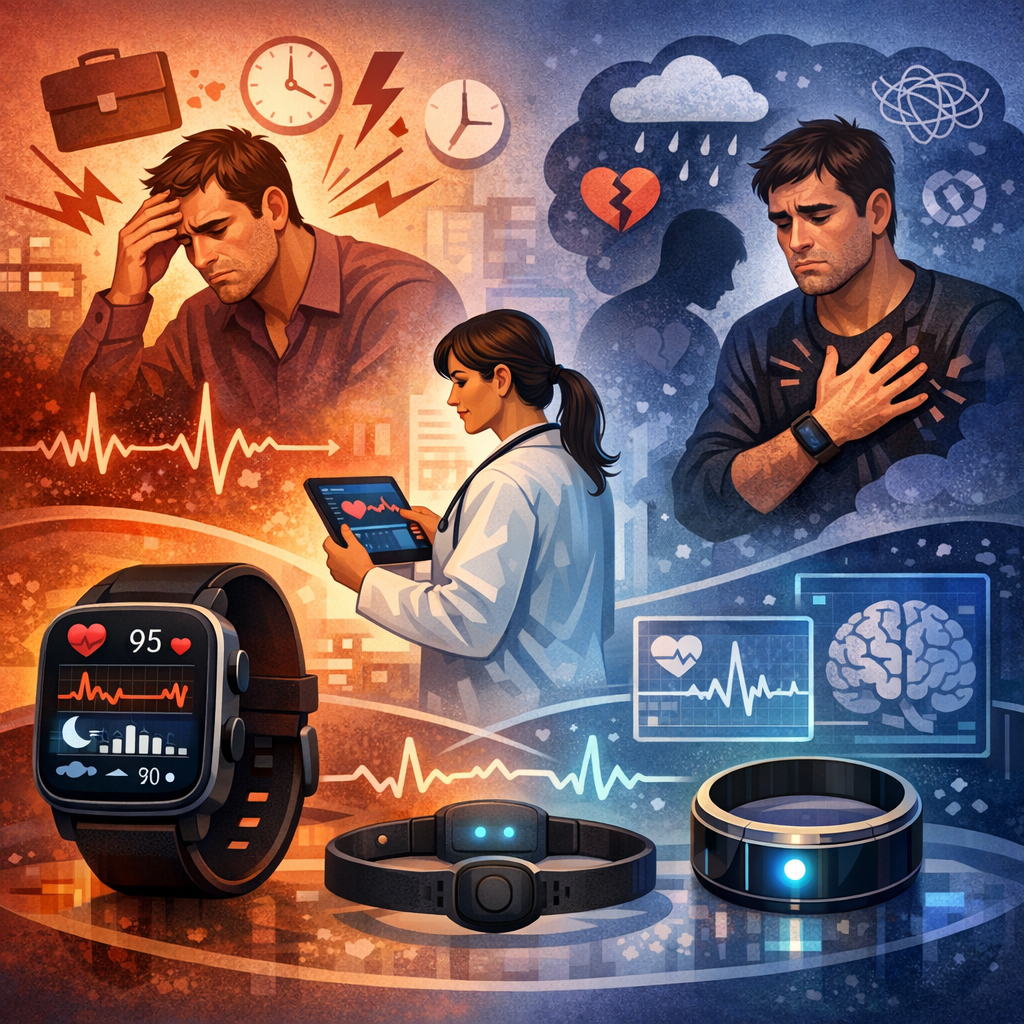
### The Evolution of Wearable Health Technology
In recent years, wearable health technology has advanced from simple step counters to sophisticated biosensors capable of continuously monitoring heart rate variability (HRV), skin conductance, sleep patterns, and more. For clinicians treating men—who often underreport mental health symptoms—these next-generation wearables offer objective, real-time data that can distinguish between temporary stress responses and signs of chronic anxiety. By leveraging continuous physiological monitoring and AI-driven analytics, healthcare providers can tailor interventions more effectively, improving outcomes and reducing the risk of untreated mental health disorders in men.
### Understanding Stress and Anxiety: Why Differentiation Matters
Not all stress indicates a mental health disorder. Temporary stress is a natural reaction to acute challenges like work deadlines, family commitments, or financial concerns. In contrast, chronic anxiety involves persistent worrying, restlessness, and physiological dysregulation lasting weeks or months. Men, in particular, may downplay or dismiss anxiety due to cultural expectations surrounding masculinity, resulting in delays in seeking help. Accurate differentiation is crucial: mistaking chronic anxiety for ordinary stress can result in under-treatment, while over-diagnosing anxiety can lead to unnecessary interventions.
### Key Biomarkers Tracked by Wearables
Next-gen wearables capture an array of biomarkers relevant to stress and anxiety:
– **Heart Rate Variability (HRV):** Lower HRV over extended periods often correlates with chronic stress and anxiety.
– **Resting Heart Rate (RHR):** Elevated RHR outside of physical exertion can indicate sustained sympathetic nervous system activation.
– **Electrodermal Activity (EDA):** Changes in skin conductance reflect sweat gland activity, a proxy for sympathetic arousal.
– **Sleep Metrics:** Disrupted sleep patterns, such as frequent awakenings and reduced REM or deep sleep, can signal anxiety disorders.
– **Activity and Recovery Patterns:** Imbalanced activity-to-recovery ratios suggest insufficient physiological rest.
### Continuous Monitoring vs. Sporadic Testing
Traditional clinical assessments rely on questionnaires and occasional vital sign checks, capturing only snapshots of a patient’s emotional state. Wearables provide continuous, longitudinal data streams, revealing trends invisible during in-office visits. For example, a man may present with normal vital signs during a single appointment, yet wearable data could show weeks of suppressed HRV and elevated nighttime heart rate—hallmarks of chronic anxiety. Dr. John Mayer, a clinical psychologist, notes, “Continuous data allows for a more reliable read on a patient’s ongoing mental state, providing real insights.”
### AI-Driven Analytics and Personalized Baselines
Advanced wearables integrate AI algorithms to create personalized physiological baselines. By comparing current data against an individual’s historical norms, these platforms dynamically adjust for factors like fitness level, age, and lifestyle. An AI engine can flag deviations—such as a sudden drop in HRV or a persistent increase in resting heart rate—prompting clinicians to investigate whether the cause is temporary stress (e.g., a busy workweek) or a deeper anxiety disorder requiring intervention.
### Clinician Dashboards and Alerts
Next-gen wearable ecosystems include clinician dashboards that aggregate patient data into intuitive visualizations. Dashboards display key metrics, trend lines, and risk scores, enabling providers to assess quickly whether a male patient’s stress response falls within expected short-term patterns or meets criteria for chronic anxiety. Automated alerts can notify clinicians when thresholds are crossed, allowing timely outreach or adjustment of treatment plans.
### Case Study: From Data to Diagnosis
Consider John, a 38-year-old software engineer experiencing intermittent irritability and trouble sleeping. In consultations, John attributes his symptoms to “normal work pressure.” His clinician equips him with a next-gen wearable that tracks HRV, EDA, and sleep. Over a month, the data reveals persistent low HRV, frequent night-time awakenings, and sporadic spikes in skin conductance unrelated to exercise. Recognizing these patterns as consistent with chronic anxiety—not merely deadline-driven stress—the clinician initiates cognitive-behavioral therapy (CBT) and prescribes a short course of anxiolytics. Follow-up wearable data shows gradual normalization of HRV and improved sleep, confirming treatment efficacy.
### Benefits for Male Patients and Providers
– **Objective Insights:** Wearables circumvent the “man-up” bias by providing hard data on physiological stress.
– **Early Detection:** Continuous monitoring catches the transition from temporary stress to chronic anxiety sooner.
– **Personalized Care:** AI-driven baselines ensure interventions are tailored to each man’s unique physiology.
– **Improved Engagement:** Many men find tracking metrics motivating, increasing adherence to therapeutic regimens.
– **Outcome Measurement:** Wearables quantify treatment progress, enabling data-backed adjustments.
### Challenges and Considerations
While promising, wearable-based mental health monitoring poses challenges:
– **Data Privacy:** Sensitive health data must be protected under HIPAA and GDPR standards.
– **False Positives/Negatives:** Algorithms need rigorous validation to avoid mislabeling stress patterns.
– **User Compliance:** Consistent device wear and proper syncing are essential for accurate insights.
– **Integration into Workflows:** Clinicians need training and seamless EMR integration to interpret wearable data efficiently. Dr. Sarah Thompson emphasizes, “Training is crucial for the effective use of wearable data in clinical practice.”
### Future Directions of Wearable Technology
Next-generation wearables will expand to measure additional biomarkers—such as cortisol levels via non-invasive sweat sensors, brain-wave patterns through EEG headbands, and multimodal fusion for richer mental health insights. Advances in federated learning may enable cross-institutional AI models that respect patient privacy while improving diagnostic accuracy. Emerging telehealth platforms will integrate wearable data directly into virtual visits, bridging real-time monitoring and personalized care.
### Conclusion: A Game-Changer in Men’s Mental Health
For men, who often underreport mental health concerns, next-generation wearables are transformative. By continuously tracking physiological signals and applying AI analytics, clinicians can differentiate between everyday stress and chronic anxiety with unparalleled precision. This objective approach not only empowers men to engage more actively in their mental health but also enables healthcare providers to deliver timely, personalized interventions. As wearable technology evolves, it promises to play an increasingly central role in the early detection and management of anxiety disorders among male patients.