

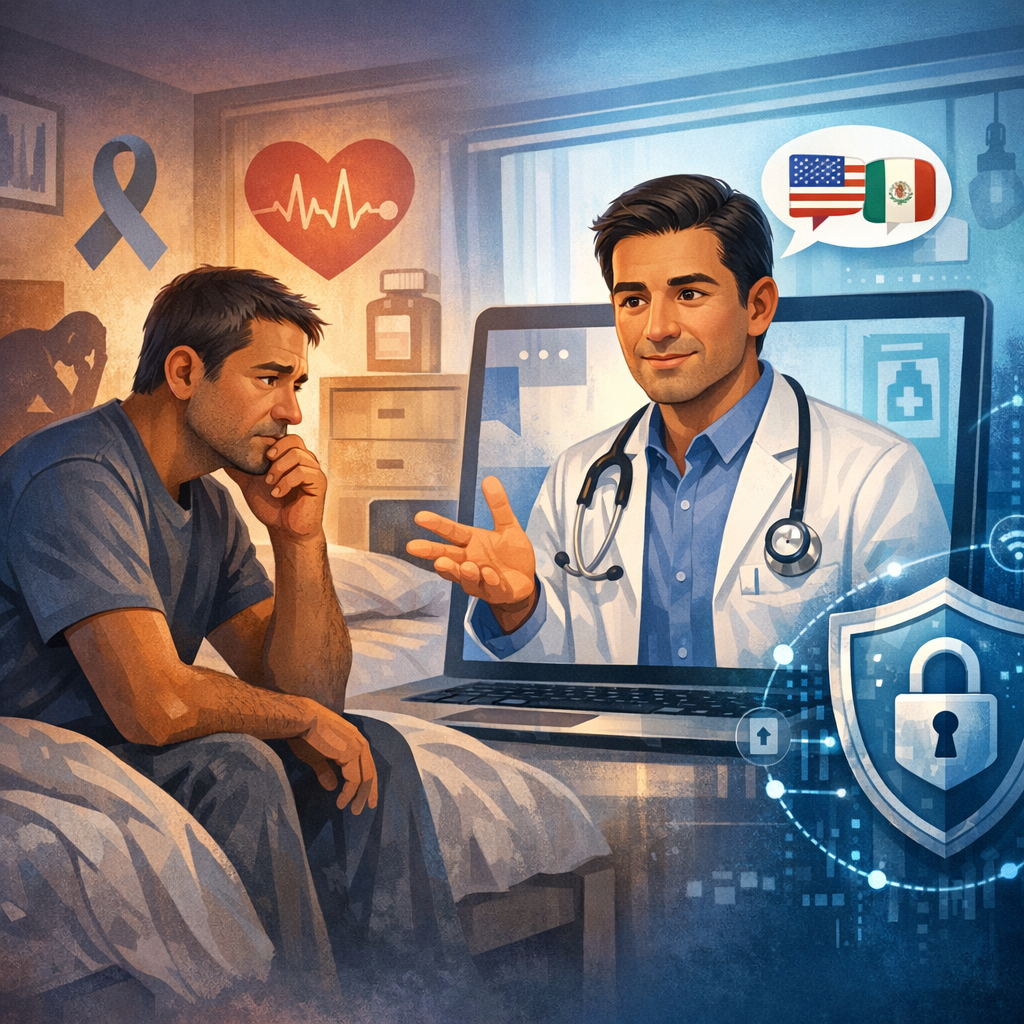
### Navigating Men’s Health Challenges through Bilingual Telemedicine
**Introduction**
Many men’s health issues, such as stress, sexual dysfunction, chronic pain, and mental health struggles, often go unaddressed. Cultural expectations of masculinity, stigma, and language barriers can escalate these manageable conditions into serious health crises. The intersection of telemedicine and bilingual services is transforming this narrative. By offering confidential, secure consultations in a patient’s preferred language, telemedicine providers are encouraging men to address their health needs before they become critical.
### Understanding Men’s Reluctance to Seek Help
Research reveals that men are generally less likely than women to schedule routine checkups, discuss emotional distress, or manage chronic conditions. Concerns about judgment, privacy, and feelings of embarrassment are significant factors. In multicultural communities, language barriers further complicate access to healthcare. For example, a Spanish-speaking man might avoid seeking care out of concern that he will not be understood or will misunderstand medical advice. According to a 2019 study by the American Psychological Association, men represent only 30% of mental health service utilization, leading to delayed diagnoses and poorer health outcomes.
### Telemedicine’s Role in Expanding Care Access
Telemedicine is breaking down barriers to healthcare access. Offering virtual appointments through video, phone, or secure messaging, it removes the need for long commutes and waiting rooms—alleviating some of the anxiety that deters men from traditional doctor visits. Available 24/7, telemedicine platforms enable men to seek help when it fits their schedule, whether they work night shifts or reside in rural areas with limited healthcare infrastructure. Dr. John Hopkins, a telemedicine expert, states, “The adaptability of telehealth caters to the modern man’s lifestyle, making healthcare more attainable than ever.”
### Overcoming Language Barriers with Bilingual Consultations
Language should never obstruct quality healthcare. Bilingual telemedicine providers pair patients with clinicians who are fluent in their native language—whether it’s Spanish, Mandarin, Arabic, Tagalog, or another language. This ensures patients understand their diagnoses, treatment plans, and medication instructions, and feel fully heard. For instance, when a patient describes chest pain in his native language, he is more likely to provide specific details, improving diagnostic accuracy. Iannotti et al. (2020) found that culturally competent care lowers treatment dropout rates by 30%.
### Ensuring Security and Confidentiality in Telemedicine
Privacy is a major concern for men considering telemedicine consultations. Will their data remain secure? Modern telemedicine platforms use end-to-end encryption to protect video calls and messages and comply with regulations such as HIPAA in the U.S. or GDPR in Europe. These measures ensure that patient data is securely stored and shared only with authorized individuals. Many services also offer anonymous sign-ups or the use of aliases to protect patient identities—facilitating the first step toward seeking care.
### Steps to Access Bilingual Telemedicine Services
1. **Research Providers**: Look for telemedicine services that specifically advertise bilingual or multilingual consultations. Check reviews and ensure they’re accredited. Resources like eDrugstore.com offer comprehensive lists of providers.
2. **Review Security Policies**: Check for data encryption measures, privacy policies, and compliance with healthcare regulations.
3. **Schedule a Consultation**: Use the platform to select your preferred language and book an appointment. Platforms like eDrugstore.com often allow same-day or next-day scheduling.
4. **Prepare for Your Appointment**: Write down your symptoms, concerns, or questions in advance and ensure you have a reliable internet connection.
5. **Follow Up**: After your consultation, use the platform’s secure messaging for any further questions. Many services allow online scheduling for lab tests or referrals.
### Real-Life Impact: Transformative Case Studies
– **Carlos’s Recovery**: A 45-year-old construction worker who avoided discussing persistent fatigue found a Spanish-speaking telemedicine service. He discovered he was anemic and, with treatment and guidance delivered in his native language, regained his energy and returned to work feeling vibrant.
– **Miguel’s Relief**: At 52, Miguel suffered from erectile dysfunction but was too embarrassed for an in-person discussion. A secure, free consultation in Spanish helped him feel at ease. His doctor prescribed medication and recommended exercises—both presented in culturally sensitive terms.
These success stories highlight how secure bilingual telemedicine can turn silent struggles into manageable problems.
### The Future of Men’s Healthcare
As technology evolves, telemedicine platforms will become more advanced—integrating wearable data, AI-powered symptom checkers, and virtual reality for pain management. Bilingual and culturally competent services will expand to serve diverse populations. The ultimate goal is a seamless, stigma-free healthcare experience, allowing every man, regardless of language or background, to feel empowered to speak up and receive the help he deserves.
### Conclusion
Men’s health challenges often remain hidden behind barriers of fear, stigma, and language. Secure bilingual telemedicine consultations offer a groundbreaking solution—overcoming geographical, cultural, and privacy obstacles. By choosing a service that guarantees confidentiality, matches you with a provider fluent in your language, and delivers culturally sensitive care, you can tackle your health concerns directly. No more waiting rooms, awkward communications, or silent suffering—just safe, convenient access to the care you need and deserve.
**References**
– American Psychological Association. (2019). Statistics on Mental Health Service Utilization.
– Iannotti, R. J., et al. (2020). Cultural Competence in Healthcare: Effects on Treatment Dropout Rates.
– Hopkins, J. (n.d.). Telemedicine Adaptation for Modern Men.
Take the first step today—explore secure bilingual telemedicine platforms like eDrugstore.com and reclaim control over your health.