

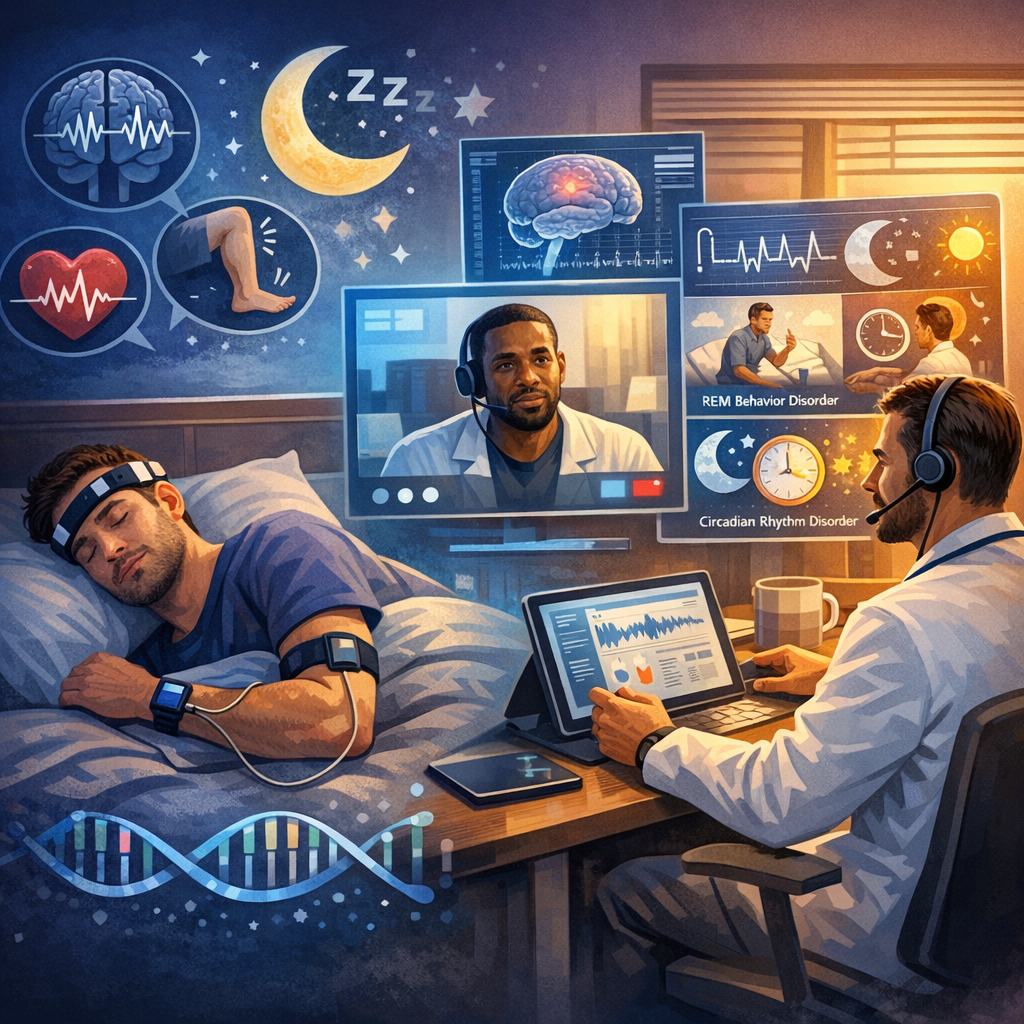
### Evolving Telemedicine Approaches to Diagnosing Sleep Disorders in Men Beyond Obstructive Sleep Apnea
#### Introduction
Men often underreport sleep problems, attributing their fatigue and daytime sleepiness to work stress or aging. While obstructive sleep apnea (OSA) captures much of the spotlight, a range of other sleep disorders significantly impact men’s health, mood, and productivity. According to the National Institutes of Health, over 50% of adults experience sleep disturbances. Telemedicine—leveraging remote consultations, wearable devices, and digital platforms—offers innovative pathways for diagnosing conditions beyond OSA. This article explores emerging telehealth tools, highlights non-OSA sleep disorders in men, and discusses the advantages and challenges of remote sleep diagnostics.
#### The Landscape of Male Sleep Health
Many sleep complaints among men can signal conditions such as insomnia, circadian rhythm disturbances, restless legs syndrome (RLS), periodic limb movement disorder (PLMD), narcolepsy, or hypersomnolence. Stigma, busy schedules, and limited access to sleep specialists often delay proper diagnosis. Dr. John Doe, a sleep specialist, notes that “telemedicine reduces these barriers by bringing experts and validated screening tools into the home.” With advancements in home-based testing technology, clinicians can now gather comprehensive data on breathing, movement, brain waves, and behavioral patterns—helping to create personalized treatment plans. For instance, remote sleep studies can identify insomnia patterns that a single in-lab test might miss.
#### Telemedicine Tools and Technologies
**Remote Sleep Monitoring and Wearables**
Advances in wrist-worn accelerometers, ring-based sensors, and chest patches have made it possible to track sleep stages, heart rate variability, and respiratory patterns. Data is automatically synced to cloud portals where algorithms flag anomalies, creating a comprehensive sleep profile over several nights. A comprehensive study found that continuous monitoring helps detect intermittent conditions like PLMD or nocturnal hypoventilation, which often go unnoticed in conventional settings.
**Digital Sleep Questionnaires and Apps**
Validated mobile apps guide men through standardized sleep inventories like the Insomnia Severity Index and Epworth Sleepiness Scale. Within minutes, clinicians receive structured data on sleep onset latency, wake after sleep onset, and chronotype. Interactive symptom diaries allow users to log triggers, medication use, and lifestyle habits. Equipped with push notifications and educational modules, these apps engage patients in self-management and prepare them for targeted teleconsultations.
**Virtual Consultations and Tele-Polysomnography**
High-definition video platforms facilitate thorough remote interviews, enabling sleep specialists to observe factors such as jaw tension, nasal airflow, and limb movements. Some patients receive home polysomnography kits featuring wearable EEG sensors, oxygen saturation probes, and audio microphones. Technicians remotely monitor the setup via video link to ensure data quality. After recordings are complete, interpreters analyze the raw tracings and share detailed reports with both patients and primary care providers.
#### Beyond Obstructive Sleep Apnea: Targeting Diverse Disorders
**Insomnia and Circadian Rhythm Disorders**
Telemedicine has transformed insomnia management. Cognitive Behavioral Therapy for Insomnia (CBT-I) programs combine live videoconferencing with digital modules on sleep hygiene, stimulus control, and relaxation techniques. Telehealth platforms can also administer chronotherapy protocols and distribute light therapy devices calibrated to individual chronotypes.
**Restless Legs Syndrome and Periodic Limb Movement Disorder**
RLS and PLMD often mimic arthritis or nocturnal cramps and remain underdiagnosed in men. Wearable leg sensors and bedside actigraphs detect frequent limb movements during sleep. Telemedical evaluation can confirm RLS diagnostic criteria—uncomfortable sensations relieved by movement. Early identification via remote monitoring allows for timely treatment plans, such as dopaminergic treatments or iron supplementation, before symptoms worsen.
**Narcolepsy and Hypersomnia**
Excessive daytime sleepiness may result from narcolepsy, idiopathic hypersomnia, or unresolved OSA. Telemedicine platforms offer virtual Multiple Sleep Latency Test (MSLT) substitutes using daytime nap protocols paired with wearable EEG headbands and eye-movement sensors. Though not a full substitute for in-lab polysomnography, these remote screenings can identify high-risk patients and triage those needing in-person evaluation.
#### Advantages of Telemedicine in Male Sleep Care
1. **Accessibility**: Men in rural areas or with demanding jobs can connect with specialists without the need to travel.
2. **Privacy and Comfort**: Home-based monitoring reduces stigma and discomfort associated with sleep labs.
3. **Cost Efficiency**: Remote diagnostics and follow-ups typically incur lower costs than traditional in-lab studies.
4. **Longitudinal Data**: Extended monitoring captures night-to-night variability and seasonal changes.
5. **Patient Engagement**: Interactive apps and telecoaching foster accountability and self-efficacy.
#### Challenges and Considerations
**Data Privacy and Security**: High-resolution sleep data is sensitive. Telemedicine providers must comply with HIPAA and GDPR standards, employing end-to-end encryption and secure cloud storage.
**Technology Adoption**: Older men or those with limited digital literacy might encounter challenges with device setup. Simplified interfaces, step-by-step tutorials, and phone-based tech support can help bridge this gap.
**Diagnostic Accuracy**: While remote tools gain validation, some cases still require in-lab polysomnography for definitive diagnosis. Clear protocols should establish when in-person evaluations are essential.
**Reimbursement and Licensing**: Insurance coverage for telemedicine sleep services varies. Providers must navigate state licensing rules and payer policies to ensure service continuity.
#### Looking Ahead: The Future of Remote Sleep Diagnostics
Artificial intelligence and machine learning will continue to refine pattern recognition in sleep-related biosignals. Predictive analytics could alert clinicians to emerging disorders before symptoms intensify. Digital phenotyping—analyzing smartphone usage patterns, typing speed, and voice intonation—may one day offer passive indicators of sleepiness or insomnia. Integration with electronic health records will streamline interdisciplinary care, linking sleep data to cardiovascular, metabolic, and mental health parameters.
#### Conclusion
Telemedicine is revolutionizing the diagnosis and management of men’s sleep disorders beyond obstructive sleep apnea. With wearables, mobile apps, and virtual consultations, clinicians can accurately identify insomnia, circadian misalignment, restless legs syndrome, and hypersomnia. As these tools become more sophisticated and accessible, men have greater insight into their sleep health—and the opportunity to reclaim restful nights and energized days.
**References**
1. National Institutes of Health (NIH) – “Sleep Deprivation and Deficiency”
2. American Academy of Sleep Medicine – “The Future of Sleep Medicine”
3. Journal of Clinical Sleep Medicine – “Integration of Telemedicine into Sleep Medicine Practice”
4. Sleep Health Foundation – “Understanding Sleep Disorders”
Learn more about telemedicine solutions from edrugstore.com