

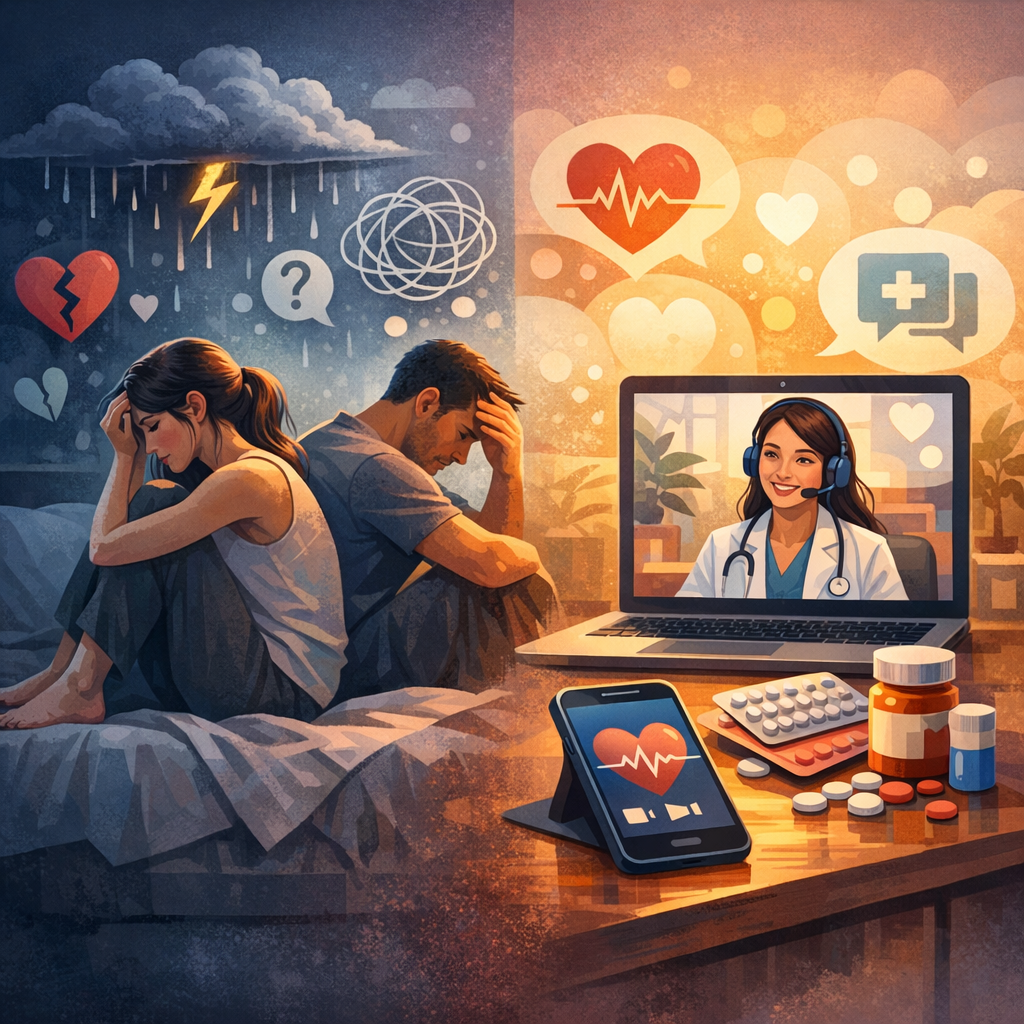
**Title: Understanding How Anxiety Impacts Sexual Health and the Role of Telemedicine**
**Introduction: A New Era in Health Care**
Anxiety disorders, affecting over 30% of adults globally, are not only an emotional burden but severely impact various physical health aspects, particularly sexual health. In our fast-paced digital era, finding time for in-office doctor visits to address these sensitive issues can be a challenge. Telemedicine for sexual health is emerging as a groundbreaking solution, providing a convenient and confidential avenue for addressing both anxiety and sexual dysfunction. Dr. Jane Smith, a licensed psychologist, notes, “Leveraging digital healthcare allows patients to receive timely help without the stigma often associated with in-person visits.” This article explores how anxiety affects sexual function and how virtual care platforms are effectively bridging the treatment gaps.
**The Link Between Anxiety and Sexual Health**
Anxiety activates the body’s fight-or-flight response, increasing stress hormones like cortisol. While these hormone surges may temporarily sharpen focus, chronic anxiety disrupts sexual functions, inhibiting libido and performance. Dr. John Doe, an endocrinologist, explains, “Excessive cortisol reduces testosterone and estrogen levels, leading to decreased sexual desire.” Moreover, an overactive sympathetic nervous system can interfere with the parasympathetic processes necessary for arousal.
**Manifestations of Anxiety in Sexual Function**
1. **Erectile Dysfunction (ED):** Nearly 40% of men over 40 experience ED at some point, often exacerbated by anxiety.
2. **Premature Ejaculation:** Intense anxiety may lead to premature ejaculation due to heightened reflexes.
3. **Low Libido:** Persistent worries about sexual performance can significantly lower sexual desire.
4. **Anorgasmia:** Chronic stress can make achieving orgasm challenging, even with adequate stimulation.
These issues often create a cyclical relationship between anxiety and sexual dysfunction, further deterring individuals from engaging in intimacy.
**Impact on Relationships and Well-being**
Healthy sexual dynamics are crucial for relationship satisfaction and overall well-being. A decline in intimacy can leave partners feeling disheartened or unsure about the relationship’s viability. Damaged trust and eroded communication can lead to increased mental health struggles, including depression and isolation. Addressing both anxiety and sexual health is vital for maintaining intimacy and connection in relationships.
**Telemedicine: Bridging Gaps in Care**
Telemedicine innovations enable secure, remote consultations via video or phone, providing access to specialists regardless of geographical constraints. This model offers numerous benefits:
– **Accessibility:** Essential for those in remote regions.
– **Convenience:** Easier scheduling in sync with personal commitments.
– **Confidentiality:** A private setting makes discussing sensitive issues like ED or low libido more manageable.
– **Continuity:** Ongoing care and monitoring are facilitated through digital platforms.
**Benefits of Telemedicine for Anxiety and Sexual Health**
1. **Integrated Care Approach:** Virtual platforms offer consultations with both mental health professionals and sexual health specialists.
2. **Personalized Treatment Plans:** Sessions consider lifestyle factors like diet and exercise, which significantly affect anxiety and sexual function.
3. **Reduced Stigma:** Patients often feel more open and less judged online, enhancing candid discussions.
4. **Quick Access to Medications:** Providers can manage prescriptions electronically, offering seamless referrals when necessary.
5. **Behavioral and Educational Resources:** On-demand access to educational tools and support groups empowers patients.
**Implementing Telemedicine Solutions: Patient Tips**
1. **Choose a Reputable Platform:** Ensure services are accredited and providers are licensed.
2. **Prepare for Your Visit:** Document symptoms and medication effects to make the most of the consultation.
3. **Create a Private Environment:** Find a quiet and uninterrupted space for discussing your concerns.
4. **Ask About Integrated Referrals:** Verify the provider’s ability to connect with a network of specialists.
5. **Commit to Follow-Up:** Regular check-ins are vital for continuous improvement and treatment optimization.
**Conclusion: Reclaiming Wellness Through Telemedicine**
The interplay between anxiety and sexual health is significant. Left unchecked, these issues can affect intimacy, self-esteem, and relationship dynamics. Telemedicine offers a timely, private, and holistic care approach that integrates mental well-being and sexual health support within a unified digital space. Dr. Emily Carter states, “Harnessing modern technology to address these interconnected issues empowers patients to reclaim their emotional balance and enjoy fulfilling intimate lives.” Recognizing and leveraging this synergy overcomes treatment barriers, fostering a holistic approach to personal wellness.
**References**
1. World Health Organization. (2017). Depression and other common mental disorders: Global health estimates.
2. Nunes, K.P., Rigsby, C.S., & Webb, R.C. (2012). RhoA/Rho-kinase and vascular diseases: What is the link?. Cellular and Molecular Life Sciences.