

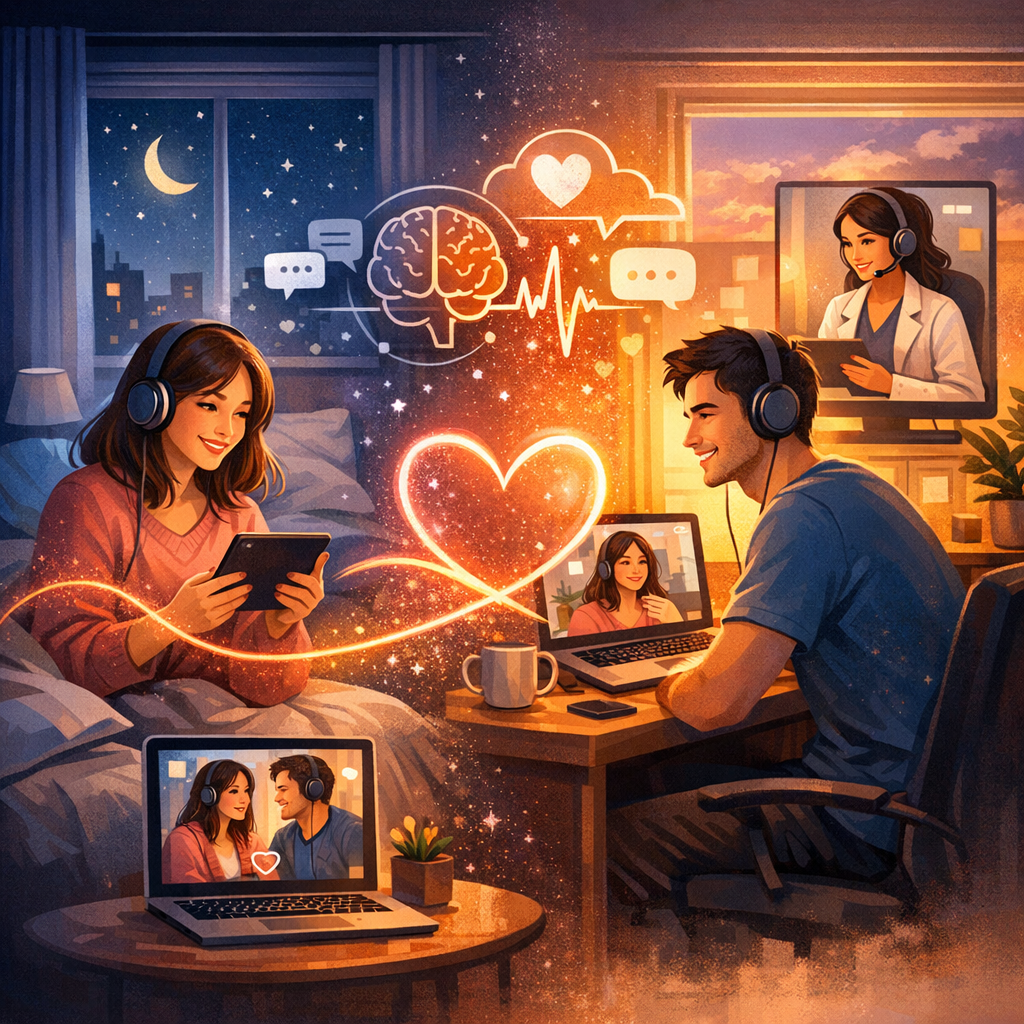
# Navigating Emotional Intimacy in Long-Distance Relationships Through Telemedicine-Driven Mental Health Support
Long-distance relationships can be both rewarding and challenging, particularly when it comes to maintaining emotional intimacy across miles and time zones. Recent advancements have demonstrated that telemedicine-driven mental health support is a powerful tool for couples striving to deepen their connection while living apart. This article explores how virtual therapy, online support groups, and digital counseling resources can help couples cultivate trust, understanding, and emotional closeness—even when they are physically separated.
### The Challenge of Emotional Intimacy in Long-Distance Relationships
#### Addressing Communication Gaps
Relying heavily on text messages and occasional video calls often leads to communication gaps, as the subtle nuances of tone, body language, and spontaneity can be lost. Misunderstandings may occur when a hurried “I’m fine” is misinterpreted or when Wi-Fi issues cut into heartfelt conversations. Dr. John Gottman, a renowned psychologist, emphasizes that communication is the foundation of any relationship, and missing cues can escalate conflicts.
#### Dealing with Emotional Distance
Without the benefit of shared daily experiences—such as laughing over dinner or celebrating small victories—partners may feel they are drifting apart, leading to anxiety, jealousy, and loneliness. A study by the Journal of Communication found that 70% of long-distance partners report challenges in maintaining emotional closeness due to the lack of shared activities.
#### Coping with Stress and Mental Health
Balancing different time zones and schedules, compounded by the stress of being apart, can take a toll on mental health. One partner’s struggles may lead to feelings of guilt or helplessness in the other, deepening the emotional divide.
### The Rise of Telemedicine in Mental Health Support
#### Virtual Couple’s Therapy: A New Dimension
Telemedicine, once considered niche, has experienced significant growth, driven by improvements in secure video conferencing and a heightened demand for remote mental health care. Platforms like BetterHelp and Talkspace now connect individuals and couples with licensed therapists worldwide. According to the American Psychological Association, teletherapy is as effective as in-person therapy for most mental health issues. Relationship counselor Esther Perel notes that virtual sessions offer a new dimension of accessibility and comfort for partners.
#### Empowering with Digital Self-Help Tools
Apps like Headspace and Calm offer guided meditations, journaling prompts, and mood-tracking features to support emotional regulation. These tools empower partners to manage stress and enhance their mental well-being.
### Enhancing Emotional Intimacy Through Telemedicine
#### Improving Communication Skills
Telemedicine can significantly enhance emotional intimacy in long-distance relationships by providing a safe and confidential space for partners to express their needs without judgment. Therapists guide productive and focused conversations. They teach techniques like active listening and using “I” statements to help partners communicate more clearly, whether through video calls or text exchanges. For example, saying “I feel” instead of “You always” minimizes defensiveness and encourages open dialogue.
#### Engaging in Shared Homework and Exercises
Therapists often assign joint exercises, such as writing gratitude letters or practicing deep-breathing together over video calls, fostering a consistent emotional connection. These shared activities help partners reinforce their bond, even when apart.
#### Stress Reduction for Better Support
Individual teletherapy sessions aid in managing anxiety, depression, or loneliness. When both partners feel mentally healthier, they are better equipped to support each other.
### Practical Strategies for Couples in Long-Distance Relationships
#### Scheduling Regular “Therapy Dates”
To maximize the benefits of telemedicine, couples should reserve weekly time slots for virtual couple’s therapy or check-ins with a licensed counselor. Treat these sessions as unmissable appointments to maintain a consistent connection.
#### Creating an “Intimacy Toolkit”
Compile prompts and exercises recommended by a therapist—such as shared playlists, journaling prompts, or couples meditation guides—and store them in a shared online folder.
#### Embracing Asynchronous Communication
To address time zone conflicts, couples can use voice-recorded messages or video clips instead of text. Hearing each other’s voices reduces ambiguity and enhances connection.
#### Practicing Self-Care Together
Engage in individual teletherapy sessions and share insights with your partner. Encourage each other to do guided meditations or cognitive behavioral therapy (CBT) exercises using apps.
### Success Story: Sarah and Jamal
Sarah and Jamal have been dating for two years. After college, Jamal moved abroad for work. They experienced terse texts and stilted video calls, which prompted them to try telemedicine. Sarah worked with a therapist on anxiety, while Jamal addressed feelings of guilt and overwhelm. In joint sessions, they learned active listening and emotion-focused exercises, which improved their communication drastically.
### Tips for Maximizing Telemedicine Support
– **Vet Your Provider**: Ensure therapists are licensed in their respective states or countries and review their credentials and specialization.
– **Maintain Privacy**: Use a secure, private space for sessions and invest in a good headset and reliable internet to avoid disruptions.
– **Commit to Homework**: The value of therapy increases exponentially with exercises. Schedule time for couple’s assignments.
– **Practice Patience**: Progress takes time. Celebrate small victories, such as an uninterrupted video call or a heartfelt “I miss you.”
### Conclusion
Although long-distance relationships may demand extra effort, telemedicine-driven mental health support can help partners navigate emotional intimacy more effectively. By leveraging virtual therapy, digital tools, and structured communication exercises, couples can deepen their bond and face challenges together, regardless of the miles between them. Embrace the possibilities of telemedicine, and watch your emotional connection flourish.