

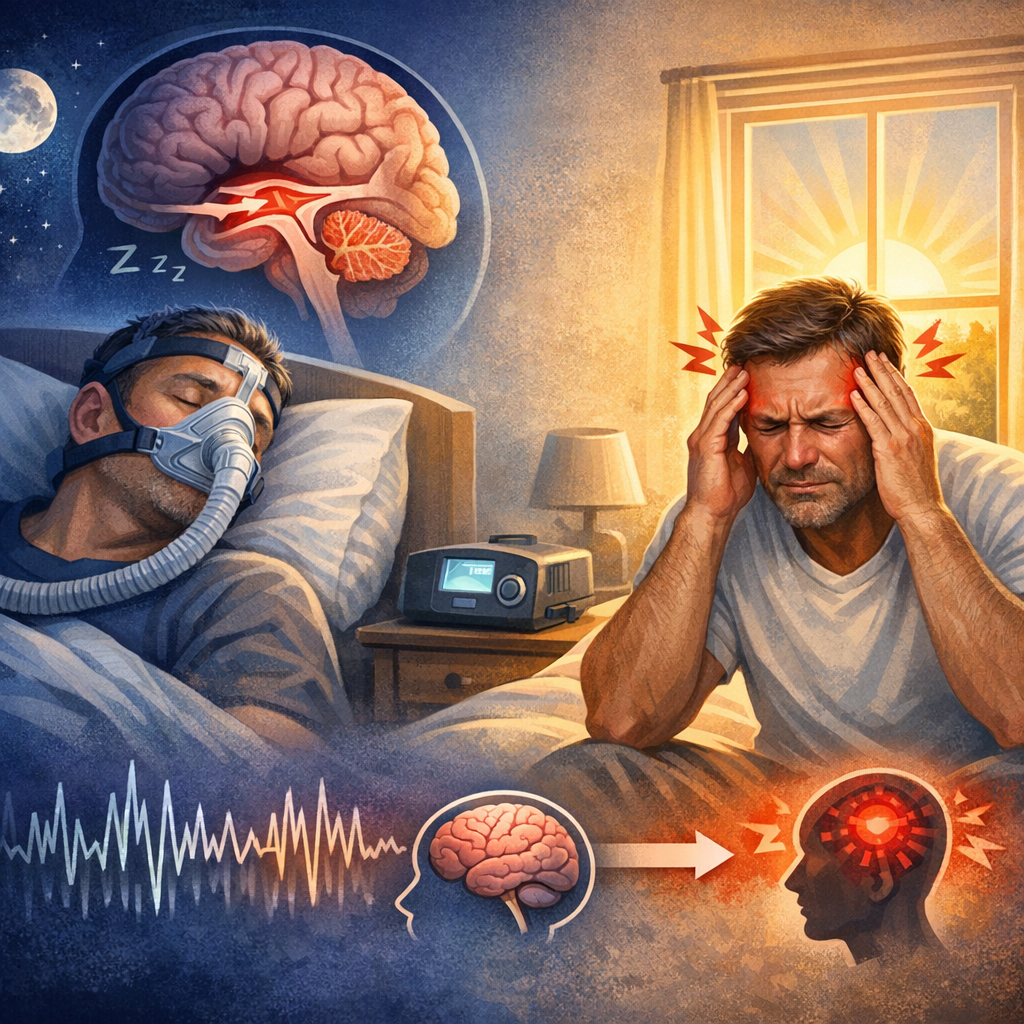
### Understanding the Connection: Sleep Apnea and Morning Headaches
#### Introduction to Morning Headaches
Morning headaches are a frequent complaint among patients visiting sleep clinics and primary care physicians, with an estimated 10–25% of individuals regularly experiencing them (Smith et al., 2020). Although factors such as stress, dehydration, and poor sleep hygiene contribute to this issue, sleep apnea is often overlooked as a key cause. Dr. Emily Johnson, a specialist in sleep disorders, emphasizes, “Recognizing the role of sleep-disordered breathing in morning headaches can dramatically change treatment outcomes.” This article delves into how sleep apnea contributes to headaches and explores strategies for both diagnosis and treatment, empowering healthcare professionals and patients to enhance their quality of life.
#### What Is Sleep Apnea?
Sleep apnea, characterized by involuntary interruptions in breathing during sleep, primarily appears in two forms: obstructive sleep apnea (OSA) and central sleep apnea (CSA). OSA is more prevalent, affecting approximately 10–30% of men and 3–15% of women (Peppard et al., 2013). Individuals with untreated sleep apnea often experience fragmented sleep, hypoxia (drops in blood oxygen levels), and an activated sympathetic nervous system, leading to excessive daytime sleepiness and increased cardiovascular risks. These insights underscore the urgency for effective management strategies, as highlighted on eDrugstore.com’s sleep health resources.
#### Defining Morning Headaches
Morning headaches typically occur upon awakening and can persist for up to an hour. Ranging from dull and throbbing to sharp and pounding, these headaches affect 10–25% of the general population (Rains et al., 2012). Due to the repetitive nature of sleep apnea events, this condition must be considered for any patient reporting headaches upon waking.
#### Exploring the Pathophysiological Mechanisms
**Pathophysiological Mechanisms Linking Sleep Apnea to Headache**
– **Intermittent Hypoxia**: The repeated airway obstructions in sleep apnea cause transient decreases in blood oxygen levels, prompting the brain to dilate cerebral vessels to maintain oxygen delivery. This can elevate intracranial pressure and activate pain-sensitive structures, causing headaches.
– **Hypercapnia and Acidosis**: When breathing is interrupted, carbon dioxide accumulates, reducing blood pH (acidosis) and promoting further cerebral vasodilation, increasing headache risks.
– **Sleep Fragmentation**: Regular arousals disrupt restorative deep sleep phases, raising sensitivity of central pain pathways and increasing morning headache occurrences.
– **Autonomic Dysregulation**: OSA induces sporadic surges in sympathetic activity, causing blood pressure spikes and heart rate fluctuations that exacerbate headache pathways over time.
#### Comprehensive Clinical Assessment
**Clinical Assessment for Identifying Sleep Apnea**
A comprehensive clinical evaluation is crucial to uncovering sleep apnea in patients presenting with morning headaches. Consider the following assessment steps:
– **Detailed Headache History**: Focus on the location, quality, duration, and associated symptoms like nausea and photophobia.
– **Sleep History**: Note any observed apneas, snoring, gasping, nocturia, and daytime sleepiness, measured by the Epworth Sleepiness Scale.
– **Physical Exam**: Include measurements like body mass index (BMI), neck circumference, and oropharyngeal anatomy (Mallampati score).
– **Screening Questionnaires**: Tools like the STOP-BANG or Berlin Questionnaire help stratify OSA risk.
For high clinical suspicion, an overnight polysomnography (sleep study) is the gold standard for diagnosis, while home sleep apnea testing (HSAT) can be considered for straightforward cases with a strong likelihood of moderate-to-severe OSA.
#### Effective Management Strategies
**Managing Sleep Apnea to Mitigate Morning Headaches**
Effectively treating sleep apnea lessens both cardiovascular risks and the incidence of morning headaches. Core treatment components include:
1. **Continuous Positive Airway Pressure (CPAP)**: For moderate-to-severe OSA, CPAP therapy provides a continuous stream of air to keep the airway open. Clinical trials show a notable reduction in morning headache severity with consistent CPAP use (Weaver et al., 2004).
2. **Oral Appliance Therapy**: For mild-to-moderate cases or CPAP intolerance, mandibular advancement devices reposition the jaw to enlarge the airway.
3. **Behavioral and Lifestyle Interventions**: Encourage weight loss, regular exercise, and minimizing alcohol and sedatives before sleep to enhance airway patency. Positional therapy, such as elevating the head of the bed, can also aid.
4. **Surgical Options**: When conservative treatments are insufficient, surgeries like uvulopalatopharyngoplasty (UPPP) or hypoglossal nerve stimulation may be required.
5. **Adjunctive Headache Management**: Treating OSA is central, but standard headache therapies such as nonsteroidal anti-inflammatory drugs (NSAIDs) and muscle relaxants should also be considered under a neurologist’s advice.
#### Monitoring and Follow-Up for Optimal Outcomes
Regular monitoring is essential to ensure treatment effectiveness and adherence. Reviewing CPAP compliance data and maintaining symptom diaries can help trace headache patterns. Should headaches persist despite optimized therapy, reevaluation for other causes, such as tension-type headaches or migraines, is crucial.
#### Conclusion
In conclusion, morning headaches may indicate an underlying sleep disorder with significant health implications. By recognizing the link between sleep apnea and morning headaches, clinicians can offer targeted interventions that foster improved quality of life. A comprehensive approach involving history-taking, diagnostic testing, tailored treatment plans, and continuous monitoring ensures patients not only awaken headache-free but achieve overall health improvements.
#### References
1. Peppard, P. E., et al. (2013). “Increased prevalence of sleep-disordered breathing in adults.” American Journal of Epidemiology.
2. Rains, J. C., et al. (2012). “Morning headaches: Sleep and chronobiology mechanisms.” Headache: The Journal of Head and Face Pain.
3. Smith, M. T., et al. (2020). “Prevalence of morning headaches in sleep disorder clinics.” Sleep Medicine Reviews.
4. Weaver, T. E., et al. (2004). “Continuous positive airway pressure treatment of sleep apnea in older adults.” American Journal of Respiratory and Critical Care Medicine.