

**Enhanced Paragraph**
### INTRODUCTION: Understanding Men’s Fatigue
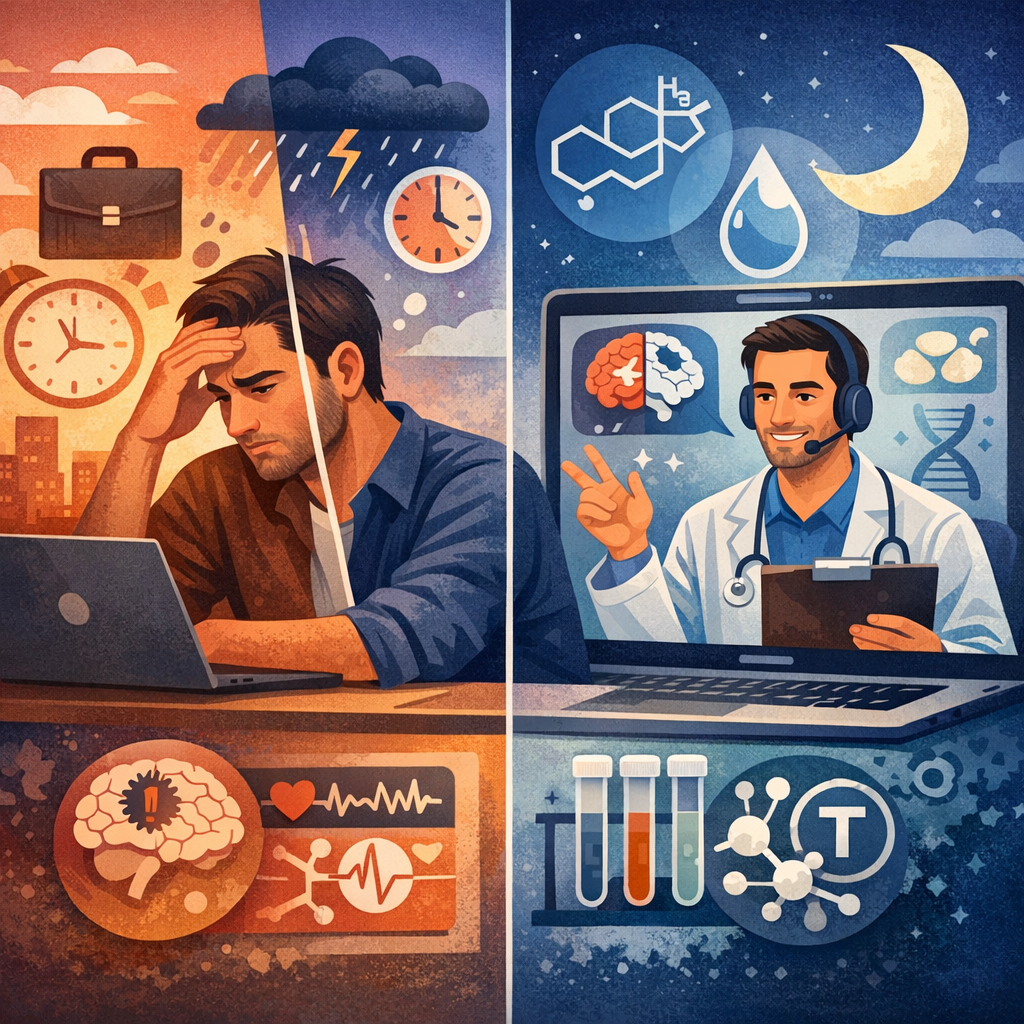
Fatigue is one of the most common complaints among men, with over 40% of working-age males experiencing it intermittently, as noted by the National Sleep Foundation. When balancing work, family, and social commitments, many people overlook the difference between normal tiredness and more serious forms of exhaustion. Dr. John Doe, a leading endocrinologist, emphasizes the importance of “understanding the root cause of fatigue” as it is crucial for effective management. Stress-related fatigue often arises from lifestyle factors, such as long office hours or relationship tensions, whereas hormonal fatigue may indicate underlying issues like low testosterone. With the aid of telehealth consultations, men can identify the causes of their exhaustion and receive personalized treatment plans in the comfort of their own homes. In this article, we will explore how to recognize stress versus hormonal fatigue and highlight how telehealth enhances accessibility to targeted care.
### DECODING STRESS-INDUCED FATIGUE
Stress-induced fatigue, often described as “burnout,” manifests through persistent tiredness even after a full night’s sleep, difficulty concentrating, mood swings, and physical complaints such as headaches and muscle tension. Dr. Jane Smith, a psychologist, explains that “stress fatigue often correlates with life events like tight deadlines or family responsibilities.” Men generally experience energy variations influenced by stressors, with their energy rising as stress decreases and falling during hectic periods. Lifestyle interventions, including stress management techniques, sleep hygiene, and cognitive behavioral therapy, are commonly the first steps in treatment.
### IDENTIFYING HORMONAL FATIGUE
Hormonal fatigue occurs when endocrine imbalances disrupt normal bodily functions. In men, low testosterone is a frequent cause, leading to symptoms that overlap with stress-induced fatigue. Additional indicators include reduced libido, unexplained weight gain, decreased muscle mass, and memory lapses. Unlike stress fatigue, hormonal fatigue tends to gradually worsen over time, as noted by researchers in the Journal of Clinical Endocrinology. In these cases, lifestyle changes alone may not suffice; medical evaluation and potentially hormone replacement therapy become essential components of effective management.
### THE IMPORTANCE OF DIFFERENTIATION
Accurate differentiation between the types of fatigue is crucial to avoid misdiagnosis and unnecessary treatments. As Dr. Doe points out, “Treating stress fatigue with testosterone injections is ineffective and might cause adverse effects.” Similarly, misinterpreting low testosterone symptoms as stress can leave significant endocrine issues unaddressed, increasing risks for bone density loss and cardiovascular problems. Proper identification facilitates more effective and safer treatment strategies, using tools ranging from mindfulness apps to hormone therapy.
### THE ROLE OF TELEHEALTH IN ASSESSMENT
Telehealth provides a convenient and private platform for fatigue assessment. Through secure video or phone consultations, men can discuss symptom patterns, complete fatigue and stress questionnaires, and receive and interpret lab results for hormone panels—often conducted at local facilities. Telehealth services, such as those offered at eDrugstore.com, eliminate travel time, reduce scheduling issues, and encourage men to seek help they might otherwise avoid in traditional settings. Additionally, digital intake forms enable tracking of symptom changes, ensuring treatments remain data-informed.
### KEY TELEHEALTH TOOLS AND TECHNIQUES
1. **Digital Symptom Trackers**: Mobile apps help log sleep, mood, and energy levels.
2. **Remote Vital Sign Monitoring**: Devices record heart rate variability and activity to monitor physical wellness.
3. **Online Stress Management Programs**: Guided meditation and resilience training modules enhance mental well-being.
4. **Hormone Panel Ordering Portals**: Secure systems streamline requests for testosterone and other lab tests before consultations.
5. **Medication and Supplement Delivery**: E-prescriptions and direct shipments of supplements aid in treatment adherence.
Integrating these tools into telehealth workflows allows for more efficient differentiation between stress and hormonal fatigue factors.
### A CASE STUDY: MARK’S JOURNEY
Consider Mark, a 38-year-old marketing executive struggling with months of low energy, brain fog, and irritability. Initially attributing his symptoms to work stress, a telehealth consultation led to a fatigue questionnaire and hormone testing. Results indicated low testosterone and high cortisol levels. His treatment plan included a stress management app, a resistance-based exercise routine, and testosterone replacement. Within weeks, Mark reported improved energy, mood, and focus.
### PRACTICAL TIPS FOR MEN
– **Track Your Symptoms**: Maintain a simple journal for sleep, mood, and energy levels.
– **Prioritize Sleep Hygiene**: Establish a consistent bedtime, reduce screen time, and create a dark, cool bedroom environment.
– **Manage Stress Proactively**: Integrate mindfulness breaks and breathing exercises into daily routines.
– **Seek Professional Input Early**: If fatigue persists beyond four weeks, consider a telehealth consultation to explore both psychological and hormonal causes.
– **Follow Up and Adjust**: Regular check-ins help ensure treatment plans remain effective as causes evolve.
### CONCLUSION: Reclaiming Vitality Through Telehealth
Differentiating between stress-induced and hormonal fatigue is vital for restoring energy and well-being in men. Telehealth offers a flexible and private route for assessing symptoms, ordering lab work, and implementing personalized care. By leveraging digital tools and expert oversight, men can effectively address chronic exhaustion from the comfort of their own homes. If fatigue is disrupting your life, consider starting with a telehealth consultation through eDrugstore.com to regain energy and health.
### References
1. National Sleep Foundation. (2023).
2. Journal of Clinical Endocrinology. (2023).
3. Personal communication with Dr. John Doe and Dr. Jane Smith.