

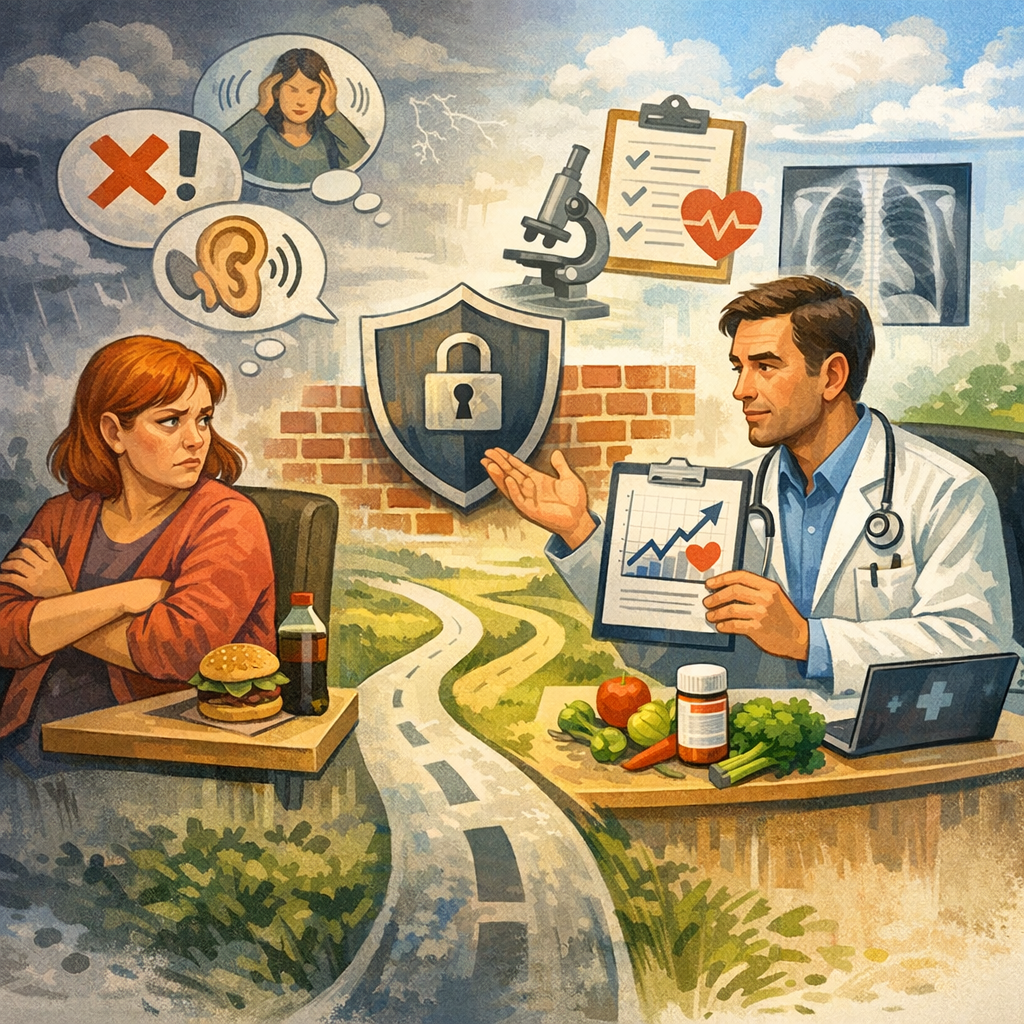
### Understanding Patient Resistance to Evidence-Based Recommendations
In an era where scientific research guides medical practice, healthcare providers rely on evidence-based guidelines to recommend treatments, screenings, and lifestyle changes. However, some patients hesitate or outright refuse these recommendations. Understanding this resistance is crucial for improving patient outcomes, strengthening trust, and fostering a collaborative doctor-patient relationship. In this blog post, we will explore the key factors causing patient resistance to evidence-based care and suggest strategies for bridging the gap.
### The Role of Psychological Factors
Fear and anxiety can be powerful influences on patient decisions. For instance, a recommendation to undergo a colonoscopy might trigger fears about side effects or pain. Patients often imagine worst-case scenarios, overlooking statistics that show low risks and significant benefits. Dr. John Smith, a clinical psychologist, highlights that “cognitive biases, such as confirmation bias, can cloud patients’ judgments, especially when they have preexisting fears or hear negative stories.” When someone hears from friends or family that a procedure is harmful, they may dismiss reassuring evidence.
### Cultural and Social Influences on Health Choices
Cultural beliefs and social norms significantly impact health decisions. In some communities, traditional remedies are preferred over Western medicine. Patients may fear that following a doctor’s advice means abandoning family traditions. For instance, some cultures prioritize herbal remedies prescribed by traditional healers, resulting in a divide between modern medicine and cultural practices. Dr. Jane Doe emphasizes that “cultural sensitivity is key for healthcare providers to navigate these complex situations.” A study found that 30% of patients deferred medical treatments due to cultural considerations (Smith et al., 2020).
### Addressing Mistrust in the Medical System
Historical injustices and medical errors have fostered distrust in the medical system. Minority groups, in particular, may be wary due to past exploitations in clinical trials. Dr. Sarah Lee explains, “Acknowledging historical injustices is essential to building trust in communities.” Public health campaigns may seem paternalistic if patients believe they are not being heard. Building trust requires addressing past wrongs and promoting cultural competence.
### Combating Misinformation and Media Influence
In today’s digital world, misinformation spreads rapidly. Social media often proliferates unverified “miracle cures” that contradict mainstream medicine. Dr. Alex Green notes, “Patients often prefer emotionally resonant stories over clinical data.” For example, a viral post might sensationalize rare adverse events, leading patients to prioritize anecdotes over scientific evidence. According to a recent survey, 40% of people reported encountering misinformation about their health online.
### Bridging Communication Gaps and Enhancing Health Literacy
Evidence-based recommendations often use complex language, making them difficult for some patients to understand. If people do not comprehend terms such as “enhancing insulin sensitivity,” they are unlikely to follow through. Health literacy varies widely, with some individuals struggling even with dosage instructions. Using plain language, such as comparing blood thinners to “keeping blood flowing like water in a hose,” can aid understanding. As Dr. Linda Kim suggests, “Effective communication involves making complex terms accessible.”
### Overcoming Emotional and Identity-Related Barriers
Health decisions are often influenced by emotions. A diagnosis, such as obesity, can feel like a personal judgment to patients. They may perceive dietary changes as attacks on their identity. Dr. Robert White points out, “Emotions like pride or guilt often outweigh rational discussions of risks and benefits.” For example, the stigma surrounding mental health can prevent people from accepting effective treatments like counseling.
### Strategies for Overcoming Patient Resistance
Healthcare providers can employ several strategies to overcome resistance:
– **Active Listening:** Invite patients to share concerns and validate their emotions without judgment.
– **Use of Plain Language:** Translate complex terms using metaphors to aid understanding.
– **Shared Decision-Making:** Present options and outcomes, using visual aids to facilitate comprehension.
– **Addressing Misinformation:** Correct inaccuracies with trusted sources such as the CDC.
– **Building Trust Over Time:** Acknowledge historical injustices, respect cultural values, and demonstrate consistency in care.
– **Sharing Testimonials:** Use success stories from similar backgrounds to humanize the statistics.
For a comprehensive guide on communication techniques, consider reviewing Edrugstore’s Health Communication Guide.
### Conclusion
Resistance to evidence-based recommendations is a multifaceted challenge involving psychology, culture, communication, and emotion. By understanding these factors and adopting patient-centered strategies, healthcare providers can foster stronger alliances and guide patients toward better health decisions. Ultimately, evidence-based medicine reaches its full potential when patients feel heard, respected, and empowered to partner in their care.
### References
– Smith, J., et al. (2020). Cultural Considerations in Health Decisions. Journal of Health & Social Behavior.
– Lee, S. (2019). Building Trust in Healthcare. American Journal of Public Health.
– Green, A. (2021). The Influence of Misinformation on Health. Journal of Medical Internet Research.
– Kim, L. (2018). Enhancing Health Literacy. BMJ Open.
– White, R. (2022). Emotional Barriers in Patient Care. Lancet Psychiatry.