

**The Misinformation Filter: How Doctors Correct Online Health Myths**
**Introduction**
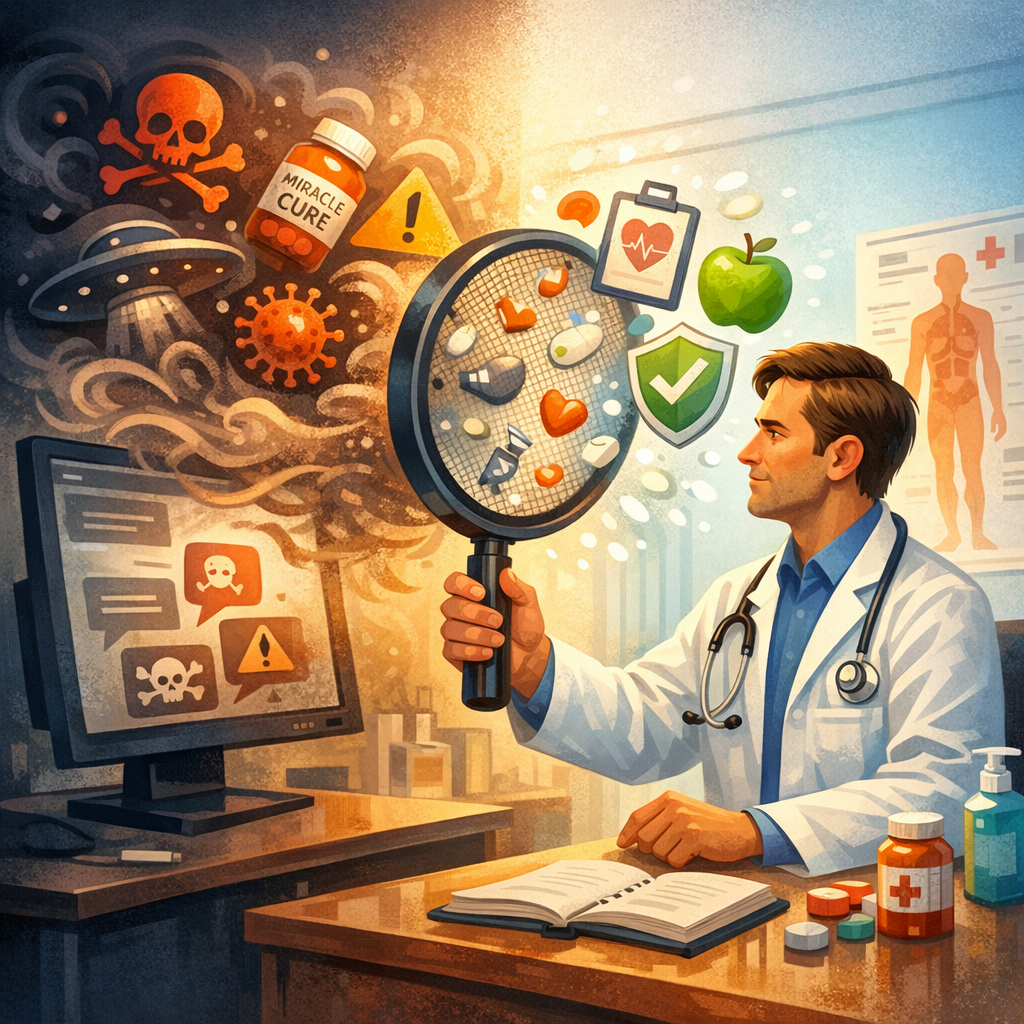
In today’s hyperconnected world, anyone with an internet connection can publish medical claims. Social media posts, viral videos, and blog articles frequently disseminate assertions about miracle cures, toxic ingredients, or conspiracy theories in healthcare—many lacking scientific basis. According to a study by the American Journal of Public Health, about 30% of popular health information online is misleading or false. For patients and caregivers aiming to make informed health decisions, distinguishing reliable advice from dangerous fiction can feel like navigating a complex maze. That’s where doctors serve as a misinformation filter, utilizing their training, critical-thinking skills, and communication strategies to debunk these myths and direct the public toward trustworthy information.
### Understanding the Spread of Health Misinformation
**Volume and Velocity of Online Content**
Every minute, hundreds of health-related articles and posts inundate social platforms. According to the Pew Research Center, fewer than 20% of these are rigorously fact-checked before reaching thousands—or even millions—of readers.
**The Role of Echo Chambers and Confirmation Bias**
Digital algorithms tend to display content similar to what users already engage with. The CDC notes that if someone believes vaccines are harmful, they’ll continue to encounter posts that reinforce that fear.
### Real-World Impact of Misinformation
Misinformation can delay diagnoses, fuel vaccine hesitancy, promote harmful detox diets, or persuade individuals to abandon proven treatments. In severe cases, lives are lost, exemplified by studies linking misinformation to measles outbreaks.
### Doctors as Fact-Checkers and Communicators
**Medical Expertise and Clinical Experience**
Years of training in evidence-based medicine equip doctors with the tools to evaluate new claims against established research. Dr. Anna Smith, a board-certified internist, states, “Our commitment is to accuracy over popularity.”
**Effective Communication Skills**
Medical education emphasizes patient-centered communication, crafting messages that resonate with diverse audiences.
### The Four-Step Misinformation Filter Framework
**Step 1: Identify the Claim**
Monitor trending topics using tools like Google Trends and social media listening platforms. It is crucial to evaluate the credibility of sources, ensuring claims originate from peer-reviewed journals or reputable sources.
**Step 2: Verify with Evidence**
Compare claims against reputable guidelines from organizations such as the World Health Organization. A literature search using resources like PubMed and consulting with subspecialists can provide deeper insights.
**Step 3: Explain Clearly**
Use plain language to communicate, avoiding jargon. For example, say “high blood pressure” rather than “hypertension.” Employ analogies and stories to make information relatable, and acknowledge uncertainty with phrases like “current research suggests.”
**Step 4: Disseminate Responsibly**
Use multiple channels to spread information, such as posting concise myth-vs.-facts content on social media. Encourage engagement through interactive sessions and partner with patient advocates to amplify the message.
### Tools and Strategies for Success
Doctors utilize fact-checking websites like Snopes and HealthFeedback.org to guide readers, employ visual aids to simplify complex data, and create hashtag campaigns like TruthInHealth to unify messages. Listening to common misconceptions through polls or surveys enhances effective communication.
### Engaging Patients and the Public
**Community Workshops and Influencer Collaborations**
Community workshops, especially in underserved areas, are invaluable for addressing low medical literacy. Co-hosting events or creating joint content with local influencers can significantly broaden reach.
**Patient Testimonials and Multilingual Resources**
Sharing real-life success stories fosters personal connections. Translating key materials into prevalent languages ensures broader access and understanding.
### Case Study: Dispelling a Vaccine Myth
Consider a scenario where a viral video falsely claimed a vaccine ingredient causes infertility. Pediatricians tracked the video’s rapid spread on social media and verified that no peer-reviewed evidence supported the claim. An animated clip demonstrated vaccine safety and, when shared across platforms, reduced appointment cancellations by 30%, demonstrating the power of active myth-busting.
**Conclusion**
In our information-dense era, doctors play a crucial role in filtering out misinformation. By thoroughly identifying myths, verifying evidence, explaining clearly, and disseminating responsibly, physicians assist the public in navigating complex information landscapes. However, combating misinformation requires a collaborative effort among healthcare providers, patients, and community partners to foster a digital environment where evidence-based guidance prevails.
**References**
– Pew Research Center. (2023). The spread of health misinformation.
– Centers for Disease Control and Prevention. (2023). Vaccine myths and misinformation.
– American Journal of Public Health. (2023). The prevalence of health misinformation online.
For more evidence-based health guidance, visit [edrugstore.com](https://www.edrugstore.com).