

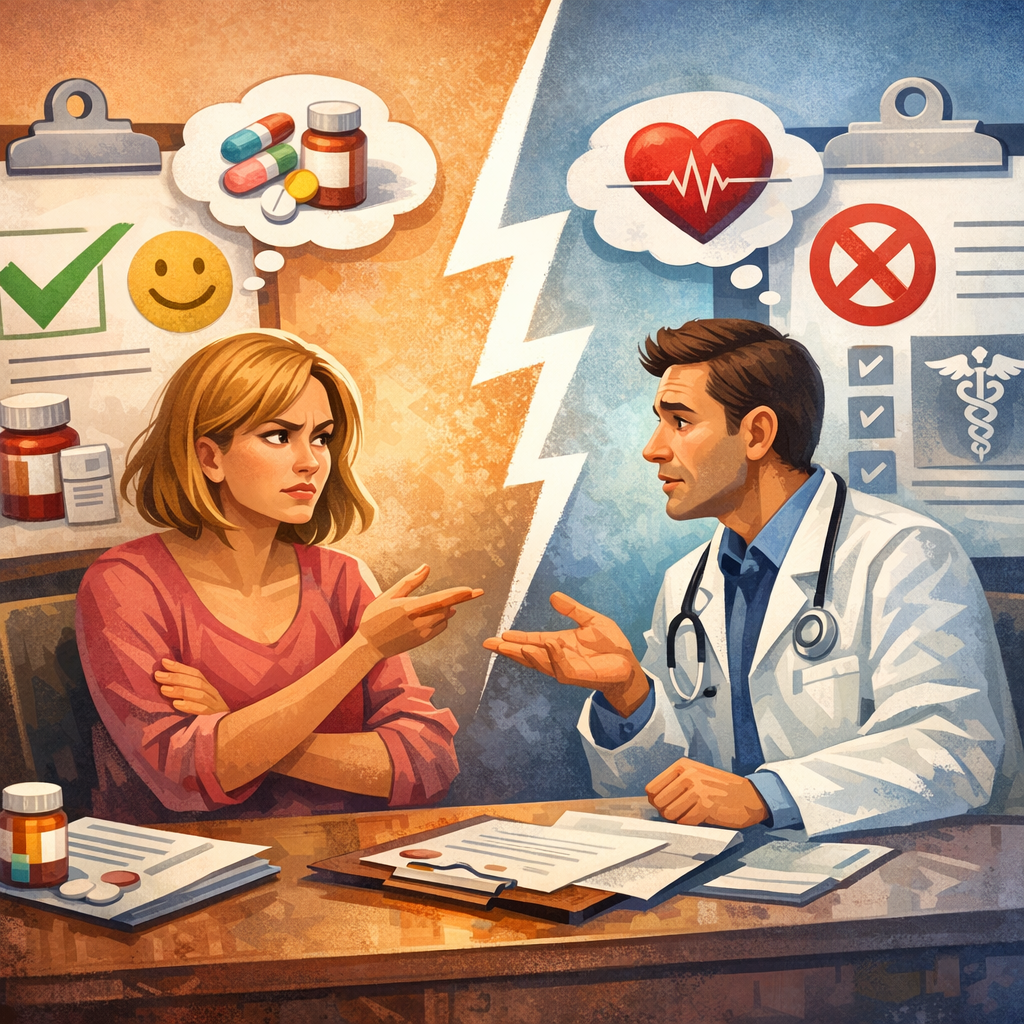
### Introduction to the Expectation–Guideline Conflict
In modern healthcare, patients often bring personal research from stories, media, and online medical forums. While it’s encouraging that individuals actively engage in their care, clinicians sometimes struggle to balance patient expectations with evidence-based clinical guidelines. These two forces can be at odds, leading to frustration, diminishing trust, and even suboptimal health outcomes. A study in the Journal of the American Medical Association found that 62% of patients have differing expectations from clinical guidelines. This article explores why these conflicts arise, their impact, and practical strategies to bridge the gap.
### Understanding the Expectation–Guideline Gap
Clinical guidelines, crafted by experts after reviewing comprehensive scientific evidence, aim to standardize care, minimize risk, and enhance patient outcomes. Conversely, patients may form expectations based on unverified sources like anecdotes or media reports. A physician recently noted, “Patients sometimes ask why I won’t prescribe antibiotics for every cold—many are unaware of antibiotic resistance risks.” This gap often raises questions such as, “Why won’t you prescribe antibiotics?” or “Can’t I try this supplement instead of standard therapy?” With differing information sources, both patients and clinicians may assess risks and benefits divergently.
### Why Patients Form Conflicting Expectations
#### Information Overload
The Internet, with its vast array of medical journals, blogs, and influencers, can overwhelm patients who may find it challenging to distinguish credible sources from misinformation.
#### Impact of Personal Experiences
Personal stories, like those of friends who claim to have “beaten cancer with diet” or “cured back pain with an injection,” can be more convincing than statistical data.
#### Media Sensationalism
Sensational headlines promising “miracle cures” often create unrealistic expectations. Patients may erroneously interpret preliminary research as established fact.
#### Distrust of Conventional Medicine
Concerns about pharmaceutical companies and potential side effects push some patients towards alternative treatments.
### The Consequences of Ignoring Guidelines
Ignoring clinical guidelines can have several negative effects. Patients who follow unproven therapies may face delayed recovery, as noted by the Mayo Clinic. Furthermore, supplements or off-label medications, especially when used without medical supervision, can increase adverse events. Consistent disagreements over treatment plans might also erode trust and satisfaction, straining the patient-provider relationship. According to Health Affairs, “Suboptimal compliance with guidelines increases healthcare costs.”
### Effective Strategies for Bridging the Gap
#### Active Listening
Start consultations by inviting patients to share their beliefs, fears, and goals, thereby acknowledging their expertise in their personal health experiences.
#### Empathetic Education
Present guidelines in clear, non-technical language, explaining what is recommended and why, supported by studies and statistics.
#### Shared Decision Making
Discuss guideline-based options, evaluating the pros and cons together. Encourage questions to create a collaborative treatment plan.
#### Utilizing Visual Aids and Decision Tools
Charts and graphs can effectively illustrate benefits and risks. For instance, a chart showing a 30% reduction in heart disease risk from adhering to medications can be more compelling than abstract descriptions.
#### Guiding Patients to Trusted Resources
Direct patients to reputable resources, such as NIH websites for reliable health information.
#### Negotiation and Compromise
Explore how non-standard therapies might complement standard treatments, emphasizing they should not replace evidence-based options.
#### Ongoing Follow-Up and Reassessment
Schedule follow-ups to continuously address any lingering concerns and reinforce educational messages.
### Case Example: Navigating Expectation and Guideline Alignment
Consider Mrs. Lee, who arrives with newly diagnosed hypertension and asks for a popular herbal supplement she read about online. She hesitates to start an ACE inhibitor, fearing side effects. Begin with active listening, inviting her to share her understanding and concerns about the supplement. Then, provide empathetic education by explaining the proven benefits of ACE inhibitors in reducing heart attack risk. Through shared decision making, agree on trying a low-dose ACE inhibitor while considering the herbal supplement as an adjunct, not a replacement. Finally, arrange a two-week follow-up call to assess her experience.
### When Expectations Change Over Time
Keep in mind that patient beliefs are not static. As patients experience symptom relief or encounter new information, their expectations may evolve. By maintaining a continuous dialogue, emerging preferences can be aligned with changing guidelines, promoting adherence and reinforcing the clinician-patient partnership.
### Conclusion: Navigating the Information-Rich Environment
Conflicts between patient expectations and clinical guidelines are inevitable today. However, rather than perceiving these clashes as obstacles, they present opportunities for deeper engagement. Active listening, clear education, and shared decision making can guide patients toward evidence-based care while respecting individual preferences. The result is stronger relationships, better adherence, and ultimately, improved health outcomes.