

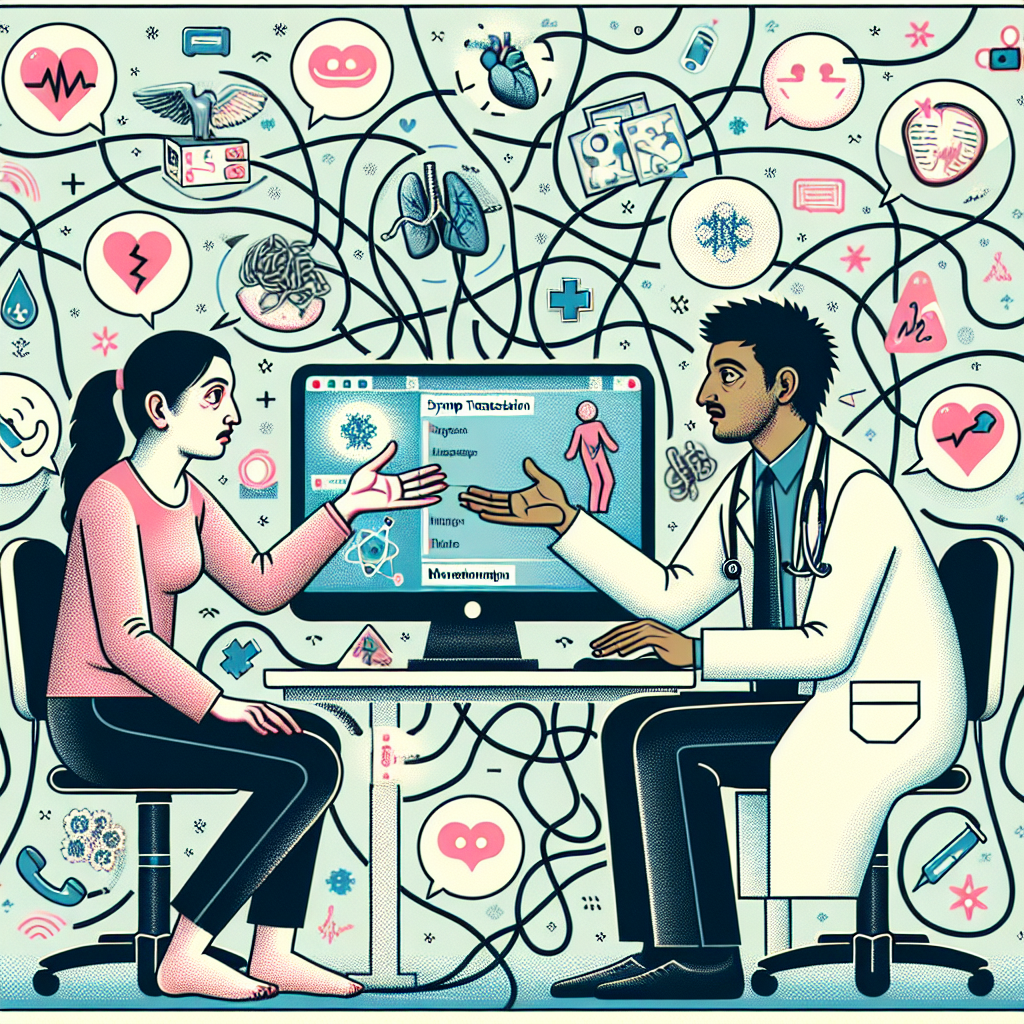
**Title: Overcoming the “Symptom Translation” Challenge: Enhancing Online Patient Communication**
### Introduction to the Symptom Translation Challenge
In the digital age, millions turn to online forums, social media groups, and health apps to discuss their health concerns. These platforms offer community support and facilitate information sharing but also introduce the “symptom translation” challenge. This issue arises when patients describe similar or related health problems in diverse ways, complicating interpretation for caregivers, moderators, and AI tools. This article explores why symptom translation occurs, its impact on online healthcare interactions, and methods to align patient language with medical understanding.
### The Surge of Online Health Communities
In the last decade, online health communities have grown significantly. Platforms like Facebook support groups centered on specific conditions and Reddit’s r/AskDocs enable real-time sharing of symptoms, diagnoses, and treatments. While these spaces empower users by offering emotional support and practical advice, their hallmarks of informality, anonymity, and user-generated content can result in inconsistent symptom descriptions, potentially leading to misunderstandings.
### Understanding the Symptom Translation Problem
Symptom translation refers to the varied ways patients express the same underlying health issue. For instance, one person might say, “I experience a sharp, stabbing pain under my rib cage after eating,” while another describes it as, “my side feels like it’s on fire whenever I finish a meal.” Both could be dealing with gallbladder irritation, yet these descriptions can confuse nonmedical readers, AI, or moderators. It’s akin to translating between two dialects without a shared dictionary.
### Why Patients Express Symptoms Differently Online
1. **Health Literacy and Medical Jargon**
Many people lack medical training, using everyday terms like “upset stomach” that do not translate directly into clinical diagnoses. Additionally, they may pick up on buzzwords from other posts.
2. **Cultural and Language Variances**
Regional differences, such as “my head is pounding” versus “a hammering sensation,” introduce variety. Moreover, non-English speakers using translation tools might provide awkward phrasing.
3. **Emotional State and Pain Interpretation**
Anxiety or depression can affect how symptoms are reported, causing mild discomfort to be exaggerated or serious symptoms to be understated due to stoicism.
4. **Platform Limitations and Formatting**
Character limits on platforms like Twitter, community guidelines, and the use of GIFs can influence the manner in which symptoms are reported.
### Effects on Online Diagnosis and Care
Unchecked symptom translation can lead to multiple issues:
– **AI Misinterpretation:** Automated triage systems might miss red flags or misclassify conditions if language deviates from their training data.
– **Inconsistent Peer Advice:** Misinterpretation by well-intentioned participants may cause confusion or delays in seeking professional help.
– **Expert Burnout:** Medical moderators may waste time clarifying basic descriptions instead of offering substantial guidance.
### Strategies to Bridge the Symptom Translation Gap
1. **Advocate for Structured Symptom Reporting**
Implementing templates and dropdown menus for factors like location, severity, and triggers can help users provide precise details. For instance, integrating a symptom diary into apps can standardize entries.
2. **Enhance Patient Education and Develop Glossaries**
Communities can pin resources that explain common medical terms in simple language. Interactive glossaries can help members link everyday terms to standard medical descriptors.
3. **Utilize Smart Prompting and AI Assistance**
Chatbots that ask detailed follow-ups can refine initial descriptions. NLP systems trained on diverse narratives can recognize synonyms and idiomatic expressions.
4. **Promote Collaborative Moderation**
Pairing moderators with community members can help translate medical language into everyday speech. Regular “Ask the Expert” sessions can clarify common misunderstandings.
5. **Foster an Encouraging Environment**
Encourage users to share without fear of imperfect descriptions. Highlight posts with clear, detailed symptom descriptions as positive examples.
### Conclusion: Achieving Clearer Communication
The symptom translation challenge is a key issue in digital peer-to-peer health communication. By using structured tools, educating users, and employing advanced AI, online communities can enhance safety and effectiveness in health support. Clear communication speeds up accurate guidance and strengthens trust and empathy on these platforms. Our goal should be to ensure every “burning side pain” or “under-the-rib ache” is properly understood and addressed.